Nilesat 301
 NileSat
Next-generation Ku/Ka-band geostationary broadcast satellite launched in 2022 to extend and modernize Nilesat's 7 degrees West DTH capacity.
Technical specifications
- Manufacturer
- Thales Alenia Space
- Platform
- Spacebus-4000B2
- Launch date
- 8-9 June 2022
- Launch vehicle
- SpaceX Falcon 9
- Launch site
- Cape Canaveral SLC-40, Florida
- Launch mass
- 4,100 kg
- On-orbit mass
- ~3,900 kg
- Orbital position
- 7° West (GEO)
- Ku-band transponders
- 32
- Ka-band transponders
- 6
About
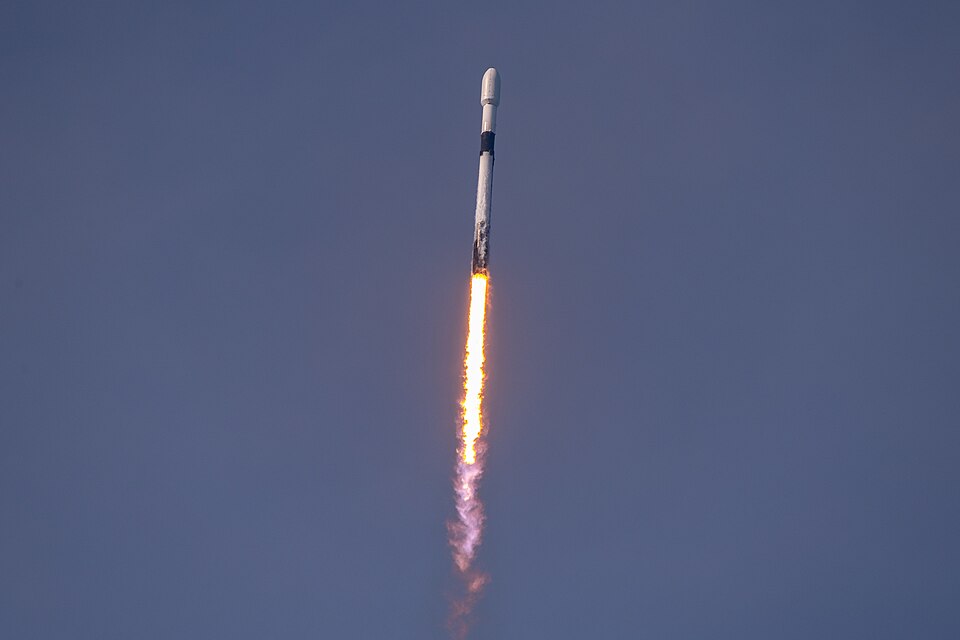
Nilesat 301 is a geostationary communications satellite built by Thales Alenia Space for Nilesat, Egypt’s national satellite operator, on the Spacebus-4000B2 platform. It launched on 8/9 June 2022 aboard a SpaceX Falcon 9 rocket from Space Launch Complex 40 at Cape Canaveral Space Force Station, Florida, and was placed into the 7 degrees West orbital slot alongside the earlier Nilesat 201 spacecraft.
The satellite has a launch mass of approximately 4,100 kg (on-orbit mass around 3,900 kg) and carries 32 Ku-band transponders plus 6 Ka-band transponders, providing significantly expanded direct-to-home (DTH) television, radio broadcasting, and data-transmission capacity compared to its predecessor. Nilesat 301 was designed to progressively assume the broadcast traffic previously carried by the aging Nilesat 201, extending service continuity for the 7 degrees West video neighborhood that reaches tens of millions of households across Egypt, the Middle East, and North Africa.
As Nilesat’s newest and most capable satellite, Nilesat 301 underpins the operator’s continued role as a leading broadcast platform in the MENA region, supporting both traditional DTH television distribution and growing demand for broadband and data services via its Ka-band payload.
Documentation
No public datasheet yet — request the datasheet / ICD from the supplier.