Dynamics Testing Services
 Element Defense
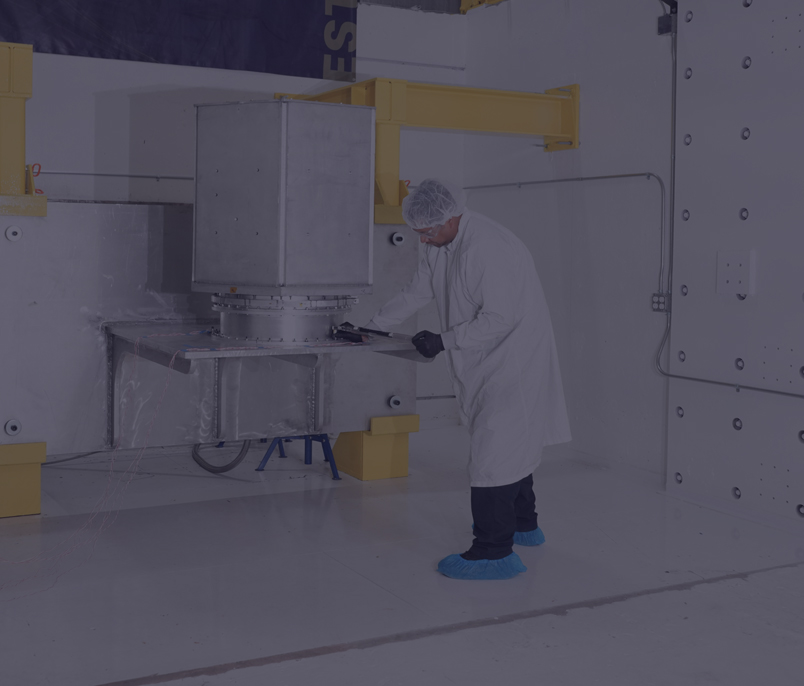
Element U.S. Space & Defense offers a comprehensive suite of dynamics testing services, including acceleration, acoustic noise, bird impact, vibration, corrosion, thermal shock, mechanical shock, drop, and accelerated aging tests.
Key figurescomparable across the catalogue
- Mass
- 0.998 kg
Normalised to common units so this product can be compared with others in its category. The supplier's own wording is below.
As published by the supplier
- Acceleration test centrifuge diameter
- 1ft (0.3m) to 62 ft (16m)
- Acceleration test weight capacity
- a few grams to 7,000 lbs (3,175 kg)
- Acoustic noise test reverb chamber volume
- 5,000 cubic foot
- Acoustic noise test clean room size
- 1,400 square foot High Bay Class 100k
- Bird impact test bird weight range
- 2.2 to 8-pound
- Bird impact test speed
- as fast as 400 mph
- Vibration test force pounds (Tandem Shakers)
- up to 70,000 force pounds
- Vibration test force pounds (Single Shaker)
- up to 45,000 force pounds
- Vibration test grms
- in excess of 200 GRMS in a single band
- Vibration test data channels
- in excess of 100
- Drop test height
- up to 80 feet
- Drop tower induced mechanical shock
- 15,000 g and 20,000 g
About
Element U.S. Space & Defense provides a wide range of dynamics testing services to evaluate product resilience and functionality under various environmental and operational stresses. These services are crucial for products in aerospace, military, automotive, and commercial sectors, with specific mention of applications for satellites and space probes.
Acceleration testing studies product response to varying g-forces, ensuring functionality under peak loads. It is performed on G-tables and centrifuges ranging from 1ft (0.3m) to 62 ft (16m) in diameter, with weight capacities from a few grams to 7,000 lbs (3,175kg). Electrical slip rings and swivels are used for instrument control and pneumatic/hydraulic supply. Methods include centrifuge, cycling, multi-axis, thrust application, and payload analysis (for satellites and space probes). MIL-STD-202 is the industry standard for electrical components.
Acoustic noise testing determines a device’s noise threshold and how it handles sound exposure, especially critical for high-altitude, high-velocity, or high-torque applications like aircraft engines. Testing is conducted in facilities including a 5,000 cubic foot reverb chamber in a 1,400 square foot High Bay Class 100k clean room.
Bird impact testing uses a strike simulator (‘chicken gun’) to release organic and imitation birds (2.2 to 8 pounds) at speeds up to 400 mph to assess the durability of aircraft and vehicle parts against high-speed impacts.
Vibration testing evaluates product resistance to shakes and tremors, essential for engine components in vehicles and aircraft. Tests are performed on shaker tables, capable of generating up to 70,000 force pounds with tandem shakers and 45,000 force pounds on a single shaker, with capabilities exceeding 200 GRMS in a single band and over 100 data channels.
Corrosion testing accelerates the corrosive process to determine how long a product will resist environmental effects. Standards include MIL-STD-810, ASTM B117, and GM9540P, with basic salt-fog tests for average corrosive factors.
Thermal shock testing subjects products to abrupt temperature fluctuations, while mechanical shock testing includes pyro-shock (simulating explosive shock) and shipboard shock (heavyweight, lightweight, and medium weight shock).
Drop testing determines the height from which products and packaging can fall and remain intact, with tests performed at heights up to 80 feet and drop towers inducing mechanical shocks of 15,000g to 20,000g. ISTA standards are commonly used.
Accelerated aging tests, including Highly Accelerated Life Testing (HALT), Highly Accelerated Stress Screening (HASS), and Highly Accelerated Thermal Shock (HATS), are used to find design weaknesses, identify manufacturing defects, and assess durability under extreme conditions.
Documentation
No public datasheet yet — request the datasheet / ICD from the supplier.