SmartSat SAR Satellite Constellation
 Smart Satellite Technology
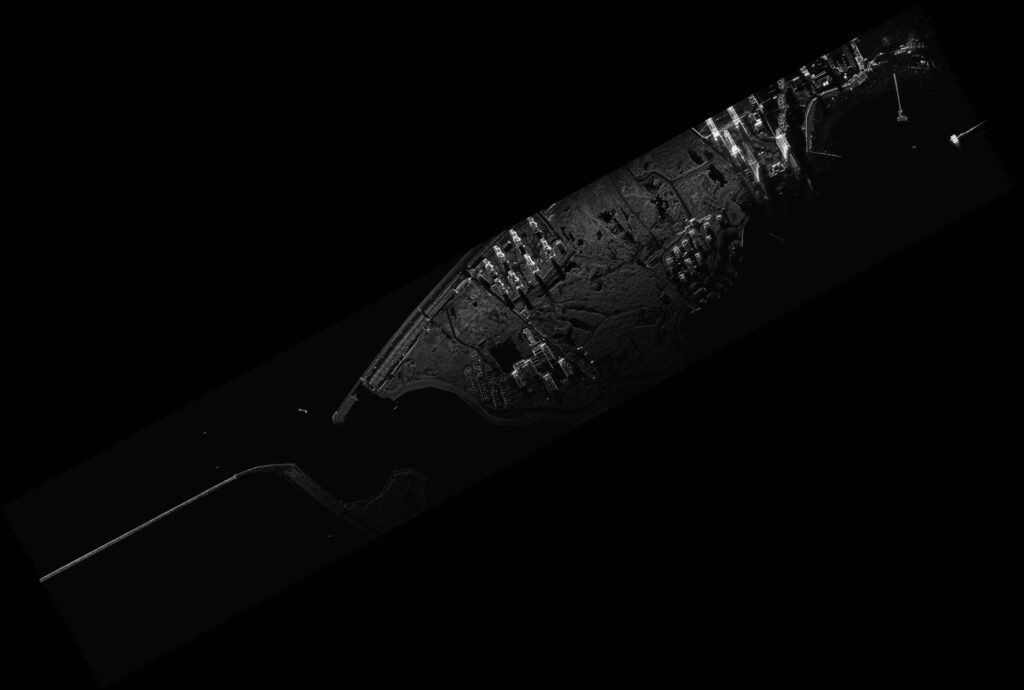
In-orbit small-satellite synthetic aperture radar (SAR) platform and growing constellation for all-weather, day/night Earth deformation and change monitoring.
Key figurescomparable across the catalogue
- TRL
- 9
Normalised to common units so this product can be compared with others in its category. The supplier's own wording is below.
As published by the supplier
- Sensor type
- Synthetic Aperture Radar (SAR), all-weather day/night imaging
- Constellation target size
- 48 satellites
- Target revisit
- Global, hour-class (with full constellation)
- Application
- Millimeter-level ground deformation monitoring, disaster response, radar change detection
- Flight heritage
- SmartSat-1A (Dec 2020, Long March 8), SmartSat-3A (May 2022, via Tianzhou-4), SmartSat-2A / Jigao Kechuang (Feb 2024, Jielong-3) — in-orbit and operational
- TRL
- 9 (flight-proven)
About
Smart Satellite Technology (founded May 2018, Jinan/Beijing, China) designs, builds, and operates a constellation of small SAR (synthetic aperture radar) satellites branded SmartSat, targeting millimeter-level ground deformation monitoring and hour-class global revisit imagery. The company’s first satellite, SmartSat-1A, launched 22 December 2020 on a Long March 8 rocket from Wenchang. SmartSat-3A launched 10 May 2022 aboard the Tianzhou-4 cargo spacecraft. The first dedicated SAR satellite, SmartSat-2A (also known as ‘Jigao Kechuang’), launched 3 February 2024 on a Jielong-3 (Smart Dragon-3) rocket from waters near Yangjiang, Guangdong. Smart Satellite Technology is currently building out a constellation of 48 SAR satellites intended to deliver global radar-imagery revisit within about one hour. The company holds independent intellectual property for low-Earth-orbit SAR satellite manufacturing and operations, with SAR payload technology flight-validated on both satellite and UAV platforms — the same core SAR payload technology underpins the company’s separate airborne MiniSAR product line. Core team members come from the China Academy of Space Technology (CAST/Fifth Academy), the Chinese Academy of Sciences, and National University of Defense Technology, with prior flight heritage on programs including Tiantong-1, the enhanced DFH-4 and DFH-5 satellite platforms, and Xiaoxingxing-1. In-orbit satellites (e.g. SmartSat-2A) have been used operationally for disaster response, including high-resolution radar imagery support during Typhoon flooding events in Guangxi and Taiwan.
Documentation
No public datasheet yet — request the datasheet / ICD from the supplier.