TILE — Thermal Integrated LEO Edge Compute Module
 Sophia Space
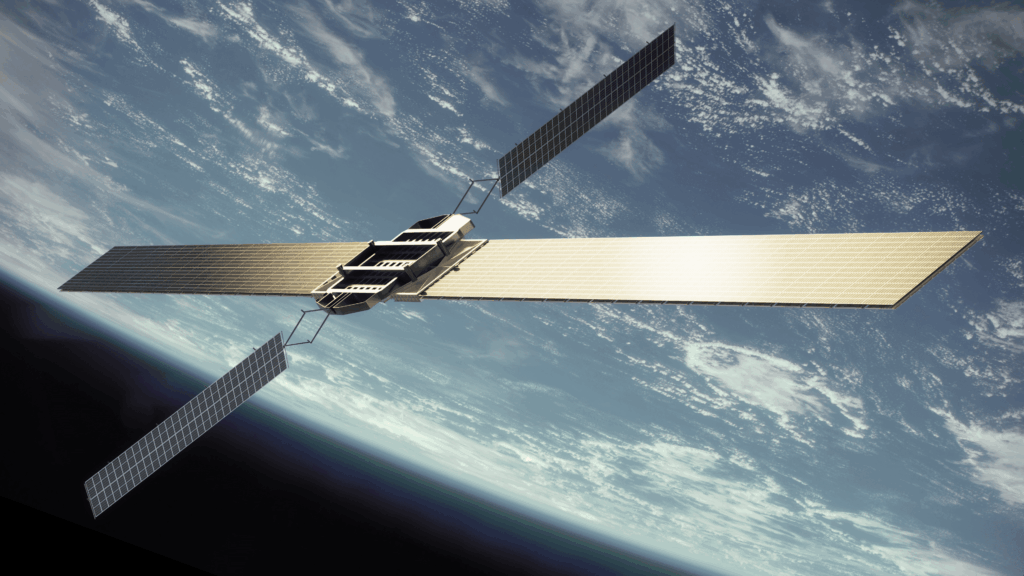
Modular, solar-powered, passively-cooled AI edge compute panel for satellites and space stations, delivering up to 800 TOPS per unit.
Typed specifications3 values
Discloses 1 of 14 fields engineers filter by in this category (category median 5).
- Envelope (L×W×H)
- ~1 m² surface area, ~1 cm thick (foldable) product page
- Operating system
- other SOOS (Sophia Orbital Operating System) — scheduling, thermal,… · product page
- Flight heritage
- Spun out of Mandala Space Ventures; commercializes Caltech/JPL orbital compute technology; team of former JPL engineers product page
Each value is typed with its unit and measurement condition and cites the datasheet page it was taken from. Nothing is guessed: a field that is absent here has not been published by the manufacturer. machine-extracted ✓ checked by NewSpace Market ✓ manufacturer confirmed by the manufacturer.
As published by the supplier12 lines, in the manufacturer's own wording
- Dimensions
- ~1 m² surface area, ~1 cm thick (foldable)
- Compute per tile
- Up to 800 TOPS (4 × Sophia BLADE single-board compute units)
- Power efficiency
- ~92% of generated solar power to computation
- Cooling
- Passive — space vacuum + aluminum alloy heat spreader/radiator; no fans
- Power
- Non-parasitic — self-generated solar; does not draw from host satellite
- Scaling tiers
- Single tile / ~40-tile companion-orbit cluster / 2,500-tile ODC (~1 MW, fits in Falcon 9 fairing)
- Interface
- Secure networking with intelligent, fail-safe routing; edge-to-constellation compute support
- Os
- SOOS (Sophia Orbital Operating System) — scheduling, thermal, firmware, fault routing
- Configuration
- SOPHIA ST1 — configurable for sensor-specific compatibility, storage, and battery size
- First mission
- Apex satellite bus, targeted late 2027/early 2028
- Funding
- $10M seed (February 2026)
- Flight heritage
- Spun out of Mandala Space Ventures; commercializes Caltech/JPL orbital compute technology; team of former JPL engineers
About
TILE (Thermal Integrated LEO Edge) is Sophia Space’s modular AI compute unit for orbital data processing, designed for deployment on satellite buses, space stations, or as a free-flying companion-orbit compute cluster. Each TILE measures approximately 1 m² in surface area and roughly 1 cm thick when deployed, with solar panels on one face and an array of four Sophia BLADE single-board computers on the other, delivering up to 800 TOPS of AI compute per TILE. The architecture unifies power generation, compute, and thermal management into a single panel: every watt generated is driven into compute, and every unit of waste heat is radiated at the point of generation.
Passive thermal management uses the vacuum of space and an aluminum-alloy heat spreader/radiator — eliminating the fans, chillers, and active cooling infrastructure that consume significant power in terrestrial data centers. The result is roughly 92% of generated solar power going directly to computation, versus the much larger cooling overhead typical of Earth-based data centers. Each TILE is non-parasitic: it generates and manages its own power without drawing from or supplying to the host satellite’s power bus, simplifying integration across diverse satellite buses and space station platforms.
TILEs are built to scale, forming resilient, distributed systems connected by secure networking and intelligent, fail-safe routing — an edge-to-constellation compute fabric that supports processing from onboard edge to distributed constellation layers, reducing latency and downlink dependence and enabling real-time in-orbit operations. Three deployment tiers exist: a single tile or small rack on a host satellite (the earliest commercial offering, configurable for sensor-specific compatibility, storage, and battery size — the SOPHIA ST1 configuration); a clustered array of approximately 40 tiles in companion orbit; and a full-scale Orbital Data Center (ODC) of approximately 2,500 tiles (roughly 50 × 50 m, delivering about 1 MW of compute power, sized to fit within a SpaceX Falcon 9 fairing).
Each TILE runs SOOS (Sophia Orbital Operating System), which handles process scheduling, thermal management, firmware updates, security patching, and AI-assisted fault routing across the compute fabric. Sophia Space has selected Apex satellite buses for its first orbital demonstration mission, targeted for late 2027/early 2028. Sophia Space is a Pasadena, CA startup founded in 2023, staffed primarily by former JPL engineers, and raised $10M in seed funding in February 2026.
Documentation
No public datasheet yet — request the datasheet / ICD from the supplier.