URA MET (Microwave Electrothermal Thruster) – AQUAMET / NMET / COMET / XMET / KMET
 URA Thrusters
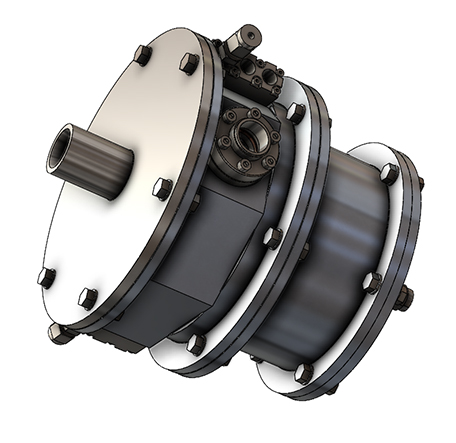
Microwave electrothermal thrusters generating a free-floating plasma discharge to heat a wide range of propellants, offered in water, ammonia, CO2, xenon and krypton variants.
Typed specifications4 values
Discloses 3 of 10 fields engineers filter by in this category (category median 3).
- Thrust
- 30–150 mN product page
- Specific impulse
- 500–1 000 s product page
- Propellant
- water product page
- Power consumption
- 1 000 W max · product page
Each value is typed with its unit and measurement condition and cites the datasheet page it was taken from. Nothing is guessed: a field that is absent here has not been published by the manufacturer. machine-extracted ✓ checked by NewSpace Market ✓ manufacturer confirmed by the manufacturer.
As published by the supplier10 lines, in the manufacturer's own wording
- Model
- AQUAMET
- Thrust
- 30-150 mN
- Specific impulse (Isp)
- 500-1000 s
- Power
- <1000 W
- Propellant
- H2O
- Market entry
- 2024/25
- Model (NMET)
- 30-150 mN thrust, 500-1000 s Isp, <1000 W, NH3 propellant
- Model (COMET)
- 30-150 mN thrust, 500-1000 s Isp, <1000 W, CO2 propellant
- Model (XMET)
- 200-300 mN thrust, 100-500 s Isp, <1000 W, xenon propellant
- Model (KMET)
- 200-300 mN thrust, 100-500 s Isp, <1000 W, krypton propellant
About
URA Thrusters’ Microwave Electrothermal Thrusters (MET) generate a free-floating plasma discharge in a cylindrical cavity resonator, efficiently heating a wide range of propellants and delivering superior performance compared to conventional resistojets and arcjets. The technology adapts to a broad range of spacecraft sizes and is compatible with multiple propellant types, including water, ammonia, argon, xenon, krypton and carbon dioxide.
Core system components include the thruster head, an RF and Power Processing Unit, a propellant management system, and a propellant tank. The product family includes the water-fed AQUAMET, ammonia-fed NMET, CO2-fed COMET, and the higher-thrust xenon (XMET) and krypton (KMET) variants, giving operators flexibility to select a propellant that matches mission and supply-chain requirements.
Documentation
No public datasheet yet — request the datasheet / ICD from the supplier.