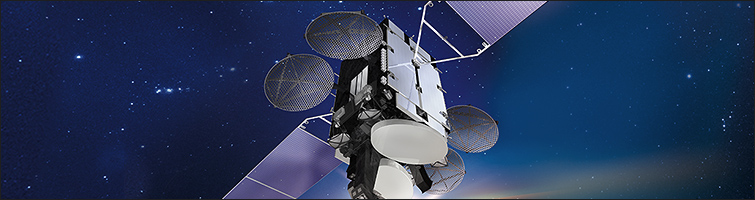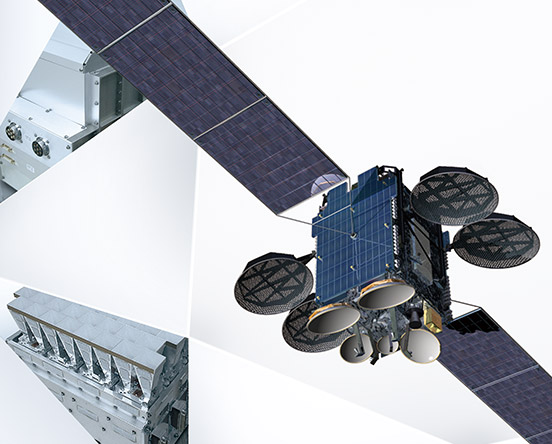
Mitsubishi Electric is a prime contractor for a range of Japanese Earth observation satellites, including ALOS series for land observation, GOSAT series for greenhouse gas monitoring, Himawari series for meteorological observation, and ADEOS-II for global environmental changes.
Observation Satellites (ALOS-4, ALOS-3, ALOS-2, GOSAT-GW, GOSAT-2, GOSAT, Himawari-8, Himawari-9, MTSAT-2/Himawari-7, AD
Mitsubishi Electric is a prime contractor for a range of Japanese Earth observation satellites, including ALOS series for land observation, GOSAT series for greenhouse gas monitoring, Himawari series for meteorological observation, and ADEOS-II for global environmental changes.
Description
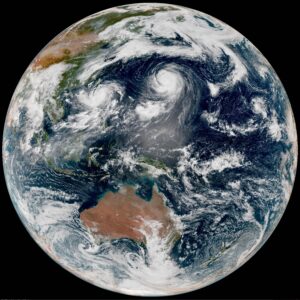
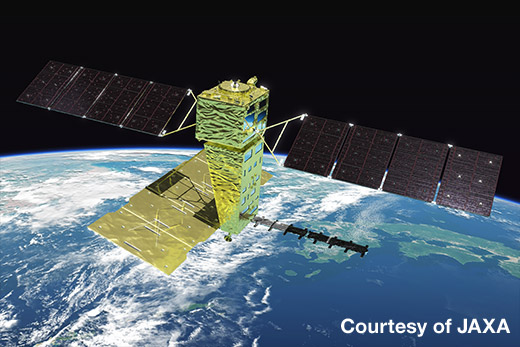
Mitsubishi Electric serves as a prime contractor for a diverse portfolio of Earth observation satellites, contributing significantly to Japan's space exploration and environmental monitoring efforts. The ALOS (Advanced Land Observing Satellite) series, including ALOS-4, ALOS-3, and ALOS-2, focuses on land observation, with ALOS-2 specifically equipped with the PALSAR-2 L-band synthetic aperture radar for improved resolution and wider observation range, aiding in disaster monitoring, forest monitoring, environmental protection, and resource exploration. The GOSAT (Greenhouse Gases Observing Satellite) series, comprising GOSAT-GW, GOSAT-2, and GOSAT, is dedicated to monitoring greenhouse gas concentrations to support global warming and climate change research. GOSAT-2, a successor to IBUKI, includes development of next-generation sensors and ground systems. The Himawari series (Himawari-8 and Himawari-9) are geostationary meteorological satellites providing essential climate forecasting for Japan and disaster prevention in the East Asia and Western Pacific regions. MTSAT-2 (Himawari-7) is a multi-functional satellite combining aviation and meteorological missions, improving air traffic safety and providing meteorological data. Finally, ADEOS-II (Advanced Earth Observing Satellite-II) continued the mission of monitoring climate changes, ozone holes, and global environmental changes, with core sensors developed by JAXA and additional instruments from international partners. Mitsubishi Electric's responsibilities consistently include being the prime contractor for these complex satellite programs.
Specifications
| Alos-4 client | Japan Aerospace Exploration Agency (JAXA) |
|---|---|
| Alos-4 launch date | July 1, 2024 |
| Alos-4 launch vehicle | H3 |
| Alos-4 launch site | Tanegashima Space Center |
| Alos-4 orbit | Sun-synchronous sub-recurrent orbit |
| Alos-4 mass | Approx. 3t |
| Alos-4 design life | 7 years |
| Alos-4 responsibilities | Prime contractor |
| Alos-3 client | Japan Aerospace Exploration Agency (JAXA) |
| Alos-3 launch date | March 7, 2023 (Launch failure) |
| Alos-3 launch vehicle | H3 |
| Alos-3 launch site | Tanegashima Space Center |
| Alos-3 orbit | Sun-synchronous subrecurrent orbit at an altitude of 669 km |
| Alos-3 mass | Approx. 3t |
| Alos-3 design life | Over 7 years |
| Alos-3 responsibilities | Prime contractor |
| Alos-2 client | Japan Aerospace Exploration Agency (JAXA) |
| Alos-2 launch date | May 24, 2014 |
| Alos-2 launch vehicle | H-IIA |
| Alos-2 launch site | Tanegashima Space Center |
| Alos-2 orbit | 628 km (sun-synchronous sub-recurrent orbit) |
| Alos-2 mass | Approx. 2t (at launch) |
| Alos-2 electrical power | 5,300 W |
| Alos-2 design life | 5 years |
| Alos-2 responsibilities | Prime contractor |
| Gosat-gw launch date | June 29, 2025 |
| Gosat-gw orbit type | Sun-synchronous sub-recurrent orbit |
| Gosat-gw weight | Approx. 2,600 kg |
| Gosat-gw mission duration | 7 years |
| Gosat-2 client | Japan Aerospace Exploration Agency (JAXA) |
| Gosat-2 launch date | October 29, 2018 |
| Gosat-2 launch vehicle | H-IIA |
| Gosat-2 launch site | Tanegashima Space Center |
| Gosat-2 orbit | Sun synchronous orbit |
| Gosat-2 mass | Approx. 1.7t (at launch) |
| Gosat-2 electrical power | 5,000 W |
| Gosat-2 design life | 5 years |
| Gosat-2 responsibilities | Prime contractor |
| Gosat client | JAXA |
| Gosat launch date | January 23, 2009 |
| Gosat launch vehicle | H-IIA |
| Gosat launch site | Tanegashima Space Center |
| Gosat orbit | Altitude: 666 km, Synchronous sub-recurrent orbit |
| Gosat mass | Approx. 1.8t (at launch) |
| Gosat electrical power | 3,800 kW |
| Gosat design life | 5 years |
| Gosat responsibilities | Prime contractor |
| Himawari-8, himawari-9 client | Japan Meteorological Agency |
| Himawari-8, himawari-9 launch date | Himawari-8 : October 7, 2014, Himawari-9 : November 2, 2016 |
| Himawari-8, himawari-9 launch vehicle | H-IIA |
| Himawari-8, himawari-9 launch site | Tanegashima Space Center |
| Himawari-8, himawari-9 orbit | Geostationary orbit |
| Himawari-8, himawari-9 design life | 15 years |
| Himawari-8, himawari-9 responsibilities | Prime contractor |
| Mtsat-2/himawari-7 client | Ministry of Land, Infrastructure and Transport |
| Mtsat-2/himawari-7 launch date | February 18, 2006 |
| Mtsat-2/himawari-7 launch vehicle | H-IIA |
| Mtsat-2/himawari-7 launch site | Tanegashima Space Center |
| Mtsat-2/himawari-7 orbit | Geostationary orbit: 145 deg. |
| Mtsat-2/himawari-7 mass | Approx. 4.7t (at launch) |
| Mtsat-2/himawari-7 electrical power | 3,410 W |
| Mtsat-2/himawari-7 design life | 10 years |
| Mtsat-2/himawari-7 responsibilities | Prime contractor |
| Adeos-ii client | JAXA |
| Adeos-ii launch date | December 14, 2002 |
| Adeos-ii launch vehicle | H-IIA |
| Adeos-ii launch site | Tanegashima Space Center |
| Adeos-ii orbit | Altitude: 800 km, Sun-synchronous subrecurrent orbit |