Satellite Platform DS2000
 Mitsubishi Electric (Space Division)
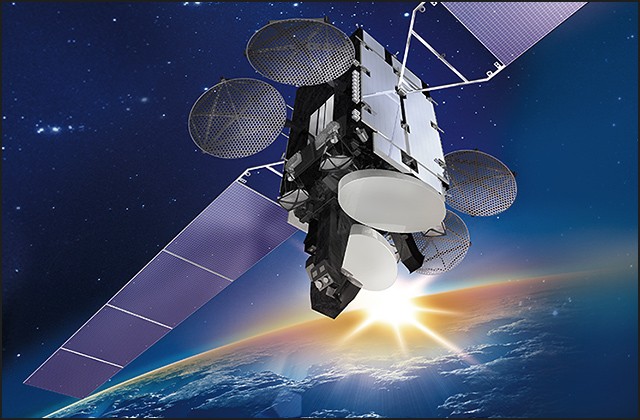
The DS2000 is a highly reliable, Japanese-made standard satellite platform developed by Mitsubishi Electric, offering a customizable foundation for various mission subsystems.
Typed specifications2 values
Discloses 0 of 7 fields engineers filter by in this category (category median 3).
- Power generation (orbit average)
- 15 000 W max · as printed: power · product page
- Max satellite wet mass
- 3 000–5 000 kg Launch mass · product page
Each value is typed with its unit and measurement condition and cites the datasheet page it was taken from. Nothing is guessed: a field that is absent here has not been published by the manufacturer. machine-extracted ✓ checked by NewSpace Market ✓ manufacturer confirmed by the manufacturer.
As published by the supplier4 lines, in the manufacturer's own wording
- Power
- Up to 15 kW
- Launch mass
- 3 – 5 tons class (approx.)
- Life
- 15+ years
- Launch vehicle
- Ariane-5, Proton M, Sea Launch, Land Launch, Atlas-V, Falcon 9, H-IIA
About
The Mitsubishi Electric DS2000 is a highly reliable, standard satellite platform, the first of its kind developed in Japan. It has been widely adopted for various satellites over the years, providing a trustworthy foundation for customized mission subsystems. This platform allows for the integration of specific mission requirements, enabling the production of high-quality satellites at a lower cost and with significantly shorter delivery times. The DS2000 platform is designed to flexibly respond to the evolving needs of satellite customers. It supports a power output of up to 15kW, has a launch mass in the 3-5 tons class, and is designed for a life of 15+ years. It is compatible with a range of launch vehicles including Ariane-5, Proton M, Sea Launch, Land Launch, Atlas-V, Falcon 9, and H-IIA. The platform’s performance and reliability are backed by Japan’s largest satellite manufacturing and testing facilities, which include a 30.25m-high building with a total floor area of 23,886 square meters and a production capacity of eight large satellites per year. These facilities are designed to withstand strong earthquakes and integrate the entire satellite production cycle from design to assembly and testing, utilizing a high-speed LAN for advanced computer and information networking to enhance quality and efficiency. The facilities also include a large space chamber (11.5m diameter, 11m length) for simulating low-temperature, high-vacuum environments, a compact antenna test range (20x30x16m, 1.5-100GHz frequency range) for antenna functionality and EMC testing, an acoustic chamber for simulating launch acoustic environments, and vibration test equipment for simulating launch vibrations.
Documentation
No public datasheet yet — request the datasheet / ICD from the supplier.