Loop Heat Pipes (LHPs)
 ACT (Advanced Cooling Technologies)
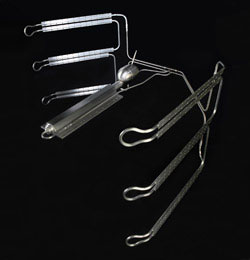
High-capacity two-phase heat transport devices that move larger amounts of heat over longer distances than conventional heat pipes, with sintered nickel, hybrid, and 3D-printed wick options.
Typed specifications17 values
Discloses 4 of 7 fields engineers filter by in this category (category median 2).
- Operating temperature
- -120 °C product page
- TRL
- 6 product page
- Product type
- loop heat pipe datasheet p.1 heat pipe | heat pipe | heat pipe | heat pipe
- Material
- wicks of nickel, stainless steel, titanium and Monel datasheet p.1
- Max transported heat
- 100 W min · heat loads from 100 to over 1,000 watts · datasheet p.1 1 000 W max · heat loads from 100 to over 1,000 watts
- Length
- 10 000 mm max · transport lengths over 10 metres are possible · datasheet p.1
- Satellite class
- microsat 10-100 kg datasheet p.1 smallsat 100-500 kg | ESPA-class | large >500 kg | GEO
- Wick type
- sintered powder LHP wicks made from fine powders, micron-sized pore radii · datasheet p.1
Each value is typed with its unit and measurement condition and cites the datasheet page it was taken from. Nothing is guessed: a field that is absent here has not been published by the manufacturer. machine-extracted ✓ checked by NewSpace Market ✓ manufacturer confirmed by the manufacturer.
As published by the supplier7 lines, in the manufacturer's own wording
- Ammonia operating range
- -40°C to 70°C
- Titanium/water variant range
- 70°C to 250°C
- Traditional wick pore radius
- ~1 µm
- 3d-printed wick pore radius
- ~8–10 µm
- 3d-printed wick TRL
- 6
- Quality certification
- AS9100
- Operating temperature
- -120°C to 100°C
About
Loop Heat Pipes (LHPs) overcome the distance and capacity limitations of traditional axially-grooved heat pipes. By separating the liquid and vapor flow paths into a loop configuration, LHPs transport significantly larger heat loads over considerably longer distances with minimal temperature drop.
ACT manufactures all LHP components domestically under strict AS9100 quality controls. Common working fluids include ammonia (-40°C to 70°C), propylene or ethane for lower-temperature applications, and titanium/water variants for 70°C–250°C missions. ACT offers three wick manufacturing approaches: traditional sintered nickel (~1 µm pore radius, TRL 9), hybrid deposition process (TRL 3), and 3D-printed wick (8–10 µm pore radius, TRL 6) for rapid design iteration.
Documentation
Need the full ICD, test reports or a specific revision? Ask the supplier directly.