Pulsating Heat Pipes (PHPs)
 ACT (Advanced Cooling Technologies)
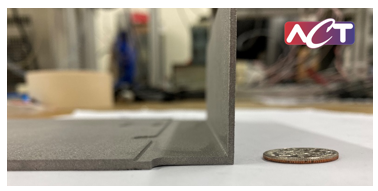
Pulsating Heat Pipes (PHPs), also called Oscillating Heat Pipes (OHPs), are passive two-phase heat transport devices that operate through self-excited oscillation of liquid slugs and vapor plugs within a sealed serpentine micro-channel, eliminating the wick structure required by conventional heat pipes. The absence of a wick structure enables extremely thin device profiles (under 3 mm […]
Technical specifications
- Wick structure
- None (wickless)
- Minimum device thickness
- < 3 mm
- Maximum transport distance
- > 1 m
- Compatible working fluids
- Ammonia, propylene, R245fa, acetone
About
Pulsating Heat Pipes (PHPs), also called Oscillating Heat Pipes (OHPs), are passive two-phase heat transport devices that operate through self-excited oscillation of liquid slugs and vapor plugs within a sealed serpentine micro-channel, eliminating the wick structure required by conventional heat pipes.
The absence of a wick structure enables extremely thin device profiles (under 3 mm thickness), removes the capillary limit on heat transport, and allows use of a broader range of working fluids including ammonia, propylene, R245fa, and acetone. PHPs can span more than one meter for long-distance heat transport. ACT has developed PHP solutions for board-to-chassis heat transport in embedded computing systems and LEO spacecraft panel cooling.
Documentation
No public datasheet yet — request the datasheet / ICD from the supplier.