TianSuan Project — Space Supercomputing Centers
 Zhongke Tiansuan (Comospace)
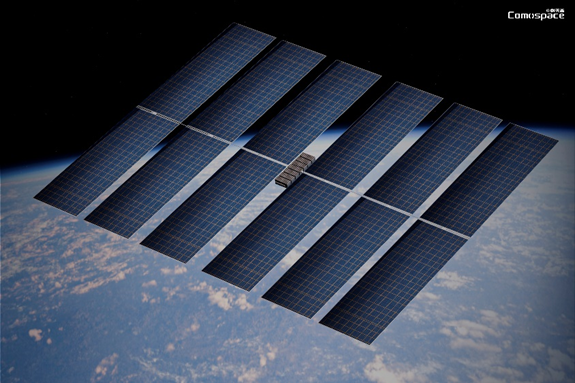
The TianSuan Project aims to establish modular space supercomputing centers in solar synchronous orbit to provide high-performance computing services in space, addressing the growing demand for in-orbit data processing and AI capabilities.
Technical specifications
- Launch year
- 2024
- Milestone
- First on-orbit inference of a space-based large language model
- Reported model size
- ~0.23B parameters (compressed/pruned)
About
The TianSuan Project (天算计划), led by Liu Yaoqi, CEO of Zhongke Tiansuan, is an ambitious initiative to deploy modular space supercomputing centers in solar synchronous orbit. This project seeks to overcome the limitations of terrestrial data centers for space-generated data by bringing large-scale AI computing capabilities directly into space. The rationale behind this move includes the need for faster processing of satellite data, reduced latency for real-time applications, and leveraging the abundant and continuous solar energy available in orbit. The project envisions a multi-phase development, starting with the breakthrough of key technologies like energy and heat dissipation, followed by the construction of initial computing constellations, and eventually large-scale space data centers through in-orbit assembly and mass production of satellites. Challenges include the harsh space environment (radiation, vacuum, microgravity, extreme temperature differences) requiring high radiation resistance, fault-tolerant hardware/software designs, and long operational lifespans (5-15 years). Additionally, the project faces constraints in payload space, mass, power supply, and the high cost and limited availability of launch services. The project aims to evolve through stages of remote sensing intelligence, communication intelligence, and application intelligence, ultimately creating a space supercomputing platform that supports complex space applications and enables advanced functionalities like intelligent processing and decision-making for future satellites. The project has already conducted experiments with multi-card clusters for collaborative fault-tolerant computing and successfully deployed a Cambricon chip with 32 TOPS of computing power in space. More recently, a 0.23B large language model was deployed in space, enabling fluent dialogue interaction between space and ground.
Documentation
No public datasheet yet — request the datasheet / ICD from the supplier.