MICRO Dragsail
 Frond Space Systems
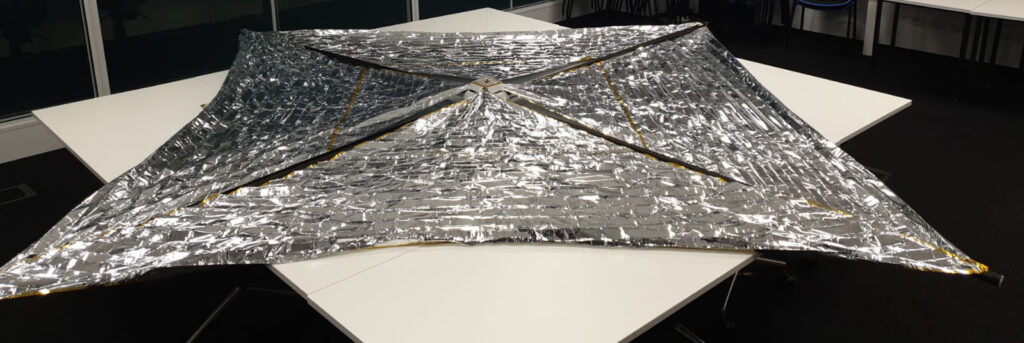
The MICRO Dragsail is a low-mass, configurable deorbiting system for microsatellites in LEO, featuring a 10m² deployed area to effectively deorbit 50-200kg satellites.
Typed specifications15 values
Discloses 3 of 10 fields engineers filter by in this category (category median 3).
- Propulsion family
- other drag sail (deorbit device) · datasheet p.1
- Mass
- 2 kg max · product page 1.6 kg max · <1.6kg | 50–200 kg
- Supply voltage
- 8–12 V activation, 1.6A, <60s duration · datasheet p.2
- Data interface
- CAN watchdog configurations · datasheet p.2 I2C watchdog configurations only | RS-422 watchdog configurations | CAN watchdog configurations only | I2C watchdog configurations +1
- Operating temperature
- -30 °C product page
- Thruster technology
- other drag sail, 10m2 deployed drag area · datasheet p.1
- Connector
- Micro D-sub (9-way) datasheet p.2
- Satellite class
- microsat 10-100 kg Microsats in rideshare or LEO constellation orbits · datasheet p.1
Each value is typed with its unit and measurement condition and cites the datasheet page it was taken from. Nothing is guessed: a field that is absent here has not been published by the manufacturer. machine-extracted ✓ checked by NewSpace Market ✓ manufacturer confirmed by the manufacturer.
As published by the supplier7 lines, in the manufacturer's own wording
- Mass
- <2 kg
- Deployed area
- 10m2
- Target satellite mass
- 50-200 kg
- Operational temperature range
- -30°C to +60°C
- Environmental qualification
- GEVS levels (14.1Grms)
- Supply voltage
- 8-12 V
- Interface
- I2C, CAN, RS-422
About
The MICRO Dragsail is an effective deorbiting solution for microsatellites operating in Low Earth Orbit (LEO). This system is designed to meet the growing need for responsible space operations, particularly in light of regulations like the US FCC policy requiring deorbiting within 5 years of end of mission. It offers a robust alternative to propulsion systems for deorbiting, especially in scenarios where spacecraft anomalies might compromise propulsion-based deorbiting. The dragsail is configurable to specific mission needs, offering options such as power line activation, an internal watchdog, self-contained batteries, and independent RF access. With a low mass of less than 2kg, it provides a 10m² deployed area, optimized for deorbiting 50-200kg satellites without adding unnecessary materials or mission complexity. The system is environmentally qualified to GEVS levels (14.1Grms) and operates within a temperature range of -30°C to +60°C, requiring minimal spacecraft interfaces. The design accounts for random tumbling conditions of the spacecraft to ensure compliance in worst-case scenarios, with any aero-stabilization or attitude control during operation being an added benefit. Frond offers a free, non-obligation pre-purchase assessment to help determine if the product is suitable for a given mission.
Documentation
Need the full ICD, test reports or a specific revision? Ask the supplier directly.