Spacecraft Propulsion Systems
 IHI Aerospace
IHI Aerospace's spacecraft propulsion product line, encompassing bipropellant, monopropellant, cold-gas and electric propulsion systems, thrusters, tanks and launch vehicle RCS, in development since 1964.
Typed specifications3 values
Discloses 1 of 11 fields engineers filter by in this category (category median 3).
- Propellant
- hydrazine product page NTO (N2O4 or MON) | MMH
Each value is typed with its unit and measurement condition and cites the datasheet page it was taken from. Nothing is guessed: a field that is absent here has not been published by the manufacturer. machine-extracted ✓ checked by NewSpace Market ✓ manufacturer confirmed by the manufacturer.
As published by the supplier70 lines, in the manufacturer's own wording
- Bipropellant system - unar-a
- Launch: cancelled; Orbit: Lunar orbit; Propellant Load: N2H4 143 kg, NTO 49 kg; Thrusters: 500N main engine, 20N x 6, 1N x 4
- Bipropellant system - ets-vi
- Launch: 1994; Orbit: GEO; Propellant Load: N2H4 910 kg, NTO 825 kg; Thrusters: 1700N main engine, 50N x 4
- Bipropellant system - j-i eve
- Launch: 1996; Orbit: Launcher; Propellant Load: N2H4 126 kg, NTO 120 kg; Thrusters: 3600N main engine
- Bipropellant system - comets
- Launch: 1998; Orbit: GEO; Propellant Load: N2H4 1030 kg, MON3 840 kg; Thrusters: 1700N main engine, 50N x 4, 1N x 16
- Bipropellant system - drts
- Launch: 2002; Orbit: GEO; Propellant Load: N2H4 973 kg, MON3 641 kg; Thrusters: 500N LAE, 20N x 8, 1N x 16
- Bipropellant system - ets-viii
- Launch: 2006; Orbit: GEO; Propellant Load: MMH 1120 kg, MON3 1849 kg; Thrusters: 500N LAE, 22N x 12
- Bipropellant system - selene
- Launch: 2007; Orbit: Lunar orbit; Propellant Load: N2H4 960 kg, MON3 355 kg; Thrusters: 500N LAE, 20N x 12, 1N x 8
- Bipropellant system - winds
- Launch: 2007; Orbit: GEO; Propellant Load: N2H4 1460 kg, MON3 1067 kg; Thrusters: 500N LAE, 20N x 8, 4N x 16
- Bipropellant system - htv
- Launch: 2009~2020; Orbit: ISS orbit; Propellant Load: MMH 918 kg, MON3 1514 kg; Thrusters: 500N main engine x 4, 120N x 28
- Bipropellant system - htv-x
- Launch: 2025- (TBD); Orbit: ISS orbit; Propellant Load: MMH 981 kg, MON3 1619 kg; Thrusters: 120N x 24
- Bipropellant system - mmx (outbound)
- Launch: 2026 (TBD); Orbit: Martian moon; Propellant Load: N2H4 916 kg, MON3 858 kg; Thrusters: 450N x 4
- Bipropellant system - mmx (inbound)
- Launch: 2026 (TBD); Orbit: Martian moon; Propellant Load: N2H4 607 kg, MON3 531 kg; Thrusters: 450N x 2, 22N x 20
- Monopropellant system - ets-iv
- Launch: 1981; Propellant Load: 64 kg; Thruster: 18N x 2
- Monopropellant system - ets-iii
- Launch: 1982; Propellant Load: 18 kg; Thruster: 1N x 12
- Monopropellant system - mos-1
- Launch: 1987; Propellant Load: 18 kg; Thruster: 1N x 14
- Monopropellant system - ets-v
- Launch: 1987; Propellant Load: 113 kg; Thruster: 20N x 2, 1N x 16
- Monopropellant system - cs-3 series
- Launch: 1988; Propellant Load: 118 kg; Thruster: 20N x 4
- Monopropellant system - mos-1b
- Launch: 1990; Propellant Load: 14 kg; Thruster: 1N x 14
- Monopropellant system - jers-1
- Launch: 1992; Propellant Load: 115 kg; Thruster: 1N x 22
- Monopropellant system - ets-vi
- Launch: 1994; Propellant Load: 115 kg; Thruster: 1N x 16
- Monopropellant system - adeos series
- Launch: 1996-; Propellant Load: 170 kg; Thruster: 20N x 4, 1N x 16
- Monopropellant system - ets-vii
- Launch: 1997; Propellant Load: 440 kg; Thruster: 20N x 28, 1N x 12
- Monopropellant system - mds-1
- Launch: 2002; Propellant Load: 24 kg; Thruster: 1N x 4
- Monopropellant system - oicets
- Launch: 2005; Propellant Load: 40 kg; Thruster: 1N x 8
- Monopropellant system - alos
- Launch: 2006; Propellant Load: 170 kg; Thruster: 4N x 4, 1N x 16
- Monopropellant system - gosat
- Launch: 2008; Propellant Load: 115 kg; Thruster: 20N x 4, 1N x 8
- Monopropellant system - gcom series
- Launch: 2012-; Propellant Load: 260 kg; Thruster: 4N x 12
- Monopropellant system - asnaro series
- Launch: 2014-; Propellant Load: 40 kg; Thruster: 4N x 4
- Monopropellant system - government program
- Launch: 2024-; Propellant Load: -; Thruster: 4N x 8
- Launch vehicle rcs - n-i
- Launch Year: 1975-1982; Thruster Configuration: 18N x 12
- Launch vehicle rcs - n-ii
- Launch Year: 1981-1987; Thruster Configuration: 18N x 12
- Launch vehicle rcs - h-i
- Launch Year: 1986-1992; Thruster Configuration: 18N x 12
- Launch vehicle rcs - h-ii
- Launch Year: 1994-1999; Thruster Configuration: 50N x 8, 18N x 2
- Launch vehicle rcs - h-iia
- Launch Year: 2001-; Thruster Configuration: 50N x 8
- Launch vehicle rcs - h-iib
- Launch Year: 2009-2020; Thruster Configuration: 50N x 8
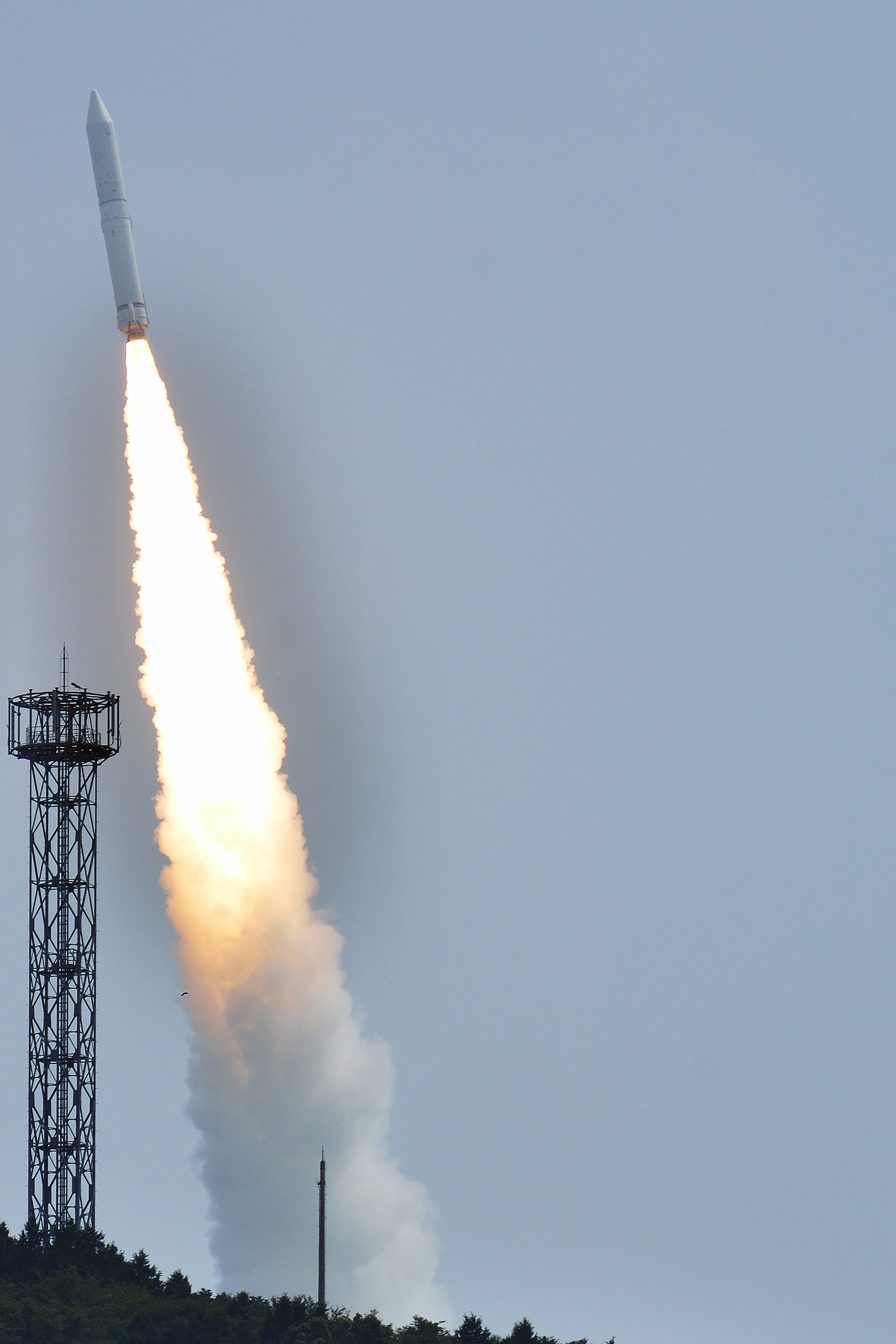
- Launch vehicle rcs - epsilon (Post Boost Stage)
- Launch Year: 2013-; Thruster Configuration: 50N x 8
- Launch vehicle rcs - h3
- Launch Year: 2023-; Thruster Configuration: 50N x 8
- Launch vehicle rcs - kairos (Payload Acceleration Module)
- Launch Year: 2024-; Thruster Configuration: 20 N x 8
- Cold gas system - hyflex
- Launch Year: 1996; Propellant: GN2; Thruster Configuration: 40N x 6
- Cold gas system - ets-vii
- Launch Year: 1997; Propellant: GN2; Thruster Configuration: 20N x 28, 1N x 12
- Cold gas system - dash
- Launch Year: 2002; Propellant: GN2; Thruster Configuration: 1N x 1
- Cold gas system - ikaros
- Launch Year: 2010; Propellant: HFC-134a; Thruster Configuration: 1N x 8
- Cold gas system - ss-520 series
- Launch Year: 1998-; Propellant: GN2; Thruster Configuration: 23N x 1-4
- Bipropellant thruster bt-4
- Propellant: Hydrazine/NTO; Thrust: 450 N; Isp: 326s; Inlet pressure: F >1.69 MPa, O >1.62 MPa; Demonstrated life: 32850s; Throughput: -; Status: Flight proven
- Bipropellant thruster bt-6
- Propellant: Hydrazine/NTO; Thrust: 21.5 N; Isp: 295s; Inlet pressure: 1.69 MPa; Demonstrated life: -; Throughput: 583 kg; Status: Flight proven
- Bipropellant thruster hbt-5
- Propellant: MMH/MON3; Thrust: 478 N; Isp: 316s; Inlet pressure: 1.72 MPa; Demonstrated life: 15000s; Throughput: -; Status: Flight proven
- Bipropellant thruster hbt-1
- Propellant: MMH/MON3; Thrust: 124.4 N; Isp: 274.9s; Inlet pressure: 2.05 MPa; Demonstrated life: 40000s; Throughput: 446 kg; Status: Flight proven
- Monopropellant thruster mt-9
- Thrust: 0.29-1.13N; Isp: 208-215s; Number of pulses: >850,000; Throughput: >100 kg; Status: Flight proven
- Monopropellant thruster mt-8a
- Thrust: 1.80-5.01N; Isp: 212-225s; Number of pulses: >850,000; Throughput: >190 kg; Status: Flight proven
- Monopropellant thruster mt-2
- Thrust: 6.9-19.6N; Isp: 210-226s; Number of pulses: >261,914; Throughput: >115 kg; Status: Flight proven
- Monopropellant thruster mt-2b
- Thrust: 24.5 N; Isp: >211s; Number of pulses: >7500; Throughput: >15 kg; Status: Qualified
- Monopropellant thruster mt-6
- Thrust: 23-50N; Isp: 215-225s; Number of pulses: >14,800; Throughput: >120 kg; Status: Flight proven
- Monopropellant thruster mt-6a
- Thrust: 50 N; Isp: 225s; Number of pulses: >14,000; Throughput: >107 kg; Status: Flight proven
- Propellant tank - 3l
- Size: 182 ID Sphere; Internal device: Diaphragm; Mount type: Boss; Status: Flight proven
- Propellant tank - 37l
- Size: 420 ID Sphere; Internal device: Diaphragm; Mount type: 3 Tabs (Lugs); Status: Flight proven
- Propellant tank - 37l (b)
- Size: 420 ID Sphere; Internal device: Diaphragm; Mount type: Pedestal; Status: Flight proven
- Propellant tank - 67l
- Size: 420 ID x 750 length; Internal device: Diaphragm; Mount type: Pedestal; Status: Flight proven
- Propellant tank - 74l
- Size: 420 ID x 754 length; Internal device: Diaphragm; Mount type: 4 Tabs (Lugs); Status: Flight proven
- Propellant tank - 74l (b)
- Size: 570 ID x 500 length; Internal device: Diaphragm; Mount type: 4 Tabs (Lugs); Status: Qualified
- Propellant tank - 141l
- Size: 650 ID Sphere; Internal device: Diaphragm; Mount type: 3 Tabs (Lugs); Status: Flight proven
- Propellant tank - 169l
- Size: 650 ID x 750 length; Internal device: Diaphragm; Mount type: 3 Tabs (Lugs); Status: Qualified
- Propellant tank - 427l
- Size: 820 ID x 1087 length; Internal device: Channel mesh; Mount type: 4 Tabs (Lugs); Status: Flight proven
- Propellant tank - 552l
- Size: 1020 ID Sphere; Internal device: Channel mesh; Mount type: 4 Tabs (Lugs); Status: Flight proven
- Propellant tank - 726l
- Size: 1020 ID x 1316 length; Internal device: Channel mesh; Mount type: 4 Tabs (Lugs); Status: Qualified
- Propellant tank internal devices
- Diaphragm (SiO2-free diaphragm under development); Surface tension channel mesh
- High power hall thruster - 6kw BOL
- Propellant: Xe; Electrical Power: 6 kW; Thrust Level: >359 mN@BOL; Isp: >1783s@BOL; Status: Qualified
- High power hall thruster - 6kw mol
- Propellant: Xe; Electrical Power: 6 kW; Thrust Level: >330 mN@MOL; Isp: >1712s@MOL; Status: Qualified
- High power hall thruster - 4kw BOL
- Propellant: Xe; Electrical Power: 4 kW; Thrust Level: >230 mN@BOL; Isp: >1673s@BOL; Status: Qualified
- High power hall thruster - 4kw mol
- Propellant: Xe; Electrical Power: 4 kW; Thrust Level: >219 mN@MOL; Isp: >1589s@MOL; Status: Qualified
- High power hall thruster - 4kw EOL
- Propellant: Xe; Electrical Power: 4 kW; Thrust Level: >212 mN@EOL; Isp: >1539s@EOL; Status: Qualified
About
IHI Aerospace (IA) is Japan’s leading manufacturer of spacecraft propulsion systems, developing and manufacturing propulsion hardware since 1964. The product line covers monopropellant, cold-gas, bipropellant and electric propulsion systems that are flight qualified for satellites and rockets, having flown on a wide range of missions for over 40 years, with more than 100 propulsion systems and their thrusters and tanks built. Applications include orbit control and reaction control of spacecraft (including H-II Transfer Vehicles, HTV), reaction control of launch vehicles, and control for re-entry capsules.
Bipropellant Propulsion Systems use hydrazine (N2H4) and mixed oxides of nitrogen (MON3), developed since the 1980s, combining a bipropellant apogee engine with monopropellant thrusters for reaction control; MMH/MON3 variants have also been developed, including the HTV propulsion system with four main thrusters meeting ISS safety requirements. Flown on programs including ETS-VI, J-I EVE, COMETS, DRTS, ETS-VIII, SELENE, WINDS, HTV, HTV-X, and the MMX outbound/inbound modules.
Monopropellant Propulsion Systems use hydrazine and have been produced since the 1960s, delivered on over 50 years of missions (ETS-III/IV/V, MOS-1/1b, CS-3, JERS-1, ADEOS, ETS-VII, MDS-1, OICETS, ALOS, GOSAT, GCOM, ASNARO, and a 2024 government program) using a wide range of IA-developed tanks and thrusters.
Launch Vehicle RCS: reaction control systems developed for over 50 years, flown on Japan’s flagship launchers N-I, N-II, H-I, H-II, H-IIA, H-IIB, Epsilon (Post Boost Stage), H3, and KAIROS (Payload Acceleration Module).
Cold Gas Propulsion Systems: developed for small satellites needing lower delta-V and for sounding rockets; the simplified system reduces cost of handling, propellant loading and transportation, and a liquefied-gas variant reduces tank volume. Flown on HYFLEX, ETS-VII, DASH, IKAROS, and the SS-520 series.
Bipropellant Thrusters: over 400 delivered since the 1980s, including 450N and 22N thrusters (hydrazine/MON3) developed in 2001 for geostationary satellites, with the 450N thruster widely used by US satellite manufacturers; the first bipropellant thruster was a 1700N N2H4/MON apogee engine delivered in the 1980s; 490N and 120N MMH/MON thrusters were developed for HTV. Models: BT-4, BT-6, HBT-5, HBT-1, all flight proven.
Monopropellant Thrusters: over 1,100 hydrazine monopropellant thrusters launched since the 1960s, thrust ranging 1N to 50N. Models: MT-9, MT-8A, MT-2, MT-2B (qualified), MT-6, MT-6A.
Propellant Tanks: propellant and pressurant tanks developed since 1964, over 200 launched and successfully operated, covering 3 to 726 liters, using diaphragm or surface-tension channel-mesh propellant management devices (PMDs); a SiO2-free diaphragm is under development.
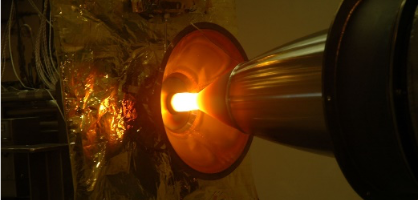
Electric Propulsion Thrusters: designed and manufactured since 1983; currently developing high-power Hall Thrusters for all-electric satellites, with qualified 6kW and 4kW variants.
Launch Site Support / Testing Capabilities: IHI Aerospace provides propellant loading and testing support after delivery, and manufacturing/testing facilities include a firing test stand for apogee engines, a firing test stand for small thrusters with three vacuum chambers, and a stage firing test stand (sea level).
Documentation
No public datasheet yet — request the datasheet / ICD from the supplier.