Spacecraft Propulsion Products
 IHI Aerospace
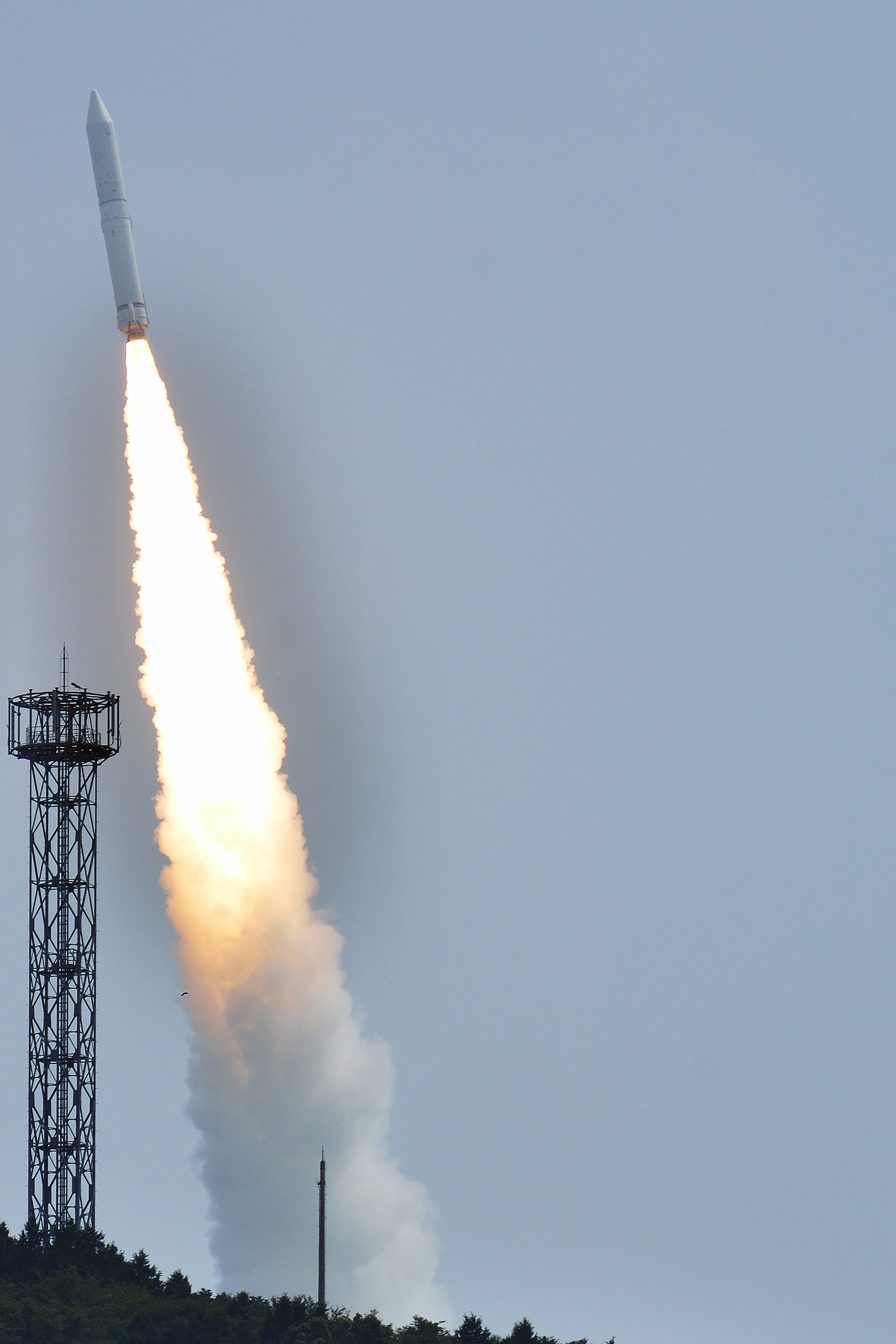
IHI Aerospace's family of monopropellant, bipropellant, cold-gas and electric (Hall-effect) propulsion systems, thrusters and propellant tanks for satellites, transfer vehicles and launch vehicle reaction control, flown since 1964.
Typed specifications3 values
Discloses 1 of 10 fields engineers filter by in this category (category median 3).
- Propellant
- hydrazine product page NTO (N2O4 or MON) | MMH
Each value is typed with its unit and measurement condition and cites the datasheet page it was taken from. Nothing is guessed: a field that is absent here has not been published by the manufacturer. machine-extracted ✓ checked by NewSpace Market ✓ manufacturer confirmed by the manufacturer.
As published by the supplier70 lines, in the manufacturer's own wording
- Bipropellant system – unar-a
- Launch: cancelled; Orbit: Lunar orbit; Propellant load: N2H4 143 kg, NTO 49 kg; Thrusters: 500N main engine, 20N x6, 1N x4
- Bipropellant system – ets-vi
- Launch: 1994; Orbit: GEO; Propellant load: N2H4 910 kg, NTO 825 kg; Thrusters: 1700N main engine, 50N x4
- Bipropellant system – j-i eve
- Launch: 1996; Orbit: Launcher; Propellant load: N2H4 126 kg, NTO 120 kg; Thrusters: 3600N main engine
- Bipropellant system – comets
- Launch: 1998; Orbit: GEO; Propellant load: N2H4 1030 kg, MON3 840 kg; Thrusters: 1700N main engine, 50N x4, 1N x16
- Bipropellant system – drts
- Launch: 2002; Orbit: GEO; Propellant load: N2H4 973 kg, MON3 641 kg; Thrusters: 500N LAE, 20N x8, 1N x16
- Bipropellant system – ets-viii
- Launch: 2006; Orbit: GEO; Propellant load: MMH 1120 kg, MON3 1849 kg; Thrusters: 500N LAE, 22N x12
- Bipropellant system – selene
- Launch: 2007; Orbit: Lunar orbit; Propellant load: N2H4 960 kg, MON3 355 kg; Thrusters: 500N LAE, 20N x12, 1N x8
- Bipropellant system – winds
- Launch: 2007; Orbit: GEO; Propellant load: N2H4 1460 kg, MON3 1067 kg; Thrusters: 500N LAE, 20N x8, 4N x16
- Bipropellant system – htv
- Launch: 2009~2020; Orbit: ISS orbit; Propellant load: MMH 918 kg, MON3 1514 kg; Thrusters: 500N main engine x4, 120N x28
- Bipropellant system – htv-x
- Launch: 2025- (TBD); Orbit: ISS orbit; Propellant load: MMH 981 kg, MON3 1619 kg; Thrusters: 120N x24
- Bipropellant system – mmx (outbound)
- Launch: 2026 (TBD); Orbit: Martian moon; Propellant load: N2H4 916 kg, MON3 858 kg; Thrusters: 450N x4
- Bipropellant system – mmx (inbound)
- Launch: 2026 (TBD); Orbit: Martian moon; Propellant load: N2H4 607 kg, MON3 531 kg; Thrusters: 450N x2, 22N x20
- Monopropellant system – ets-iv
- Launch: 1981; Propellant load: 64 kg; Thruster: 18N x2
- Monopropellant system – ets-iii
- Launch: 1982; Propellant load: 18 kg; Thruster: 1N x12
- Monopropellant system – mos-1
- Launch: 1987; Propellant load: 18 kg; Thruster: 1N x14
- Monopropellant system – ets-v
- Launch: 1987; Propellant load: 113 kg; Thruster: 20N x2, 1N x16
- Monopropellant system – cs-3 series
- Launch: 1988; Propellant load: 118 kg; Thruster: 20N x4
- Monopropellant system – mos-1b
- Launch: 1990; Propellant load: 14 kg; Thruster: 1N x14
- Monopropellant system – jers-1
- Launch: 1992; Propellant load: 115 kg; Thruster: 1N x22
- Monopropellant system – ets-vi
- Launch: 1994; Propellant load: 115 kg; Thruster: 1N x16
- Monopropellant system – adeos series
- Launch: 1996-; Propellant load: 170 kg; Thruster: 20N x4, 1N x16
- Monopropellant system – ets-vii
- Launch: 1997; Propellant load: 440 kg; Thruster: 20N x28, 1N x12
- Monopropellant system – mds-1
- Launch: 2002; Propellant load: 24 kg; Thruster: 1N x4
- Monopropellant system – oicets
- Launch: 2005; Propellant load: 40 kg; Thruster: 1N x8
- Monopropellant system – alos
- Launch: 2006; Propellant load: 170 kg; Thruster: 4N x4, 1N x16
- Monopropellant system – gosat
- Launch: 2008; Propellant load: 115 kg; Thruster: 20N x4, 1N x8
- Monopropellant system – gcom series
- Launch: 2012-; Propellant load: 260 kg; Thruster: 4N x12
- Monopropellant system – asnaro series
- Launch: 2014-; Propellant load: 40 kg; Thruster: 4N x4
- Monopropellant system – government program
- Launch: 2024-; Propellant load: -; Thruster: 4N x8
- Launch vehicle rcs – n-i
- Launch years: 1975-1982; Thruster configuration: 18N x12
- Launch vehicle rcs – n-ii
- Launch years: 1981-1987; Thruster configuration: 18N x12
- Launch vehicle rcs – h-i
- Launch years: 1986-1992; Thruster configuration: 18N x12
- Launch vehicle rcs – h-ii
- Launch years: 1994-1999; Thruster configuration: 50N x8, 18N x2
- Launch vehicle rcs – h-iia
- Launch years: 2001-; Thruster configuration: 50N x8
- Launch vehicle rcs – h-iib
- Launch years: 2009-2020; Thruster configuration: 50N x8
- Launch vehicle rcs – epsilon (Post Boost Stage)
- Launch years: 2013-; Thruster configuration: 50N x8
- Launch vehicle rcs – h3
- Launch years: 2023-; Thruster configuration: 50N x8
- Launch vehicle rcs – kairos (Payload Acceleration Module)
- Launch years: 2024-; Thruster configuration: 20 N x8
- Cold gas system – hyflex
- Launch: 1996; Propellant: GN2; Thruster configuration: 40N x6
- Cold gas system – ets-vii
- Launch: 1997; Propellant: GN2; Thruster configuration: 20N x28, 1N x12
- Cold gas system – dash
- Launch: 2002; Propellant: GN2; Thruster configuration: 1N x1
- Cold gas system – ikaros
- Launch: 2010; Propellant: HFC-134a; Thruster configuration: 1N x8
- Cold gas system – ss-520 series
- Launch: 1998-; Propellant: GN2; Thruster configuration: 23N x1-4
- Bipropellant thruster – bt-4
- Propellant: Hydrazine/NTO; Thrust: 450 N; Isp: 326s; Inlet pressure: F >1.69 MPa, O >1.62 MPa; Demonstrated life: 32850s; Throughput: -; Status: Flight proven
- Bipropellant thruster – bt-6
- Propellant: Hydrazine/NTO; Thrust: 21.5 N; Isp: 295s; Inlet pressure: 1.69 MPa; Demonstrated life: -; Throughput: 583 kg; Status: Flight proven
- Bipropellant thruster – hbt-5
- Propellant: MMH/MON3; Thrust: 478 N; Isp: 316s; Inlet pressure: 1.72 MPa; Demonstrated life: 15000s; Throughput: -; Status: Flight proven
- Bipropellant thruster – hbt-1
- Propellant: MMH/MON3; Thrust: 124.4 N; Isp: 274.9s; Inlet pressure: 2.05 MPa; Demonstrated life: 40000s; Throughput: 446 kg; Status: Flight proven
- Monopropellant thruster – mt-9
- Thrust: 0.29-1.13N; Isp: 208-215s; Number of pulses: >850,000; Throughput: >100 kg; Status: Flight proven
- Monopropellant thruster – mt-8a
- Thrust: 1.80-5.01N; Isp: 212-225s; Number of pulses: >850,000; Throughput: >190 kg; Status: Flight proven
- Monopropellant thruster – mt-2
- Thrust: 6.9-19.6N; Isp: 210-226s; Number of pulses: >261,914; Throughput: >115 kg; Status: Flight proven
- Monopropellant thruster – mt-2b
- Thrust: 24.5 N; Isp: >211s; Number of pulses: >7500; Throughput: >15 kg; Status: Qualified
- Monopropellant thruster – mt-6
- Thrust: 23-50N; Isp: 215-225s; Number of pulses: >14,800; Throughput: >120 kg; Status: Flight proven
- Monopropellant thruster – mt-6a
- Thrust: 50 N; Isp: 225s; Number of pulses: >14,000; Throughput: >107 kg; Status: Flight proven
- Propellant tank – 3l
- Size: 182 ID Sphere; Internal device: Diaphragm; Mount type: Boss; Status: Flight proven
- Propellant tank – 37l (Tabs)
- Size: 420 ID Sphere; Internal device: Diaphragm; Mount type: 3 Tabs (Lugs); Status: Flight proven
- Propellant tank – 37l (Pedestal)
- Size: 420 ID Sphere; Internal device: Diaphragm; Mount type: Pedestal; Status: Flight proven
- Propellant tank – 67l
- Size: 420 ID x750 length; Internal device: Diaphragm; Mount type: Pedestal; Status: Flight proven
- Propellant tank – 74l (420 ID)
- Size: 420 ID x754 length; Internal device: Diaphragm; Mount type: 4 Tabs (Lugs); Status: Flight proven
- Propellant tank – 74l (570 ID)
- Size: 570 ID x500 length; Internal device: Diaphragm; Mount type: 4 Tabs (Lugs); Status: Qualified
- Propellant tank – 141l
- Size: 650 ID Sphere; Internal device: Diaphragm; Mount type: 3 Tabs (Lugs); Status: Flight proven
- Propellant tank – 169l
- Size: 650 ID x750 length; Internal device: Diaphragm; Mount type: 3 Tabs (Lugs); Status: Qualified
- Propellant tank – 427l
- Size: 820 ID x1087 length; Internal device: Channel mesh; Mount type: 4 Tabs (Lugs); Status: Flight proven
- Propellant tank – 552l
- Size: 1020 ID Sphere; Internal device: Channel mesh; Mount type: 4 Tabs (Lugs); Status: Flight proven
- Propellant tank – 726l
- Size: 1020 ID x1316 length; Internal device: Channel mesh; Mount type: 4 Tabs (Lugs); Status: Qualified
- Propellant tank internal devices
- Diaphragm (SiO2-free diaphragm under development); Surface tension channel mesh
- High power hall thruster – 6kw BOL
- Propellant: Xe; Electrical power: 6 kW; Thrust: >359 mN@BOL; Isp: >1783s@BOL; Status: Qualified
- High power hall thruster – 6kw mol
- Propellant: Xe; Electrical power: 6 kW; Thrust: >330 mN@MOL; Isp: >1712s@MOL; Status: Qualified
- High power hall thruster – 4kw BOL
- Propellant: Xe; Electrical power: 4 kW; Thrust: >230 mN@BOL; Isp: >1673s@BOL; Status: Qualified
- High power hall thruster – 4kw mol
- Propellant: Xe; Electrical power: 4 kW; Thrust: >219 mN@MOL; Isp: >1589s@MOL; Status: Qualified
- High power hall thruster – 4kw EOL
- Propellant: Xe; Electrical power: 4 kW; Thrust: >212 mN@EOL; Isp: >1539s@EOL; Status: Qualified
About
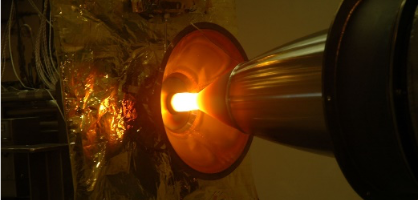
IHI Aerospace (IA) is Japan’s leading manufacturer of spacecraft propulsion systems, developing and manufacturing propulsion hardware since 1964, with over 100 complete propulsion systems built along with their thrusters and tanks. Systems have been used for orbit control and reaction control of spacecraft including the H-II Transfer Vehicle (HTV), reaction control of launch vehicles, and control for re-entry capsules. The product line spans: (1) Bipropellant Propulsion Systems using hydrazine N2H4 and mixed oxides of nitrogen (MON3/NTO), or MMH/MON3, combining a bipropellant apogee engine with monopropellant reaction-control thrusters; the MMH/MON3 system flown on HTV uses four main thrusters and meets ISS safety requirements, and has flown on programs from UNAR-A (cancelled) and ETS-VI (1994) through HTV-X and the MMX Martian-moon sample-return mission (2026, TBD). (2) Monopropellant hydrazine Propulsion Systems, developed since the 1960s and delivered for over 50 years, using IA-developed propellant tanks and thrusters, flown on ETS, MOS, CS-3, JERS-1, ADEOS, ALOS, GOSAT, GCOM and ASNARO series satellites among others. (3) Launch vehicle Reaction Control Systems (RCS), developed for over 50 years and flown on N-I, N-II, H-I, H-II, H-IIA, H-IIB, Epsilon, H3 and KAIROS launch vehicles. (4) Cold-gas propulsion systems for small satellites and sounding rockets requiring lower delta-V, offering a simplified system that reduces handling, propellant loading and transportation costs; a liquefied-gas variant reduces tank volume; flown on HYFLEX, ETS-VII, DASH, IKAROS and the SS-520 series. (5) Bipropellant Thrusters: over 400 units manufactured and delivered since the 1980s, including 450N and 22N hydrazine/MON3 thrusters for geostationary satellites (2001) with the 450N thruster widely used by US satellite manufacturers, a 1700N N2H4/MON apogee engine first delivered in the 1980s, and 490N/120N MMH/MON thrusters developed for HTV; described as stable over a wide operational range and reasonably priced. (6) Monopropellant Thrusters: over 1,100 hydrazine thrusters launched since the 1960s, thrust range 1N to 50N. (7) Propellant Tanks and pressurant tanks developed since 1964, over 200 launched and successfully operated, spanning 3 to 726 liters, using diaphragm (with a SiO2-free diaphragm under development) or surface-tension channel-mesh propellant management devices (PMDs). (8) Electric Propulsion Thrusters: IA has designed, developed and manufactured several types of electric thrusters since 1983 and is currently developing high-power Hall thrusters for all-electric satellites. IHI Aerospace also provides launch site support for propellant loading and testing, and operates manufacturing/testing facilities including a firing test stand for apogee engines, a firing test stand for small thrusters with 3 vacuum chambers, and a sea-level stage firing test stand.
Documentation
No public datasheet yet — request the datasheet / ICD from the supplier.