Infrared (IR) Earth Horizon Sensor
 CubeSpace ADCS
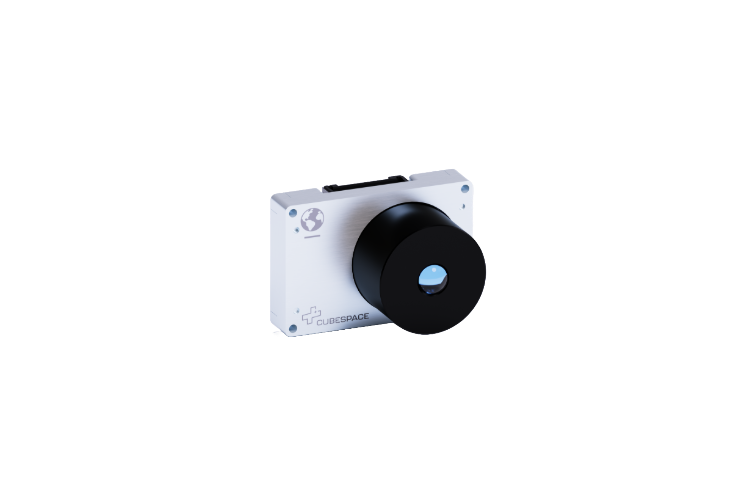
The CubeSense Earth is a compact and reliable infrared earth horizon sensor providing high-accuracy nadir determination for satellite control, especially in eclipse, without needing a star tracker.
Typed specifications9 values
Discloses 2 of 8 fields engineers filter by in this category (category median 4).
- Mass
- 18 g product page
- Envelope (L×W×H)
- 35x24x20 mm product page
- Field of view
- 90 ° product page 90 °
- Supply voltage
- 3.3 V product page
- Power consumption
- 0.28 W product page 0.2 W
- Radiation tolerance (TID)
- 24 krad product page
- Connector
- Molex Pico-Lock Plus product page
Each value is typed with its unit and measurement condition and cites the datasheet page it was taken from. Nothing is guessed: a field that is absent here has not been published by the manufacturer. machine-extracted ✓ checked by NewSpace Market ✓ manufacturer confirmed by the manufacturer.
As published by the supplier17 lines, in the manufacturer's own wording
- Accuracy (*)
- 1° (roll and elevation) 3-sigma
- Max slew rate (°/s)
- 14
- Mass
- 18 g
- Dimensions [wxhxl]
- 35x24x20 mm
- Detection field of view [°] (Horizontal/vertical)
- 90/80
- Detection field of view [°] (Diagonal)
- 90
- Data bus*
- CAN/UART/RS-485 **I2C available for custom solutions
- Connector
- Molex Pico-Lock Plus
- Update rate
- Up to 2 Hz
- Supply voltage
- 3.3 V
- Peak power
- 280 mW
- Average power
- 200 mW
- Radiation
- 24 kRad
- Random vibration
- 14.16 g RMS (NASA GEVS)
- Thermal vacuum
- -20 to 80 °C
- Thermal cold and hot start
- -35 to 70 °C
- Design life
- 5+ Years
About
The CubeSense Earth is a compact and reliable infrared earth horizon sensor designed to provide high-accuracy nadir determination throughout the entire orbit. This capability is crucial for accurate satellite control during eclipse periods, offering a less expensive alternative to star trackers. Each unit undergoes rigorous verification using CubeSpace’s in-house infrared lens calibration and earth emulator jig. The sensor features an integrated processor to reduce the processing demand on the ADCS computer, a common node design, and shares electronic design and heritage across the Gen2 product range. It is qualified for space environments with specifications including 14.16 gRMS random vibration, 24 kRad radiation tolerance, and a lifetime of 5+ years. It supports various data buses like CAN, UART, and RS-485, with I2C available for custom solutions, and uses a Molex Pico-Lock Plus connector.
Documentation
No public datasheet yet — request the datasheet / ICD from the supplier.