RLV-T Series
 LinkSpace
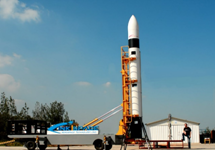
Family of VTVL (vertical take-off, vertical-landing) reusable rocket test vehicles used by LinkSpace to develop and validate its reusability technology.
Key figurescomparable across the catalogue
- Mass
- 1,500 kg
Normalised to common units so this product can be compared with others in its category. The supplier's own wording is below.
As published by the supplier
- Prototypes developed
- RLV-T1 - RLV-T5
- Test flights conducted
- 300+
- Wind tolerance for soft landing
- up to 10 m/s
- Engine thrust variability
- 20%-100% (variable thrust)
- Total engine ignition time
- 30,000+ seconds
- Rlv-t5 length
- 8.1 m
- Rlv-t5 mass
- 1.5 t
- Rlv-t5 engines
- 5 liquid engines
- Rlv-t5 highest test flight altitude
- 300 m (10 Aug 2019, ~50 s flight)
About
The RLV-T series is LinkSpace’s line of vertical take-off / vertical-landing (VTVL) technology demonstrator rockets. Over roughly four years the company developed five prototypes, RLV-T1 through RLV-T5, and conducted more than 300 test flights. Using the large volume of flight-test data gathered, LinkSpace repeatedly optimized its flight-control algorithm, giving the vehicles strong anti-interference performance and the ability to achieve accurate, soft, powered-descent landings even in strong wind conditions (up to 10 m/s).
Key engineering elements demonstrated on the RLV-T series include full rocket design and complex system integration by a team whose core members previously held key positions within China’s national (CASC) rocket industry and who have designed and developed six series of LinkSpace rockets; a pragmatic flight-test approach using a crane and safety hanger rig to test flight-control software while drastically reducing the risk and cost of a crash, allowing more extensive system testing; a variable-thrust, throttleable liquid-propellant rocket engine (20%-100% thrust range) with more than 30,000 seconds of accumulated ignition time — LinkSpace was the first Chinese commercial space company to supply liquid rocket engine products and design solutions to research institutes under CASC; and a flight-control algorithm based on applied neural networks, giving the system interoperability (knowledge from earlier rocket versions transfers to new rockets with minimal tuning) and high robustness (more reliable in disturbed conditions, with faster response and a wider operating envelope).
The RLV-T5 prototype (also referred to as ‘NewLine Baby’), 8.1 m long and about 1.5 t in mass with five liquid engines, made an untethered free flight on 27 March 2019 to 20 m altitude, a follow-up flight on 19 April 2019 to 40 m altitude, and a third flight on 10 August 2019 that reached 300 m altitude over a roughly 50-second flight with a precision powered vertical landing.
Documentation
No public datasheet yet — request the datasheet / ICD from the supplier.