PHI-1 SAT
 MBRSC
MBRSC
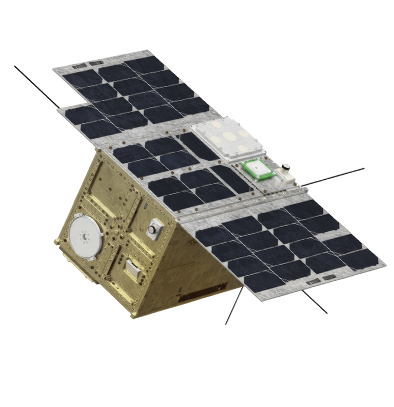
PHI-1 is a modular 12U CubeSat platform developed by MBRSC under the Payload Hosting Initiative (PHI) programme, in partnership with UNOOSA, to host innovative payloads and emerging space technologies.
Key figurescomparable across the catalogue
- Mass
- 20 kg
- Largest dimension
- 300 mm
Normalised to common units so this product can be compared with others in its category. The supplier's own wording is below.
As published by the supplier
- Launch date
- 11 November 2025
- Launch time
- 10:18 PM (UAE Time)
- Launch vehicle
- SpaceX Falcon 9
- Launch site
- Vandenberg Space Force Base, California, USA
- Orbit
- Low Earth Orbit (~500 km altitude)
- Mass
- Up to 20 kg
- Dimensions
- Approx. 20 × 20 × 30 cm (12U CubeSat configuration)
About
PHI-1 (Payload Hosting Initiative-1) is a modular satellite platform developed by MBRSC under the Payload Hosting Initiative (PHI) programme in partnership with the United Nations Office for Outer Space Affairs (UNOOSA) initiative ‘Access to Space for All’. This initiative provides a 12U CubeSat platform to host innovative payloads and emerging space technologies from around the world, promoting international collaboration and capacity-building in the space sector. PHI-1 has hosted payloads from Bahrain Space Agency (AMAN, a technology demonstration for Advanced Encryption Standard protocols) and Antarikchya Pratisthan Nepal (LoRa Satellite System, exploring LoRa communication technology in orbit). Additionally, MBRSC integrated its New-Space Earth observation video camera for technology demonstration, and Sharjah Space and Astronomy Hub contributed a PCB designed to measure temperature and orientation in space. By enabling payload hosting, PHI reduces cost, risk, and development timelines, allowing nations and entities to focus on their space innovations while gaining real-world experience and advancing their capabilities. The mission aims to open access to space for all by offering an inclusive platform for testing, collaboration, and innovation, enabling new players to contribute to the global space ecosystem. Its objectives include fostering innovation in the global space technology sector, sharing knowledge throughout all stages of satellite design, manufacturing, testing, and launch, and providing opportunities for countries and institutions to participate in a real space mission.
Documentation
No public datasheet yet — request the datasheet / ICD from the supplier.