H3 Launch Vehicle
 Mitsubishi Heavy Industries Launch Services
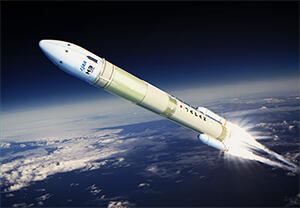
Japan's next-generation medium-heavy lift expendable launch vehicle, replacing H-IIA with lower cost and improved performance.
Key figurescomparable across the catalogue
- Mass
- 575,000 kg
- Payload capacity
- 6,500 kg
Normalised to common units so this product can be compared with others in its category. The supplier's own wording is below.
As published by the supplier
- Payload to GTO
- 6,500 kg (ΔV 1,500 m/s to GSO)
- Payload to SSO (500 km)
- 4,000 kg
- First stage engine
- LE-9 (LH2 / LOX, expander bleed cycle)
- Second stage engine
- LE-5B-3 (LH2 / LOX)
- Fairing diameter
- 5.4 m (large) / 4 m (medium)
- Height
- 63 m (long fairing) / 57 m (short fairing)
- Launch site
- Tanegashima Space Center, Japan
- First successful flight
- February 2024 (TF2)
- Gross mass
- H3-24L 575 t · H3-22L 420 t · H3-22S 419 t · H3-30S 270 t
About
H3 is Japan’s next-generation orbital launch vehicle, developed by JAXA and Mitsubishi Heavy Industries (MHI) to replace the H-IIA and provide Japan with a cost-competitive, reliable domestic launch capability for the 2020s and beyond. The vehicle significantly reduces launch costs compared to H-IIA while maintaining or improving payload capacity, targeting a launch price of approximately half that of H-IIA.
H3 uses the LE-9 engine on its first stage — a new expander bleed cycle engine burning liquid hydrogen and liquid oxygen — representing Japan’s first major new main engine since the LE-7A. The second stage uses the LE-5B-3, an evolution of the proven LE-5 engine family. The vehicle is available in three configurations differing in number of solid rocket boosters (SRB-3) and fairing size: H3-22 (two SRBs, 5.4 m fairing), H3-24 (four SRBs), and H3-30 (no SRBs).
H3’s first flight (TF-1) in March 2023 ended in failure after the second stage ignition system did not function correctly. The second flight (TF2) in February 2024 reached orbit with two small satellites and a vehicle evaluation payload; the third (F3), in July 2024, launched the DAICHI-4 (ALOS-4) Earth observation satellite. JAXA and MHI subsequently moved into routine operations.
H3 serves Japan’s domestic institutional satellites (Earth observation, technology demonstration, and communications) and is offered commercially by MHI Launch Services globally.
Documentation
No public datasheet yet — request the datasheet / ICD from the supplier.