On-board Memory Unit
 Glavkosmos
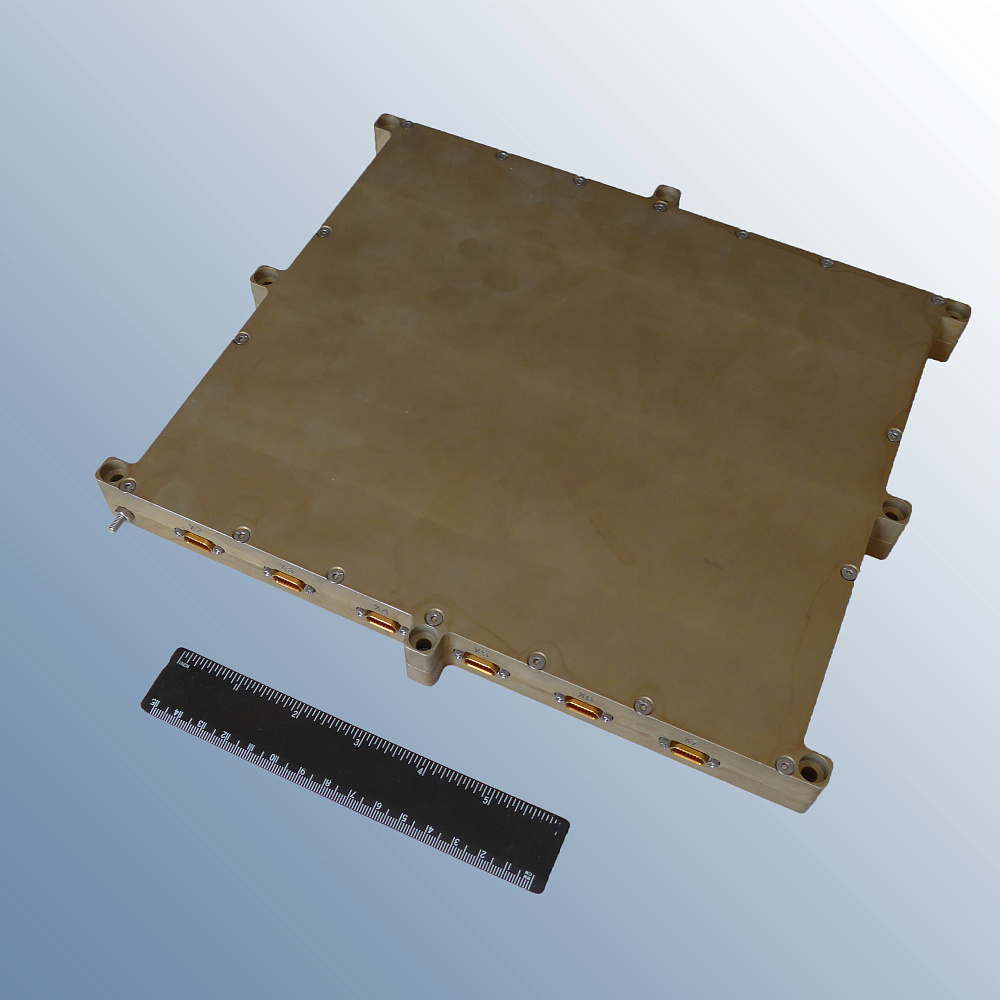
The On-board Memory Unit is a flight-qualified data storage solution for small satellites and secondary payloads on larger spacecraft, offering autonomous data handling and high throughput.
Key figurescomparable across the catalogue
- Mass
- 1.8 kg
- Power
- 12 W
- Data rate
- 1,200 Mbps
- Design life
- 7 years
- Lead time
- 12 months
Normalised to common units so this product can be compared with others in its category. The supplier's own wording is below.
As published by the supplier
- Purpose
- Small satellites on-board data handling subsystems. Autonomous storage for the secondary payloads of the large spacecraft.
- Year of release
- 2014
- Design life
- 7 years
- Lead time
- 12 months
- Flight qualification of the product
- Yes
- Brief history of flight qualification
- Scientific gear "Nucleon" on the SC "Resurs-P"; other ERS SC; analogue of a different design on the SC "Aist-2D".
- Possibility to adapt the product to customer requirements
- Yes
- Mass
- 1.8 kg
- Power consumption
- 12 W
- Read throughput
- 800 Mbps
- Storage capacity
- 128 / 512 GB
- Sustained write throughput
- 1.2 Gbps
- Data interface
- LVDS. Four ports with 4 pairs each
- Radiation at the component level
- >6 krad
About
The On-board Memory Unit is specifically designed to provide robust data storage capabilities for remote sensing satellite payloads. It serves as a crucial component for on-board data handling subsystems in small satellites and offers autonomous storage for secondary payloads integrated into larger spacecraft. The unit was released in 2014 and boasts a guaranteed service life of 7 years. It is flight-qualified, with a history of flight qualification on the scientific gear “Nucleon” aboard the SC “Resurs-P”, other Earth Remote Sensing (ERS) spacecraft, and an analogue of a different design on the SC “Aist-2D”. The product can be adapted to meet specific customer requirements. It features a storage capacity of 128 GB or 512 GB, a read throughput of 800 Mbps, and a sustained write throughput of 1.2 Gbps. Data interfacing is handled via LVDS with four ports, each comprising 4 pairs. The unit is designed to withstand radiation levels greater than 6 krad at the component level.
Documentation
No public datasheet yet — request the datasheet / ICD from the supplier.