RPS Suborbital Launch Vehicle
 Rocket Propulsion Systems (RPS)
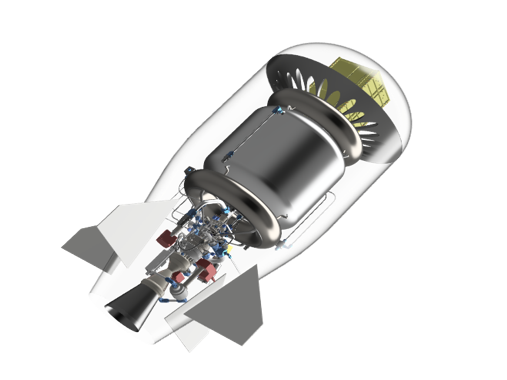
The RPS Suborbital Launch Vehicle is a single-stage, reusable, liquid-fueled, vertical takeoff rocket designed for suborbital flights for commercial, government, and defense applications.
Technical specifications
- Stages
- single-stage, VTVL
- Target apogee
- 50-100 km
- Prototype testing
- targeted 2026
About
The RPS Suborbital Launch Vehicle is a versatile system capable of reaching the edge of space (approximately 50 – 100 km). It is designed as a single-stage, reusable, liquid-fueled vehicle with vertical takeoff and landing capabilities. This suborbital rocket serves a variety of use cases, including commercial and government research, testing, and defense missions. It can be utilized for testing equipment, observing Earth’s surface, atmosphere, and outer space, and for rapid sensor deployment in surveillance and reconnaissance missions. A key defense application involves providing rapid response surveillance in scenarios where satellite constellations are compromised, enabling continuous intelligence gathering. The vehicle can operate in both guided and unguided mission profiles. In a guided mission, the rocket launches, ascends to about 100 km over a region of interest, performs surveillance, gathers intelligence, and then lands near the original launch location or another predetermined site. An unguided mission follows a similar trajectory but does not require recovery, making it suitable for regions where recovery is impractical.
Documentation
No public datasheet yet — request the datasheet / ICD from the supplier.