VILSA Software Defined Radio
 Anywaves
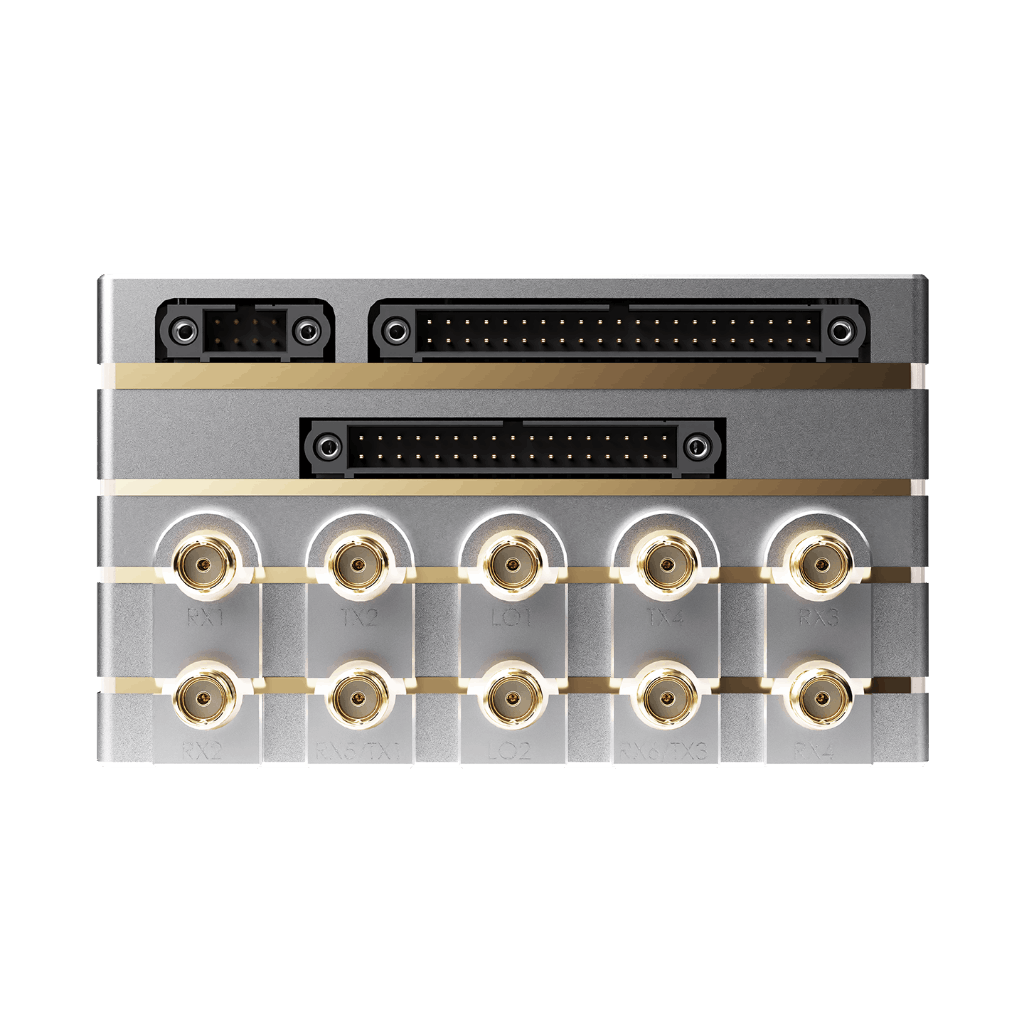
The VILSA SDR is a versatile, fully reconfigurable Software Defined Radio for space missions, combining a high-performance digital core with a multi-channel RF frontend in a ruggedized, radiation-tolerant enclosure.
Typed specifications2 values
Discloses 0 of 13 fields engineers filter by in this category (category median 5).
- Radiation tolerance (TID)
- 18 krad product page
- Flight heritage
- Based on previous-generation SDR with in-flight heritage (e.g., Juventas radar payload on ESA Hera mission) product page
Each value is typed with its unit and measurement condition and cites the datasheet page it was taken from. Nothing is guessed: a field that is absent here has not been published by the manufacturer. machine-extracted ✓ checked by NewSpace Market ✓ manufacturer confirmed by the manufacturer.
As published by the supplier13 lines, in the manufacturer's own wording
- In-flight reconfigurability
- Yes, via Zynq® UltraScale+ SoC
- RF channels
- Up to six receive and four transmit channels (configurable as 6Rx/2Tx or 4Rx/4Tx)
- Architecture
- Distributed board architecture (four modular boards)
- Mission lifetime
- 5-year mission lifetime (designed for)
- Operating frequency range
- 50 MHz to 7 GHz (direct sampling mode), up to 10 GHz (integrated superheterodyne receiver)
- Supported frequency bands
- VHF, UHF, L-band, S-band, C-band, X-band
- Maximum instantaneous bandwidth per channel
- 100 MHz (if all channels active)
- DAC sampling frequency
- 3 GSa/s
- ADC sampling frequency
- 12 GSa/s
- Radiation tolerance
- 18 krad TID
- Onboard memory
- >256 GB NAND flash
- Flight heritage
- Based on previous-generation SDR with in-flight heritage (e.g., Juventas radar payload on ESA Hera mission)
- Models available
- Engineering and Flight Models
About
The VILSA SDR is a next-generation Software Defined Radio developed by Anywaves for small satellite and space mission applications. It is built around the Zynq® UltraScale+ SoC and a fully synchronous multi-channel RF frontend, delivering up to 6 receive and 4 transmit channels across a frequency range from 50 MHz to 10 GHz. This covers VHF, UHF, L-band, S-band, C-band, and X-band within a single, programmable, and flight-qualified unit. Designed for harsh space environments and qualified for over five years of operation in LEO, the VILSA SDR combines radiation tolerance (18 krad TID), in-flight reconfigurability, and massive onboard memory (>256 GB NAND flash) in a compact, ruggedized enclosure. Its software-defined digital and RF architecture allows mission engineers to define RF chain parameters, adapt signal processing, and reconfigure the system after launch, reducing both development time and lifecycle costs. The platform enables reliable in-flight reconfiguration, allowing updates to firmware, application software, or RF transceiver parameters after launch without physical intervention. It features a multi-channel synchronous RF frontend with up to six receive and four transmit channels, all driven by a fully synchronous clock tree, operating independently while maintaining coherent phase relationships. The VILSA platform is built around four modular boards, separating digital processing and RF transceiver functions, allowing configuration to exact mission requirements and enabling long-term technology evolution. The SDR can be configured to specific platform requirements in terms of frequency, bandwidth, sample rate, digital signal processing, and interfaces, and can be paired with dedicated RF front-ends like for S-band or X-band applications. Engineering Models are available for system integration and validation. The VILSA SDR ships with an SDK including reference application software, FPGA firmware, and example RF sample flows. The VILSA SDR is based on a previous-generation SDR with in-flight heritage, notably as the core of the Juventas radar payload on the ESA Hera mission.
Documentation
No public datasheet yet — request the datasheet / ICD from the supplier.