Vapor Chambers
 ACT (Advanced Cooling Technologies)
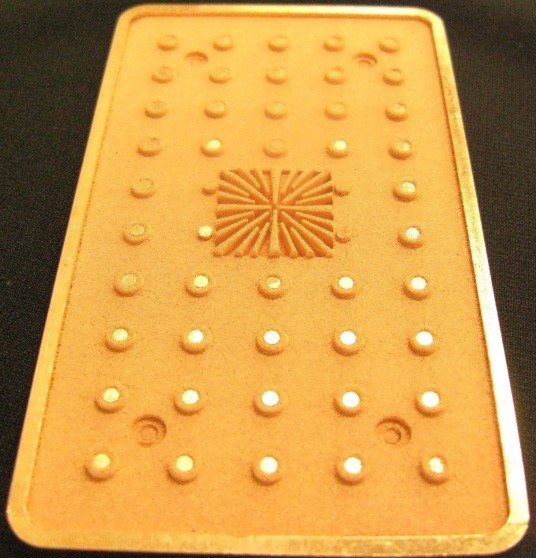
Planar two-phase heat spreaders with effective thermal conductivities of 5,000–200,000 W/m·K, available in standard copper/water and advanced low-CTE aluminum nitride ceramic variants handling over 700 W/cm².
Typed specifications1 values
Discloses 0 of 7 fields engineers filter by in this category (category median 2).
- Envelope (L×W×H)
- Up to 10" × 20" product page
Each value is typed with its unit and measurement condition and cites the datasheet page it was taken from. Nothing is guessed: a field that is absent here has not been published by the manufacturer. machine-extracted ✓ checked by NewSpace Market ✓ manufacturer confirmed by the manufacturer.
As published by the supplier8 lines, in the manufacturer's own wording
- Standard planar dimensions
- Up to 10" × 20"
- Standard heat flux
- > 100 W/cm²
- Standard thermal resistance
- < 0.08°C/W
- Effective thermal conductivity range
- 5,000–200,000 W/m·K
- Low-cte variant max heat flux
- > 700 W/cm² (1 cm² area)
- Low-cte variant total power
- Up to 2,000 W (at 500 W/cm²)
- Low-cte variant cte
- ~5.5 ppm/°C
- Low-cte variant construction
- Aluminum Nitride ceramic with Direct Bond Copper (DBC)
About
ACT’s Vapor Chambers are planar heat pipe devices that spread heat from concentrated sources to large-area heat sinks with effective thermal conductivities greatly exceeding copper alone. The sealed container houses an internal wick structure and working fluid that vaporizes and condenses, spreading heat two-dimensionally.
Standard vapor chambers use copper/water construction with planar dimensions up to 10 by 20 inches, heat flux capability exceeding 100 W/cm², and thermal resistance below 0.08°C/W. For extreme space electronics, low-CTE Vapor Chambers use aluminum nitride ceramic with Direct Bond Copper (DBC) face sheets, achieving heat fluxes exceeding 700 W/cm² with CTE of ~5.5 ppm/°C — closely matched to silicon for direct die attachment without solder fatigue.
Documentation
No public datasheet yet — request the datasheet / ICD from the supplier.