极光系列星载智能机 (Aurora Series Onboard Intelligent Machine)
 Zhongke Tiansuan (Comospace)
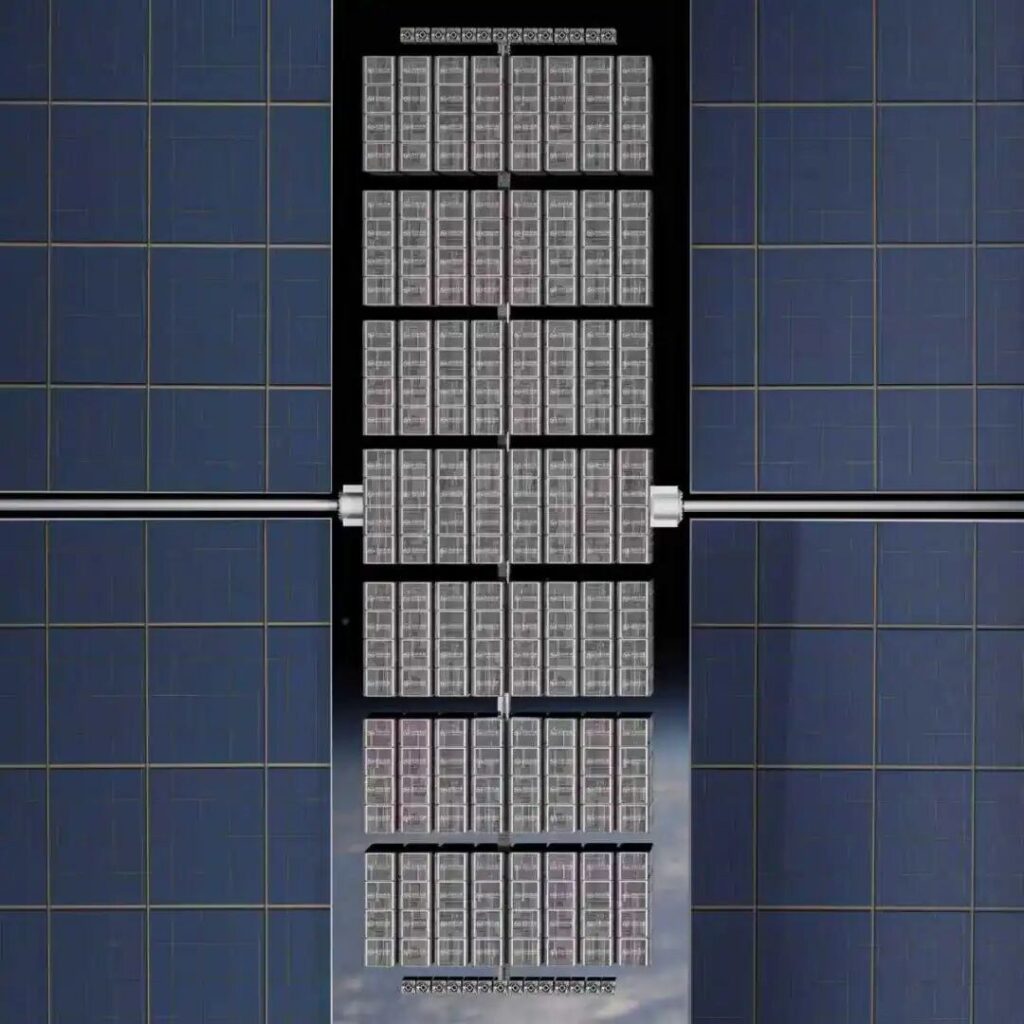
The Aurora series is a line of space-qualified intelligent computing units designed for satellite applications, offering high-performance AI processing capabilities in orbit. It includes various versions with different architectures and performance levels, some already flight-proven.
Technical specifications
- Product Line
- 极光系列星载智能机 (Aurora Series Onboard Intelligent Machine)
- Operating System
- 极光OS (Aurora OS)
- Software Library
- 极光算子库 (Aurora Operator Library)
- Aurora 1000 Series Key Feature
- Domestic high-performance AI chips
- Aurora 1000 Series Flight Heritage
- In-orbit validated on multiple satellites for over 1000 days
- Aurora 1000-3 Feature
- Three-machine in-orbit collaborative verification
- Aurora 1000 'Huiyan' Feature
- In-orbit inference for space-based large models
- Aurora 2000 Series Architecture
- VPX
- Aurora 2000 Series Status
- Development completed, awaiting in-orbit verification
- Aurora 5000 Series GPU
- Domestic full-size GPU (performance comparable to NVIDIA H100)
- Aurora 5000 Series Features
- Multi-redundancy, high reliability, high performance
- Aurora 5000 Series Cooling
- Fluid cooling
- Aurora 5000 Series AI Accelerator Support
- Supports over 10 AI accelerator cards for parallel computing
- Aurora 5000 Series Status
- Planned for in-orbit verification next year
About
The Aurora series of onboard intelligent machines, developed by Beijing Zhongke Tiansuan Technology Co. (Zhongke Tiansuan), is a core product line focused on bringing supercomputing and AI capabilities to space. The product system includes the Aurora series onboard intelligent machines, supporting module cards, the Aurora OS operating system, and the Aurora operator library.
The Aurora 1000 series, featuring domestic high-performance AI chips, has been successfully validated in orbit on multiple satellites for over 1000 days, demonstrating the feasibility of high-performance AI computing in space. Building on this, the Aurora 1000-3 was developed in 2023, completing in-orbit collaborative verification experiments with three machines, pioneering a multi-node in-orbit collaborative computing architecture. In 2024, Zhongke Tiansuan further launched the Aurora 1000 ‘Huiyan’ (Wise Eye), which successfully performed in-orbit inference for space-based large models.
The Aurora 2000 series, utilizing a VPX architecture, has completed development and is awaiting in-orbit verification. The upcoming Aurora 5000 series is designed to incorporate full-size domestic GPUs with performance comparable to NVIDIA H100. This series will feature a full-size GPU computing architecture, offering multi-redundancy, high reliability, and high performance. It will employ fluid cooling for space-borne equipment and support parallel computing and stable operation of over 10 AI accelerator cards. The Aurora 5000 is planned for in-orbit verification next year.
The core challenges addressed by the Aurora series include achieving space-grade fault tolerance in extreme environments (radiation, thermal cycling, micro-vibrations) and effective heat dissipation for high-heat-flux devices in a vacuum. Zhongke Tiansuan emphasizes its unique advantage of ‘actual flight experience + engineering capability’ gained from the development of the Aurora 1000 to Aurora 5000. The company aims to build a space supercomputing center through its ‘Tiansuan Plan’, which envisions a space-based supercomputing system with an energy module (1 sq km solar array, 100MW power), a computing module (10 Eops AI computing with 10,000 domestic GPUs), and a communication module (hundreds of 100 Gbit laser communication devices, 10 Tbps total capacity) by 2030.
Documentation
No public datasheet yet — request the datasheet / ICD from the supplier.