GNSS All-Bands Launcher Antenna
 Anywaves
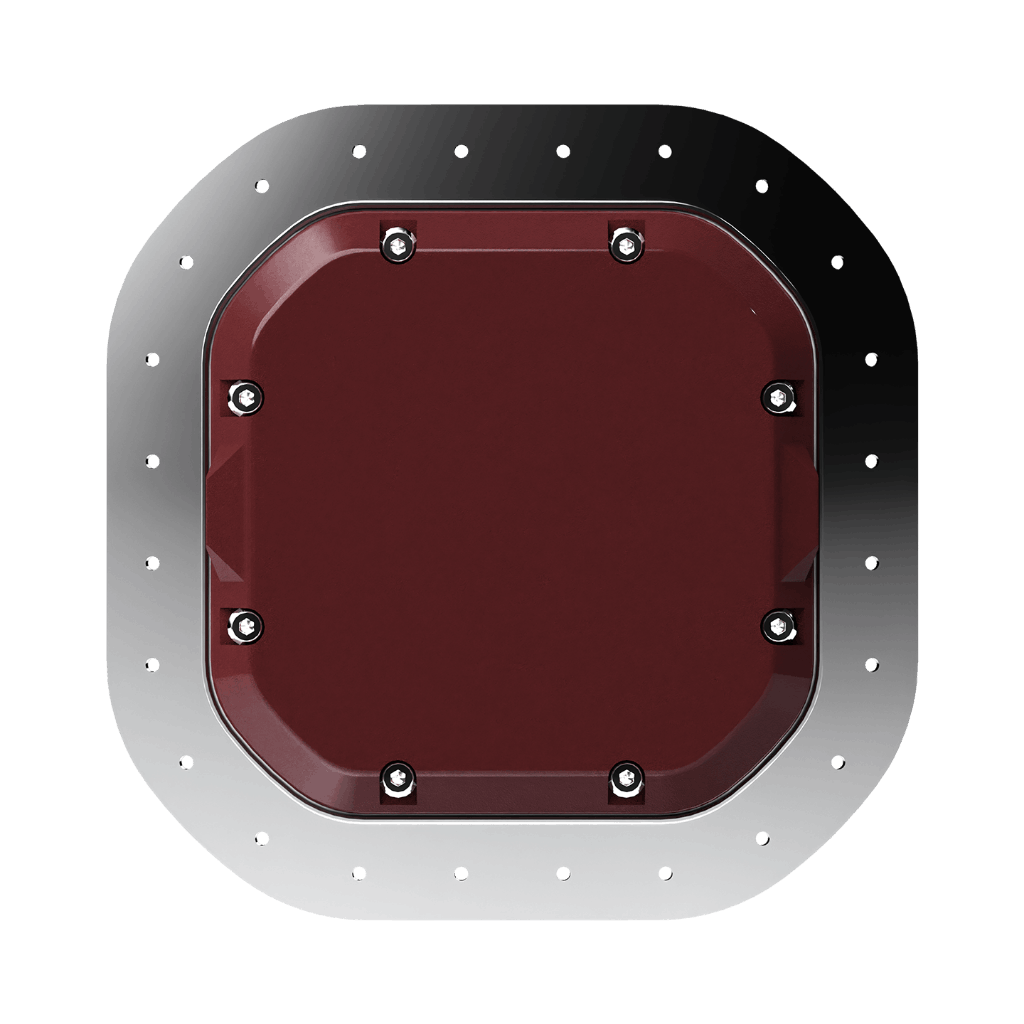
The Anywaves GNSS All-Bands Launcher Antenna is a TRL 8 navigation antenna specifically designed for launch vehicles, providing simultaneous multi-constellation GNSS reception from 1.16 to 1.61 GHz.
Typed specifications12 values
Discloses 4 of 10 fields engineers filter by in this category (category median 3).
- Frequency band
- GNSS L1/L2/L5 GPS L1/L2/L5, Galileo E1/E5a/E5b/E6, Glonass G1/G2/G3, Beidou… · datasheet p.1 L Inmarsat L-band
- Peak gain
- 0 dBi min · realized gain > 0 dBi @ boresight · datasheet p.1
- Frequency range
- 1 160–1 610 MHz GNSS all bands · datasheet p.1 1 525–1 559 MHz Inmarsat L-band
- Envelope (L×W×H)
- 150 x 150 x 30 mm³ datasheet p.1
- Polarization
- RHCP Right Hand Circular Polarization · datasheet p.1
- TRL
- 8 datasheet p.1
- Export status
- ITAR-free ITAR Free: suitable for international programs without export… · datasheet p.1
- Min gain over coverage
- -2 dBi min · ± 30° · datasheet p.1 -6 dBi min · ± 60°
- Connector
- Antenna: 162 g ± 8 g Flat mechanical bracket: 106 g Thermal shield: 62 g product page
Each value is typed with its unit and measurement condition and cites the datasheet page it was taken from. Nothing is guessed: a field that is absent here has not been published by the manufacturer. machine-extracted ✓ checked by NewSpace Market ✓ manufacturer confirmed by the manufacturer.
As published by the supplier6 lines, in the manufacturer's own wording
- Frequency band
- 1.16 GHz to 1.61 GHz — GPS L1/L2/L5, Galileo E1/E5a/E5b/E6, GLONASS G1/G2/G3, BeiDou B1/B2a/B2/B3
- Polarization
- Right Hand Circular Polarization (RHCP)
- Envelope size
- 150 × 150 × 30 mm
- Realized gain
- > 0 dBi @ boresight > −2 dBi @ ±30° > −6 dBi @ ±60°
- TRL
- 8
- Mass with connector
- Antenna: 162 g ± 8 g Flat mechanical bracket: 106 g Thermal shield: 62 g
About
The Anywaves GNSS All-Bands Launcher Antenna is the only antenna on the market providing full multi-constellation GNSS reception — GPS, Galileo, GLONASS, BeiDou — from a single unit specifically designed for launch vehicles. It covers the full 1.16 to 1.61 GHz range with a highly stable phase center, providing the signal diversity and positioning precision required for accurate trajectory management throughout all launch phases.
Derived from the Anywaves GNSS All-Bands Antenna, it is adapted for the extreme thermal and mechanical demands of the launch environment with a dedicated thermal shield in place of the standard satellite radome. At 150 × 150 × 30 mm, it integrates within space-constrained launcher body designs. RHCP polarization, acceptance tests included on flight models. Compatible with the Anywaves Test Hat for GNSS All-Bands Antennas. ITAR Free.
This antenna is further protected by a dedicated thermal shield designed to withstand the intense heat flux experienced in launcher environments. This allows the antenna to provide continuous GNSS navigation coverage throughout all launch phases — from ground checkout through max-Q, stage separation and orbit injection — without performance degradation. Its highly stable phase center and circular polarization maintain consistent GNSS signal quality across the full visible sky — ensuring reliable positioning data from the moment the vehicle leaves the pad to final orbit injection, even during the high-dynamic phases of ascent where attitude changes rapidly.
Documentation
Need the full ICD, test reports or a specific revision? Ask the supplier directly.