Hybrid Propulsion Systems
 HyImpulse Technologies
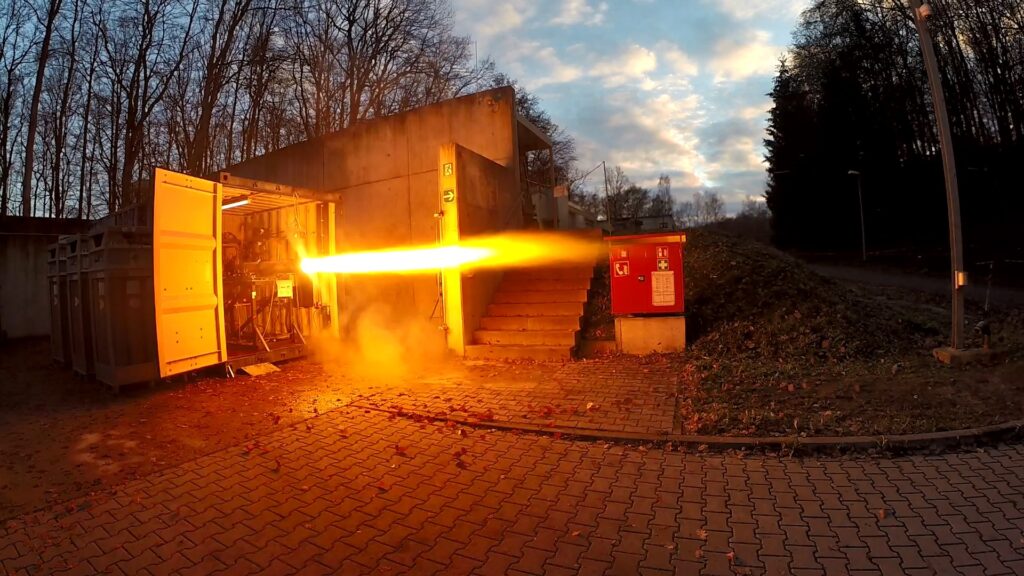
HyImpulse's hybrid motor family powers suborbital and orbital vehicles with lightweight composite casings, thrust vector control, and modular interfaces, providing liquid-like performance with hybrid simplicity.
Typed specifications4 values
Discloses 2 of 11 fields engineers filter by in this category (category median 3).
- Thrust
- 90 000 000 mN product page 75 000 000 mN | 10 000 000 mN
- Propellant
- nitrous oxide (N2O) product page
Each value is typed with its unit and measurement condition and cites the datasheet page it was taken from. Nothing is guessed: a field that is absent here has not been published by the manufacturer. machine-extracted ✓ checked by NewSpace Market ✓ manufacturer confirmed by the manufacturer.
As published by the supplier7 lines, in the manufacturer's own wording
- Thrust (SL1 orbital launcher)
- 90 kN
- Thrust (SR75 sounding rocket)
- 75 kN
- Thrust (scalable architecture)
- 10 kN
- Propellant
- Nitrous oxide hybrid
- Casing
- Full composite
- Features
- Throttling, Shutdown & restart, Customizable, Mission-ready & Scalable, ITAR Free, Re-ignitable
- Feed system
- Pressure or pump-fed
About
Our hybrid motor family powers suborbital and orbital vehicles with lightweight composite casings, thrust vector control, and modular interfaces, providing liquid-like performance with hybrid simplicity. We offer a 90 kN motor that powers the SL1 orbital launcher, successfully hot-fire tested in 2025, and a 75 kN motor that drives the SR75 sounding rocket, validated in flight. Additionally, a 10 kN motor, tested over 100 times, shares the same scalable architecture. These systems build on the flight-proven nitrous oxide hybrid technology used in the HEROS rockets, which flew above 100,000 ft in 2016. In-house turbomachinery and powerpacks further ensure efficient, reliable performance across all missions. Our propulsion systems feature full composite casings, throttling, shutdown & restart capabilities, and are customizable, mission-ready, and scalable. They are ITAR Free, have no restrictions, and are re-ignitable for multiple burns. The feed system can be pressure or pump-fed.
Documentation
No public datasheet yet — request the datasheet / ICD from the supplier.