Low-Noise Block Downconverter 1–12 GHz – Space LNB
 Anywaves
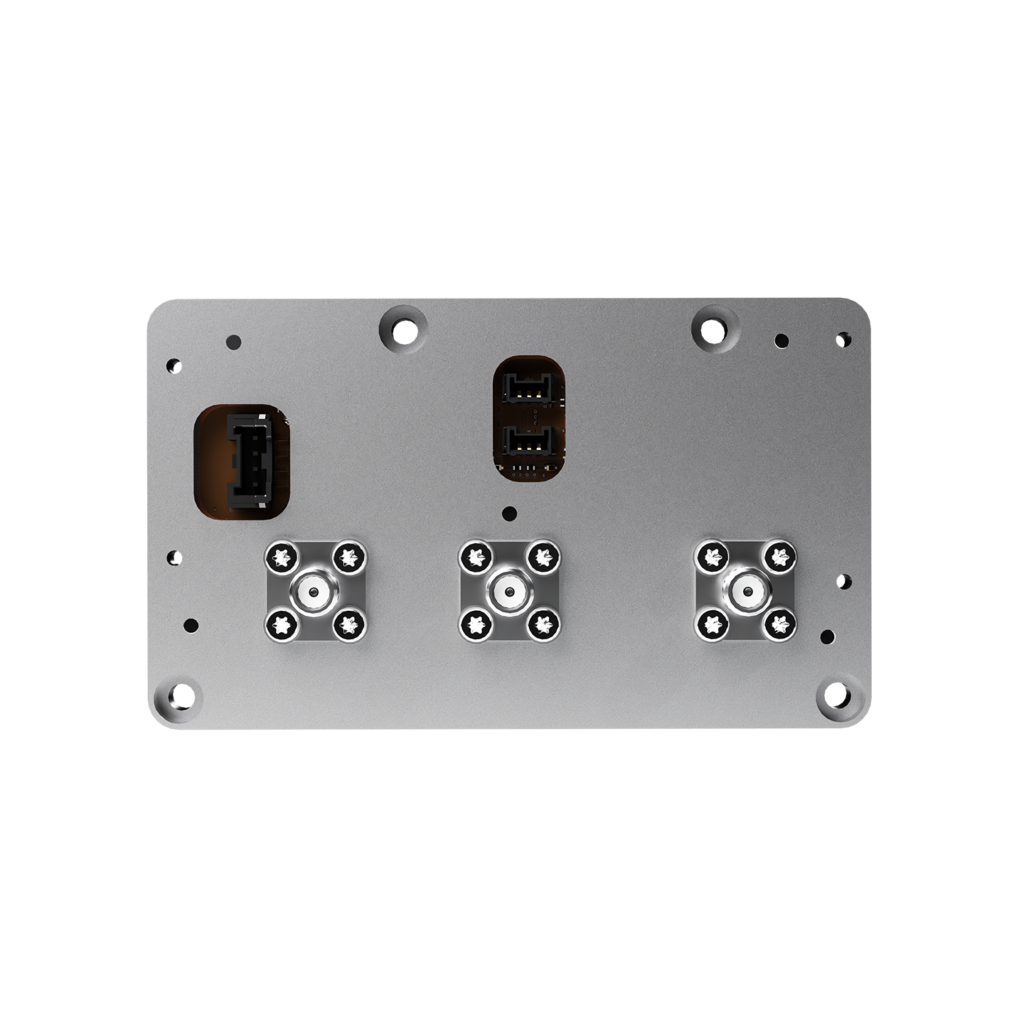
The Anywaves Low Noise Block Downconverter (LNB) is a compact, fully customisable RF front-end component for satellite and CubeSat communication systems, providing low-noise amplification and frequency down-conversion.
Key figurescomparable across the catalogue
- Power
- 5 W
Normalised to common units so this product can be compared with others in its category. The supplier's own wording is below.
As published by the supplier
- Frequency coverage
- 1 GHz to 12 GHz (three sub-bands: 1–2 / 2–6 / 6–12 GHz)
- RF architecture
- Dual input RF, Dual output IF & common LO (Local Oscillator)
- IF (Intermediate Frequency) bandwidth
- Up to 400 MHz
- Noise figure
- Optimised per band (down to 1.2 dB)
- Power consumption
- ≤ 5 W (dual‑channel)
- Qualification
- Space‑grade, TRL 9
About
The Anywaves Low Noise Block Downconverter (LNB) is a key element of satellite RF reception chains, positioned directly behind the antenna. Designed for space applications, it provides low-noise amplification and frequency down-conversion, delivering a clean intermediate-frequency signal ready for digitisation and downstream processing. Built on a dual-channel architecture with a shared external local oscillator, the Anywaves LNB family is structured into three dedicated frequency variants rather than a single wideband compromise. This approach allows RF performance to be optimised per band while remaining compatible with both Anywaves and third-party antennas, making the LNB well suited to modern payload architectures combining performance, flexibility, and long-term evolvability. The LNB is designed as a hardware building block that complements SDR-based payloads. Defined IF outputs and external local-oscillator (LO) compatibility allow straightforward interfacing with SDRs, supporting scalable RF reception chains from antenna to digital processing. When used with platforms such as Anywaves’ VILSA SDR, which provides a dedicated LO output, the LNB can be driven directly by the payload electronics. This enables precise frequency control and seamless integration at system level without additional analogue complexity.
Documentation
Need the full ICD, test reports or a specific revision? Ask the supplier directly.