RTAX-S/SL
 Microchip Technology / Microsemi (Space)
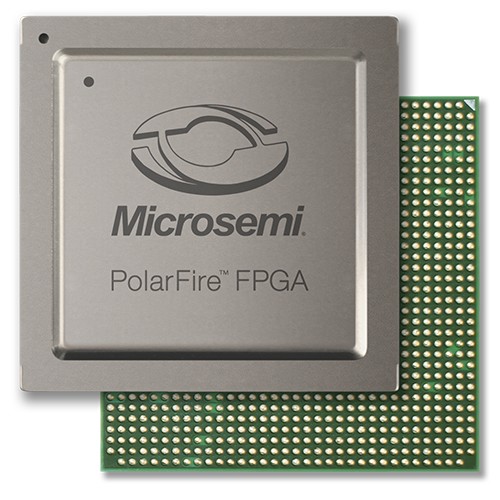
The RTAX-S/SL are radiation-tolerant FPGAs designed for space-flight systems, offering high performance, low power consumption, and a true single-chip form factor with QML Class V certification.
Technical specifications
- Device
- RTAX250S/SL
- Equivalent system gates
- 250,000
- ASIC gates
- 30,000
- Register (R-cells)
- 1,408
- Combinatorial (C-cells)
- 2,816
- Core ram blocks
- 12
- Core ram bits (k=1,024)
- 54 k
- Hardwired
- 4
- Routed
- 4
- I/o banks
- 8
- User i/os (maximum)
- 198
- I/o registers
- 744
- Speed grades
- Std., -1
- Temperature grades
- E, B, V
- Ccga/lga
- 624
- Cqfp
- 208, 352
- Device (2)
- RTAX1000S/SL
- Equivalent system gates (2)
- 1,000,000
- ASIC gates (2)
- 125,000
- Register (R-cells) (2)
- 6,048
- Combinatorial (C-cells) (2)
- 12,096
- Core ram blocks (2)
- 36
- Core ram bits (k=1,024) (2)
- 162 k
- Hardwired (2)
- 4
- Routed (2)
- 4
- I/o banks (2)
- 8
- User i/os (maximum) (2)
- 418
- I/o registers (2)
- 1,548
- Speed grades (2)
- Std., -1
- Temperature grades (2)
- E, B, V
- Ccga/lga (2)
- 624
- Cqfp (2)
- 352
- Device (3)
- RTAX2000S/SL
- Equivalent system gates (3)
- 2,000,000
- ASIC gates (3)
- 250,000
- Register (R-cells) (3)
- 10,752
- Combinatorial (C-cells) (3)
- 21,504
- Core ram blocks (3)
- 64
- Core ram bits (k=1,024) (3)
- 288 k
- Hardwired (3)
- 4
- Routed (3)
- 4
- I/o banks (3)
- 8
- User i/os (maximum) (3)
- 684
- I/o registers (3)
- 2,052
- Speed grades (3)
- Std., -1
- Temperature grades (3)
- E, B, V
- Ccga/lga (3)
- 624, 1152
- Cqfp (3)
- 256, 352
- Device (4)
- RTAX4000S/SL
- Equivalent system gates (4)
- 4,000,000
- ASIC gates (4)
- 500,000
- Register (R-cells) (4)
- 20,160
- Combinatorial (C-cells) (4)
- 40,320
- Core ram blocks (4)
- 120
- Core ram bits (k=1,024) (4)
- 540 k
- Hardwired (4)
- 4
- Routed (4)
- 4
- I/o banks (4)
- 8
- User i/os (maximum) (4)
- 840
- I/o registers (4)
- 2,520
- Speed grades (4)
- Std., -1
- Temperature grades (4)
- E, B, V
- Ccga/lga (4)
- 1272
- Cqfp (4)
- 352
- Total dose (functional)
- 300 kRads
- Total dose (parametric)
- 200 kRads
- SEU
- less than 1E-10 errors per bit-day (worst-case GEO)
- SEL immunity
- to LETTH in excess of 117 MeV-cm2/mg
- SEU immunity
- to LETTH > 37 MeV-cm2/mg
- Qml qualification
- Class Q and Class V
About
The RTAX-S/SL radiation-tolerant FPGAs provide industry-leading advantages for designers of space-flight systems. They feature high performance, low-power consumption, a true single-chip form factor, and live-at-power-up operation. These FPGAs are specifically designed for space applications, offering densities up to 4 million equivalent system gates and 840 user I/Os. The family includes SEU-hardened flip-flops implemented without user intervention and supports user-implemented triple module redundancy (TMR) without associated overhead. For applications requiring lower standby current, the RTAX-SL low-power grade option is available, offering half the standby current of the standard product at worst-case conditions. The RTAX-S/SL FPGAs are based on the commercial Axcelerator FPGAs architecture and provide a flexible programmable platform for payload designs, reducing the need for radiation-hardened ASICs (RH-ASICs). They allow for last-minute design changes without additional costs or impact on design time. The devices also feature hot-swap and cold-sparing capabilities for power management during long space missions. The RTAX-S/SL FPGAs have an unprecedented 33 million device-hours of reliability data from flight and commercial equivalent units, with no antifuse faults to date. They are QML Class V qualified, ensuring the highest quality and reliability, and include 2000 hours life test on each wafer lot and Destructive Physical Analysis (DPA) on each assembly lot. Radiation performance includes Total Dose tolerance of 300 kRads (functional) and 200 kRads (parametric), SEU less than 1E-10 errors per bit-day (worst-case GEO), and SEL immunity to LETTH in excess of 117 MeV-cm2/mg. Testing for Single-Event Effects (SEE) was performed at BNL and Texas A & M 2004, with no SEL or SEDR observed up to LETTH 117 MeV/cm2-mg (125 °C). High-frequency Single-Event Transient (SET) testing up to 150 MHz with NASA Goddard Space Flight Center found no anomalies. Logic Single-Event Upset (SEU) cross-section is 37 MeV-cm2/mg, and Memory SEU cross-section per word is ~ 4E-9 cm2 with LETTH > 30 MeV-cm2/mg, with EDAC operational and background scrubbing at 2 MHz.
Documentation
Need the full ICD, test reports or a specific revision? Ask the supplier directly.