Sunbird — Nuclear Fusion Propulsion System
 Pulsar Fusion
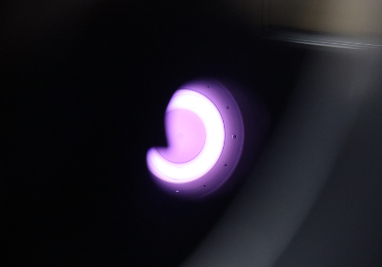
Pulsar Fusion's Sunbird is a Dual Direct Fusion Drive (DDFD) using deuterium + helium-3 fusion: targeting 10,000–15,000 s Isp, up to 100 N thrust, 2 MW power generation, ~223 km/s exhaust velocity. First plasma achieved March 2026; orbital demonstration planned 2027.
Typed specifications3 values
Discloses 2 of 11 fields engineers filter by in this category (category median 3).
- Envelope (L×W×H)
- ~9.8 × 3.5 × 3.5 m product page
- Specific impulse
- 10 000–15 000 s product page
- Propellant
- other fusion fuel: deuterium + helium-3 · product page
Each value is typed with its unit and measurement condition and cites the datasheet page it was taken from. Nothing is guessed: a field that is absent here has not been published by the manufacturer. machine-extracted ✓ checked by NewSpace Market ✓ manufacturer confirmed by the manufacturer.
As published by the supplier10 lines, in the manufacturer's own wording
- Fusion fuel
- Deuterium + Helium-3 (DDFD — Dual Direct Fusion Drive)
- Target specific impulse (Isp)
- 10,000–15,000 s
- Target thrust
- Up to ~100 N
- Power co-generation
- Up to 2 MW
- Exhaust velocity
- ~223 km/s
- Vehicle dimensions
- ~9.8 × 3.5 × 3.5 m
- First plasma milestone
- March 2026 (exhaust test system)
- Orbital demonstration target
- 2027
- Production readiness target
- Early 2030s
- Het subsystem
- 8 × Pulsar MoonRanger 5 kW Hall-effect thrusters
About
Sunbird is Pulsar Fusion’s nuclear fusion propulsion development program, targeting a Dual Direct Fusion Drive (DDFD) that simultaneously generates thrust and electricity from deuterium + helium-3 fusion reactions. The design targets 10,000–15,000 s specific impulse with up to 100 N thrust and 2 MW of co-generated electrical power — capable of transporting payloads from Earth to Jupiter in approximately 4 years at design performance, compared to decades for conventional propulsion. The exhaust velocity target is approximately 223 km/s. The Sunbird concept measures approximately 9.8 × 3.5 × 3.5 m. In March 2026, Pulsar Fusion achieved first plasma in its exhaust test system, validating core plasma physics. An orbital demonstration is planned for 2027, with production-ready systems targeted for the early 2030s. The Sunbird’s planned electric propulsion subsystem uses eight Pulsar MoonRanger 5 kW Hall-effect thrusters for low-power maneuvering. Pulsar Fusion, founded in 2019 and based in Bletchley, UK, is also developing the commercial LeoBear 500 W, MoonRanger 5 kW, and MarsRanger 10 kW Hall-effect thrusters available for near-term missions.
Documentation
No public datasheet yet — request the datasheet / ICD from the supplier.