Eagle 47-10 Space Camera
 Raptor Photonics
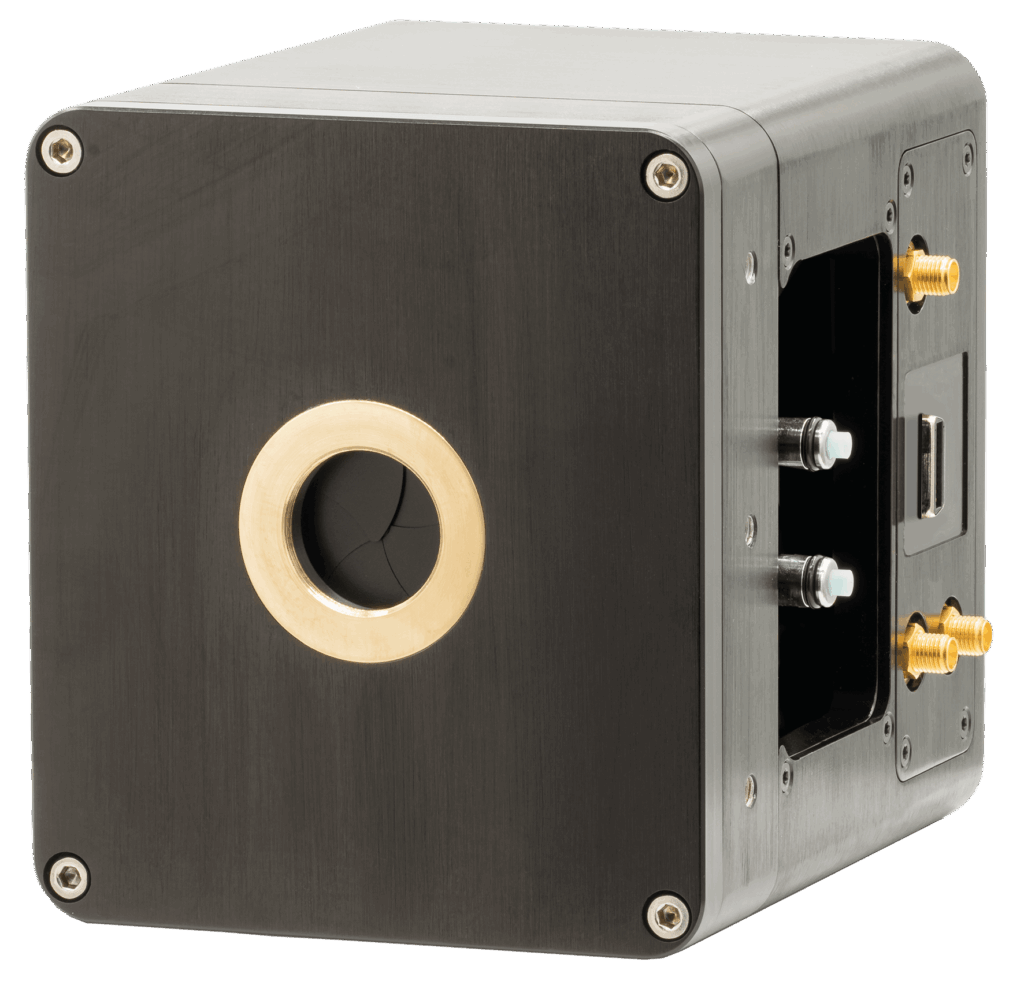
Deep-cooled back-illuminated 1MP CCD space camera with 7-year vacuum guarantee and >90% QE at 525 nm for LEO CubeSat optical payloads.
Typed specifications2 values
Discloses 0 of 14 fields engineers filter by in this category (category median 4).
- Envelope (L×W×H)
- 13 µm x 13 µm product page
- Flight heritage
- Flying on multiple LEO CubeSat missions (160–2,000 km), >36 months operational product page
Each value is typed with its unit and measurement condition and cites the datasheet page it was taken from. Nothing is guessed: a field that is absent here has not been published by the manufacturer. machine-extracted ✓ checked by NewSpace Market ✓ manufacturer confirmed by the manufacturer.
As published by the supplier7 lines, in the manufacturer's own wording
- Sensor
- Back-illuminated 1 MP CCD (Teledyne e2v)
- Pixel size
- 13 µm x 13 µm
- Peak qe
- >90% @ 525 nm; 50% @ 380 nm and 720 nm
- Cooling
- Deep-cooled to -90°C (liquid-assisted) or -80°C (air only)
- Vacuum guarantee
- 7 years
- Shutter
- C-mount integrated, closes during readout (no vertical smear)
- Space heritage
- Flying on multiple LEO CubeSat missions (160–2,000 km), >36 months operational
About
The Eagle 47-10 is a space-grade deep-cooled CCD camera built around a 1 megapixel back-illuminated sensor from Teledyne e2v, designed for integration into LEO CubeSat optical payloads. The camera features a 7-year vacuum-integrity guarantee, protects the sensor from the space environment, and eliminates vertical smear through a C-mount integrated shutter that closes during readout. Extreme cooling to -90°C (liquid-assisted) or -80°C (air only) suppresses dark current to enable long-exposure imaging. Quantum efficiency exceeds 90% at 525 nm and reaches 50% at 380 nm and 720 nm, maximising photon collection across the visible spectrum. The 13 µm square pixel pitch on the 1 MP sensor enables high spatial resolution over a wide field of view. Raptor cameras including the Eagle series have been flying on multiple live LEO CubeSat missions at 160–2,000 km altitude, with some units operational for over 36 months.
Documentation
No public datasheet yet — request the datasheet / ICD from the supplier.