SMC – Spacecraft Monitoring Camera
 Tsd-space
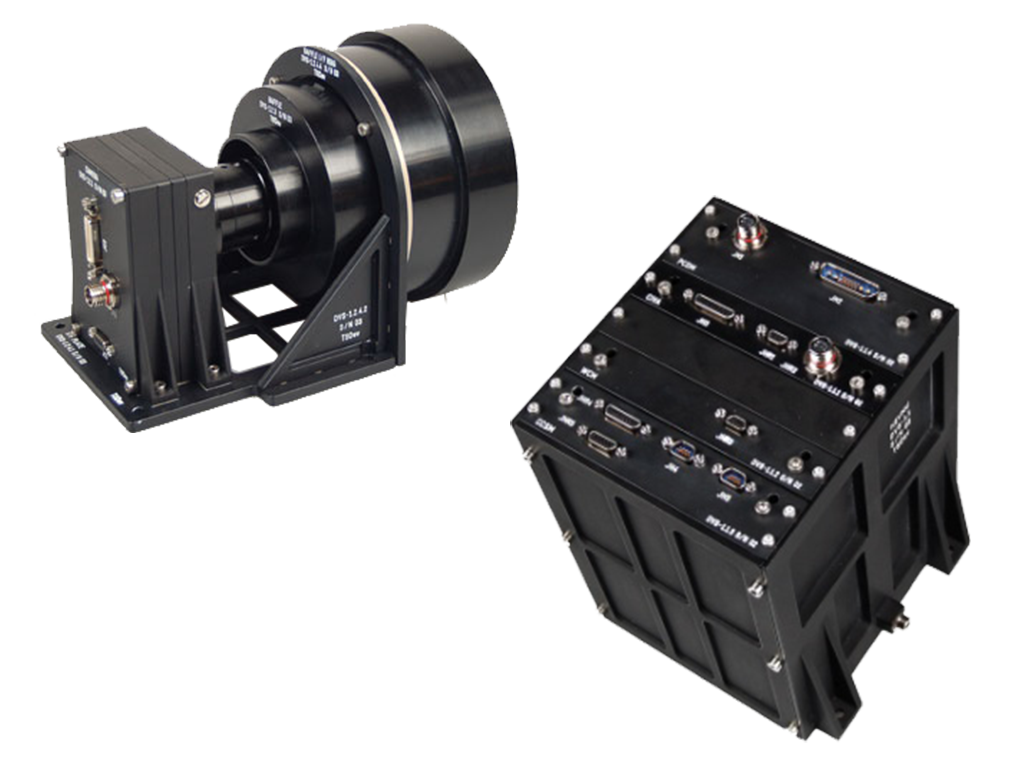
The HERA Spacecraft Monitoring Camera (SMC) is a compact, high-performance CMOS camera designed for deep space applications, featuring a 4MP image sensor, real-time image processing, and radiation-tolerant electronics.
Typed specifications5 values
Discloses 2 of 9 fields engineers filter by in this category (category median 4).
- Mass
- 900 g product page
- Envelope (L×W×H)
- ~1U product page
- Power consumption
- 5 W max · product page
- Radiation tolerance (TID)
- 20 krad min · product page
- Flight heritage
- Successfully launched aboard the HERA Spacecraft in October 2024 product page
Each value is typed with its unit and measurement condition and cites the datasheet page it was taken from. Nothing is guessed: a field that is absent here has not been published by the manufacturer. machine-extracted ✓ checked by NewSpace Market ✓ manufacturer confirmed by the manufacturer.
As published by the supplier15 lines, in the manufacturer's own wording
- Dimensions
- ~1U
- Mass (including optical system)
- 900 g
- Image sensor
- 4 MP CMOS
- Selectable roi
- 1600x1600px and 1600x1200px
- Frame rate
- Up to 10 fps
- Spectral range
- 400 to 750 nm (visible)
- Versions
- B/W and RGB
- Total pixel rate
- Up to 40Mpx/s
- Mass memory
- 2x32Gbit NAND Flash (nominal + redundant)
- FPGA
- Rad-tolerant Microchip ACTEL ProAsic3
- Compression factors
- 4÷100
- Power consumption
- <5 W @28VDC
- TID tolerance
- >20Krads
- SEE resistance
- At least 30 MeV/mg/cm2
- Flight heritage
- Successfully launched aboard the HERA Spacecraft in October 2024
About
The HERA Spacecraft Monitoring Camera (SMC) is a very compact (~1U and 900g including optical system) and high-performance CMOS Camera, specifically designed by TSD for deep space applications, in the context of the ESA HERA mission. It features a 4MP image sensor with a selectable Region of Interest (ROI) between 1600x1600px and 1600x1200px, which operates at up to 10 frames per second (fps) in the visible range, from 400 to 750 nm. Both B/W and RGB versions are available. The system offers real-time image processing capabilities, achieving a total pixel rate of up to 40Mpx/s. The camera is equipped with 2x32Gbit NAND Flash devices (nominal + redundant), along with a rad-tolerant Microchip ACTEL ProAsic3 FPGA. This FPGA can achieve compression factors in the range of 4 to 100, while requiring very low power, less than 5W at 28VDC. Being a deep-space camera, the entire electronics system is based on components radiation tolerant to a Total Ionizing Dose (TID) greater than 20Krads. Additionally, specific hardware (HW) and firmware (FW) mitigations, such as Single Event Latch-up (SEL) protection for the image sensor and Single Event Upset (SEU)/Single Event Functional Interrupt (SEFI) prevention for memories, allow the camera to be resistant to a Single Event Effects (SEE) value of at least 30 MeV/mg/cm2. The SMC has been successfully launched aboard the HERA Spacecraft in October 2024.
Documentation
No public datasheet yet — request the datasheet / ICD from the supplier.