Bradford ECAPS HPGP Thruster
 Bradford Space
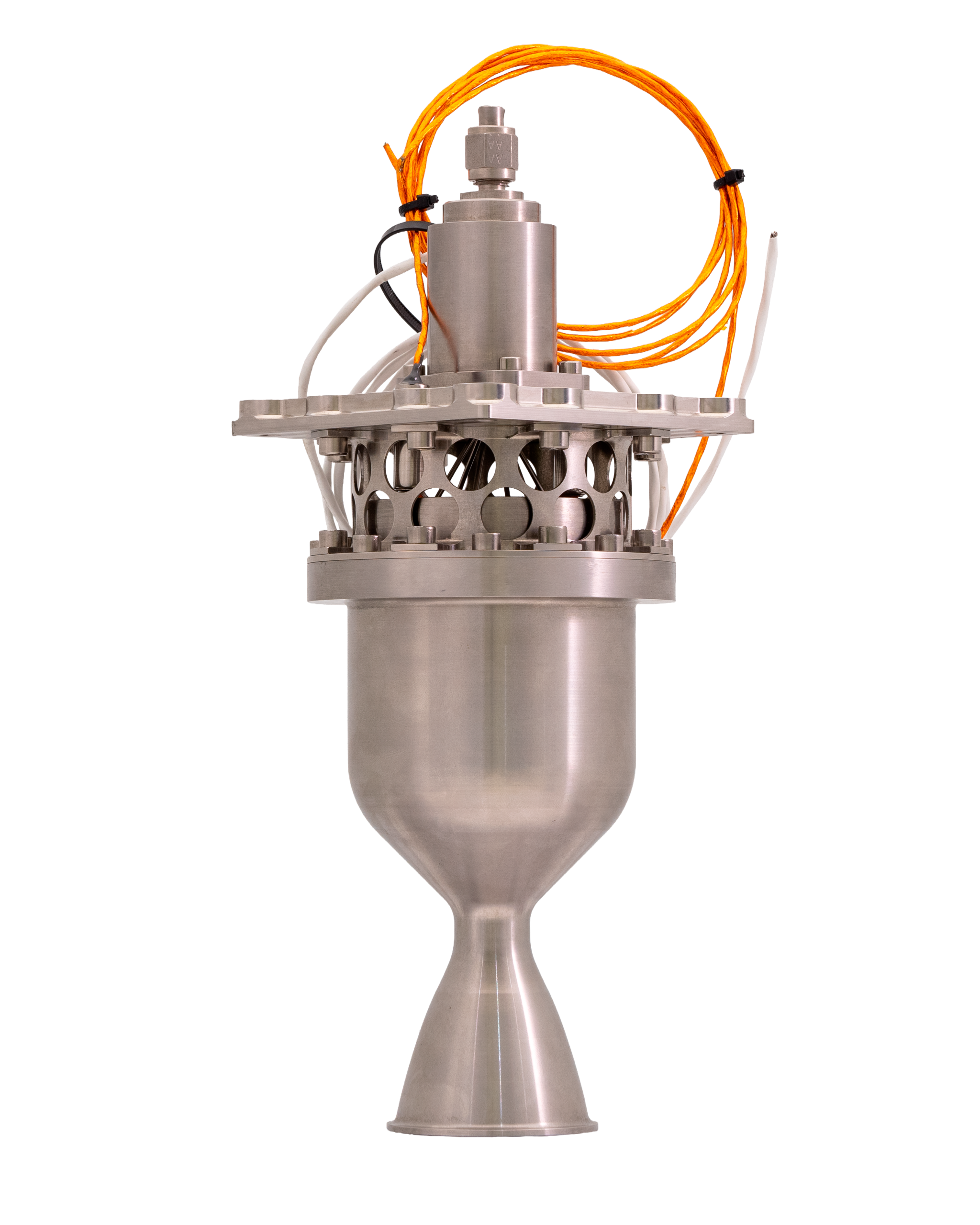
Bradford Space's (formerly Deep Space Industries) High Performance Green Propellant (HPGP) thrusters — clean-burning, high-Isp alternatives to hydrazine for satellite attitude and orbit control.
Key figurescomparable across the catalogue
- Thrust
- 0.01 N
- Specific impulse
- 220 s
Normalised to common units so this product can be compared with others in its category. The supplier's own wording is below.
As published by the supplier
- Propellant
- LMP-103S (HPGP, green propellant)
- Thrust Range
- 0.01 N – 22 N (product family)
- Specific Impulse
- 220–240 s (~12% better than hydrazine)
- Advantage
- Non-toxic, cleaner handling, lower facility cost vs hydrazine
- Flight Heritage
- PRISMA (2010), ORBCOMM, numerous commercial smallsats
- HQ
- The Hague, Netherlands (Bradford Engineering group)
About
Bradford Space (formerly Deep Space Industries, acquired by Bradford Engineering in 2019) manufactures the ECAPS (Ecological Advanced Propulsion Systems) HPGP (High Performance Green Propellant) thruster family — a clean-burning alternative to hydrazine monopropellant that is safer to handle, offers higher specific impulse, and enables lower total propellant mass for a given delta-V mission.
HPGP uses LMP-103S propellant (a blend of ammonium dinitramide, water, methanol, and ammonia) that is significantly less toxic than hydrazine, reducing handling costs and enabling satellite integration in standard cleanrooms without dedicated ISCO/HAZMAT facilities. The ECAPS 1N HPGP thruster achieves ~220–240 s specific impulse versus ~220 s for hydrazine — approximately 12% better efficiency — and can be throttled over a wide thrust range.
ECAPS thrusters have extensive flight heritage: they flew on the Prisma demonstration mission (2010), ORBCOMM satellites, and numerous commercial smallsats. Thrust levels range from 0.01 N (miniaturized versions) to 22 N for larger satellites. Bradford Space, headquartered in The Hague, Netherlands, also previously developed a water electrolysis (steam) propulsion concept under the DSI Comet name for resource utilization demonstrations.
Documentation
No public datasheet yet — request the datasheet / ICD from the supplier.