SL1 Suborbital Small Launch Vehicle
 HyImpulse Technologies
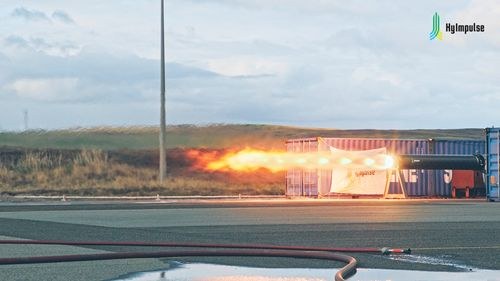
HyImpulse Technologies' SL1 — a hybrid-propellant suborbital small launch vehicle for technology demonstration and scientific payloads reaching 150 km apogee.
Key figurescomparable across the catalogue
- Payload capacity
- 600 kg
Normalised to common units so this product can be compared with others in its category. The supplier's own wording is below.
As published by the supplier
- Vehicle type
- Suborbital hybrid-propellant launch vehicle
- Propellants
- N2O oxidizer / HTPB solid fuel (hybrid)
- Apogee
- ~150 km (above Kármán line)
- Payload
- Technology demonstration and scientific payloads
- Predecessor
- SR75 sounding rocket (tested at Koonibba, Australia)
- Founded
- 2018, Sindelfingen, Germany (University of Stuttgart spin-off)
About
SL1 is HyImpulse Technologies’ next rocket after the SR75 sounding rocket, designed to carry technology demonstration and scientific payloads to suborbital trajectories reaching approximately 150 km apogee — above the Kármán line and thus providing true space environment exposure. Like all HyImpulse vehicles, SL1 uses hybrid propulsion combining a solid fuel with liquid N2O (nitrous oxide) oxidizer.
The N2O/HTPB (hydroxyl-terminated polybutadiene) hybrid engine combination provides several advantages for SL1: N2O is self-pressurizing at room temperature (no high-pressure oxidizer feed system required), inherently safer than storable liquid bipropellants, and lower cost than LOX cryogenics. The solid fuel grain eliminates complex turbopumps. The result is a vehicle that can be transported and prepared for flight in days rather than weeks.
HyImpulse is headquartered in Sindelfingen, Germany (near Stuttgart), and was founded in 2018 as a spin-off from the Institute of Space Systems at the University of Stuttgart. The company has conducted engine hot-fire tests and launched the SR75 from Southern Launch’s Koonibba Test Range in Australia. SL1 is positioned as a stepping stone toward HyImpulse’s planned orbital small launch vehicle.
Documentation
No public datasheet yet — request the datasheet / ICD from the supplier.