Intersattelite Optical Communication Terminal
 Glavkosmos
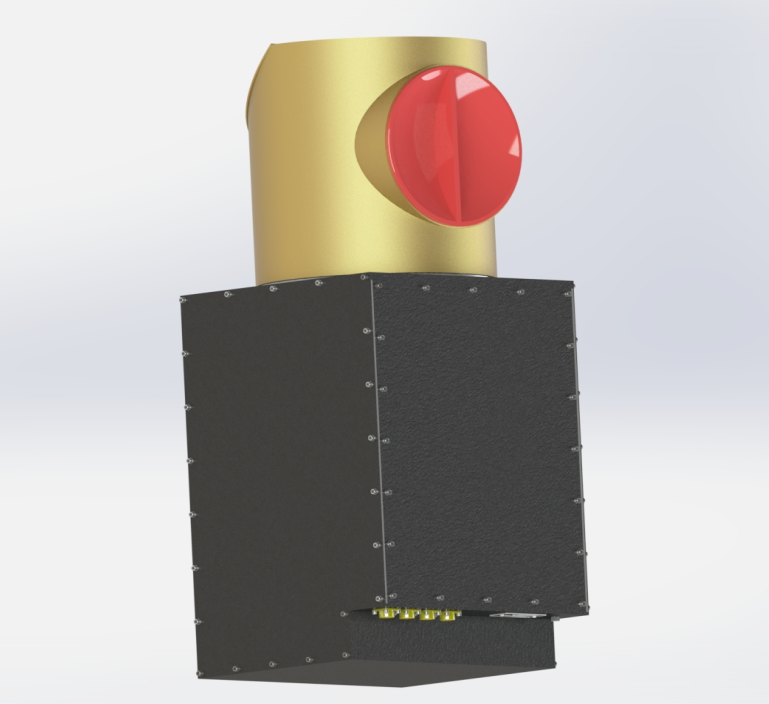
An Intersatellite Optical Communication Terminal designed for LEO satellite constellations to enable space internet and communications, supporting various network configurations.
Key figurescomparable across the catalogue
- Mass
- 12 kg
- Power
- 60 W
- Design life
- 7 years
- Lead time
- 12 months
Normalised to common units so this product can be compared with others in its category. The supplier's own wording is below.
As published by the supplier
- Purpose
- Providing communications in the constellation of satellites on LEO for the organization of space Internet and communications, support for network configurations.
- Design life
- 7 years
- Lead time
- 12 months
- Flight qualification of the product
- No
- Possibility to adapt the product to customer requirements
- Yes
- Communication range
- from 500 to 4500 km
- Data transfer rate
- from 10 to 100 Gbit / s
- Mass
- 12 kg
- Viewing angle, degrees in azimuth
- 360
- Viewing angle, degrees in elevation
- 32
- Average power consumption per revolution
- 60 W
- Clear aperture
- 96
- Target tracking speed
- 5 degrees / s
- The possibility of including in the quantum cryptography channel
- yes, transmitter
- Power-supply voltage
- 24-36 V
About
The Intersatellite Optical Communication Terminal is designed to provide robust communication capabilities within constellations of satellites operating in Low Earth Orbit (LEO). Its primary purpose is to facilitate the organization of space internet and communications, supporting diverse network configurations. The terminal features a monoblock design and is adaptable to any satellite platform with a weight of 300 kg or more. Key features include a communication range from 500 to 4500 km and a high data transfer rate ranging from 10 to 100 Gbit/s. It has a guaranteed service life of 7 years and an estimated production/delivery time of 12 months. The terminal also offers the possibility of inclusion in a quantum cryptography channel via its transmitter. It has a viewing angle of 360 degrees in azimuth and 32 degrees in elevation, with a target tracking speed of 5 degrees/s. The average power consumption per revolution is 60 W, and it operates on a power supply voltage of 24-36 V. The product is not flight qualified but can be adapted to customer requirements.
Documentation
No public datasheet yet — request the datasheet / ICD from the supplier.