Long March 2C (LM-2C / CZ-2C)
 CALT (China Academy of Launch Vehicle Technology)
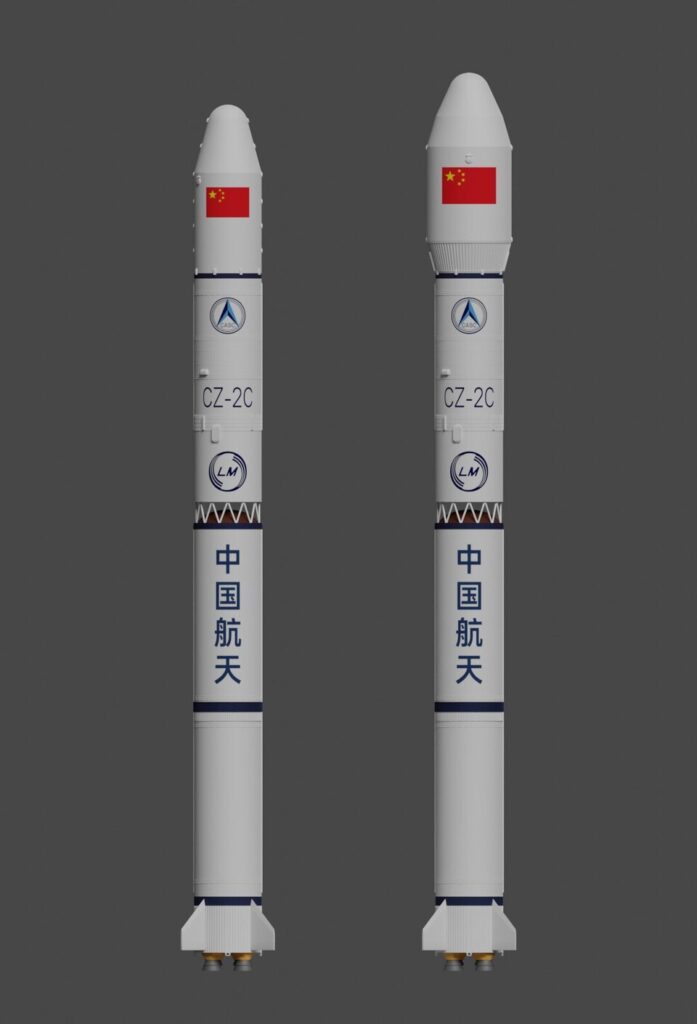
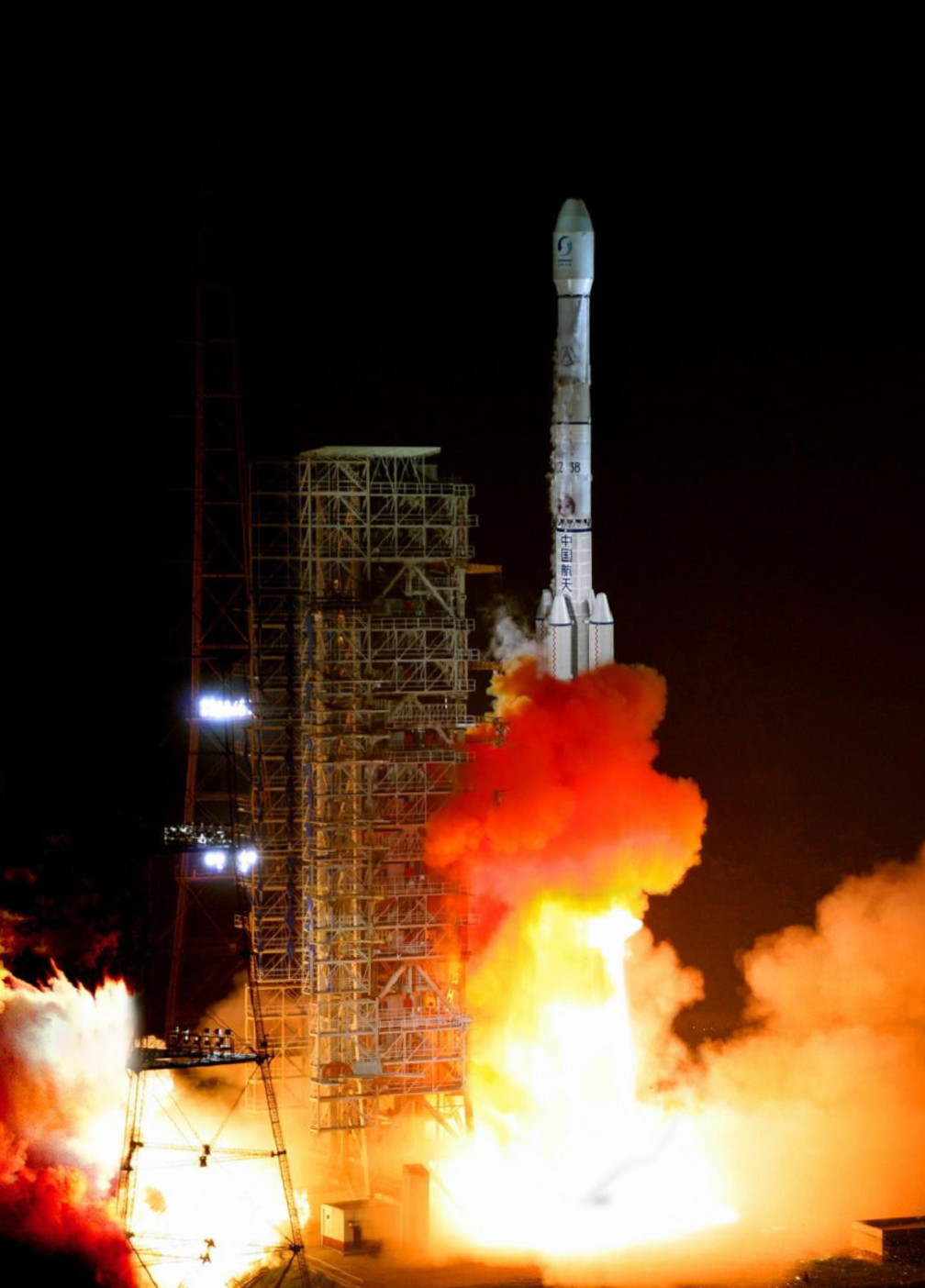
The Long March 2C is a Chinese medium-lift, two-stage orbital launch vehicle developed by the China Academy of Launch Vehicle Technology (CALT). It uses storable N2O4/UDMH propellants and has several variants for different mission profiles.
Key figurescomparable across the catalogue
- Mass
- 233,000 kg
- Payload capacity
- 3,850 kg
Normalised to common units so this product can be compared with others in its category. The supplier's own wording is below.
As published by the supplier
- Function
- Medium-lift launch vehicle
- Manufacturer
- China Academy of Launch Vehicle Technology
- Country of origin
- China
- Height
- 42 m (138 ft)
- Diameter
- 3.35 m (11.0 ft)
- Mass
- 233,000 kg (514,000 lb)
- Stages
- 2
- Payload to low earth orbit mass
- 3,850 kg (200 km, 63°)
- Payload to sun-synchronous orbit mass
- 1,400 kg (600 km)
- Payload to sun-synchronous orbit mass (2)
- 2C/SMA: 1,900 kg (4,200 lb)
- Payload to GTO mass
- 2C/SM: 1,250 kg (2,760 lb)
- Family
- Long March
- Status
- Active
- Total launches
- 87
- Success (es)
- 85
- Failure
- 1
- Partial failure
- 1
- First flight
- 9 September 1982
- Last flight
- 27 March 2026 (most recent)
- First stage height
- 25.72 m
- First stage diameter
- 3.35 m
- First stage propellant mass
- 162,706 kg (358,705 lb)
- First stage powered by
- 4 × YF-21C
- First stage maximum thrust
- 2,961.6 kN (665,800 lbf)
- First stage specific impulse
- 2,556.5 m/s (8,387 ft/s)
- First stage propellant
- N2O4 / UDMH
- Second stage height
- 7.757 m
- Second stage diameter
- 3.35 m
- Second stage propellant mass
- 54,667 kg (120,520 lb)
- Second stage powered by
- 1 × YF-24E (with 1 × YF-22E main engine and 4 × YF-23C vernier engines)
- Second stage maximum thrust (main)
- 741.4 kN (166,700 lbf)
- Second stage maximum thrust (vernier)
- 47.1 kN (10,600 lbf)
- Second stage specific impulse (main)
- 2,922.37 m/s (297.999 s)
- Second stage specific impulse (vernier)
- 2,834.11 m/s (288.999 s)
- Second stage propellant
- N2O4 / UDMH
- Third stage – (optional) height
- 1.5 m
- Third stage – (optional) diameter
- 2.7 m
- Third stage – (optional) propellant mass
- 125 kg (276 lb)
- Third stage – (optional) powered by
- 1 solid motor
- Third stage – (optional) maximum thrust
- 10.78 kN (2,420 lbf)
- Third stage – (optional) specific impulse
- 2,804 m/s (285.9 s)
- Third stage – (optional) propellant
- AP / HTPB
- Third stage (optional) – yz-1s powered by
- 1 × YF-50D
- Third stage (optional) – yz-1s maximum thrust
- 6.5 kN (1,500 lbf)
- Third stage (optional) – yz-1s specific impulse
- 315.5 s (3.094 km/s)
- Third stage (optional) – yz-1s propellant
- N2O4 / UDMH
About
The Long March 2C (LM-2C), also known as the Chang Zheng 2C (CZ-2C), is a Chinese orbital launch vehicle and a member of the Long March 2 rocket family. Developed and manufactured by the China Academy of Launch Vehicle Technology (CALT), it first launched on September 9, 1982. It is primarily a two-stage launch vehicle utilizing storable N2O4/UDMH propellants, and its design was derived from the DF-5 ICBM. The Long March 2C is capable of delivering payloads to Low Earth Orbit (LEO), Sun-synchronous Orbit (SSO), and Geostationary Transfer Orbit (GTO) with the use of an optional third stage. Several variants exist, including the 2C/SD for commercial satellite launches with a multi-satellite smart dispenser, the 2C/SM for small satellites to high orbits, and the 2C/SMA, an improved version of the 2C/SM. Recent developments include the addition of aerodynamic grid fins in 2019 to guide falling stages away from populated areas and testing of a fairing recovery system via parachutes to improve control of debris landing. The rocket has a long operational history with numerous successful launches.
Documentation
No public datasheet yet — request the datasheet / ICD from the supplier.