dragNET De-orbit System
 MMA Design
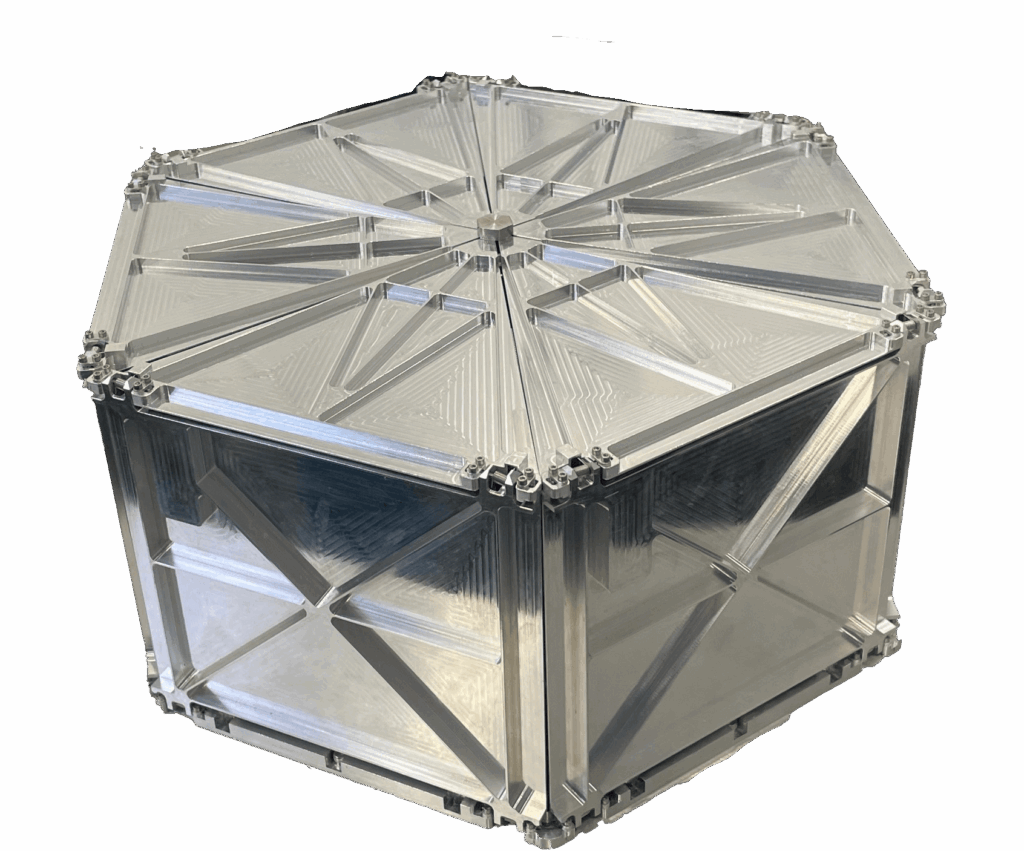
Passive drag-sail de-orbit system for spacecraft and launch vehicle upper stages — heritage since 2013, ~12.5 m² deployed sail area from a shoebox-sized stowed volume, single-actuation passive deployment.
Technical specifications
- Deployed sail area
- ~12.5 m²
- Stowed footprint
- 0.054 m²
- Area gain ratio
- 230X
- Deployment mechanism
- Single actuation — passive stored strain energy (CFRP elements)
- Interface
- 15" motorized lightband keep-out zone compatible
- Espa ring protrusion
- ≤ 5.5"
- First flight
- 2013 (Minotaur I ORS-3 — upper stage deorbit)
- Status
- Flight heritage — multiple successful deorbits
- Propulsion required
- None (passive drag)
About
MMA Space’s dragNET De-orbit System provides passive end-of-life deorbit capability for spacecraft and launch vehicle stages through a drag-sail that increases atmospheric drag to accelerate orbital decay. The next-generation dragNET uses heritage thin-film membranes and composite deployable elements that store energy for single-actuation deployment, creating an effective sail area of approximately 12.5 m² from a shoebox-sized stowed package (0.054 m² stowed footprint, 230X area gain ratio). The system fits within the keep-out zones of a 15″ motorized lightband, protruding no more than 5.5″ into an ESPA ring, and is effective at any LEO inclination. With half the parts count and half the cost of the original design, the NG dragNET makes space sustainability accessible to any mission. The original dragNET was first flown in 2013 on the Minotaur I ORS-3 mission, successfully de-orbiting the launch vehicle’s upper stage, with multiple spacecraft since deorbited within the 5-year rule.
Documentation
No public datasheet yet — request the datasheet / ICD from the supplier.