NSS Magnetometer
 NewSpace Systems (NSS)
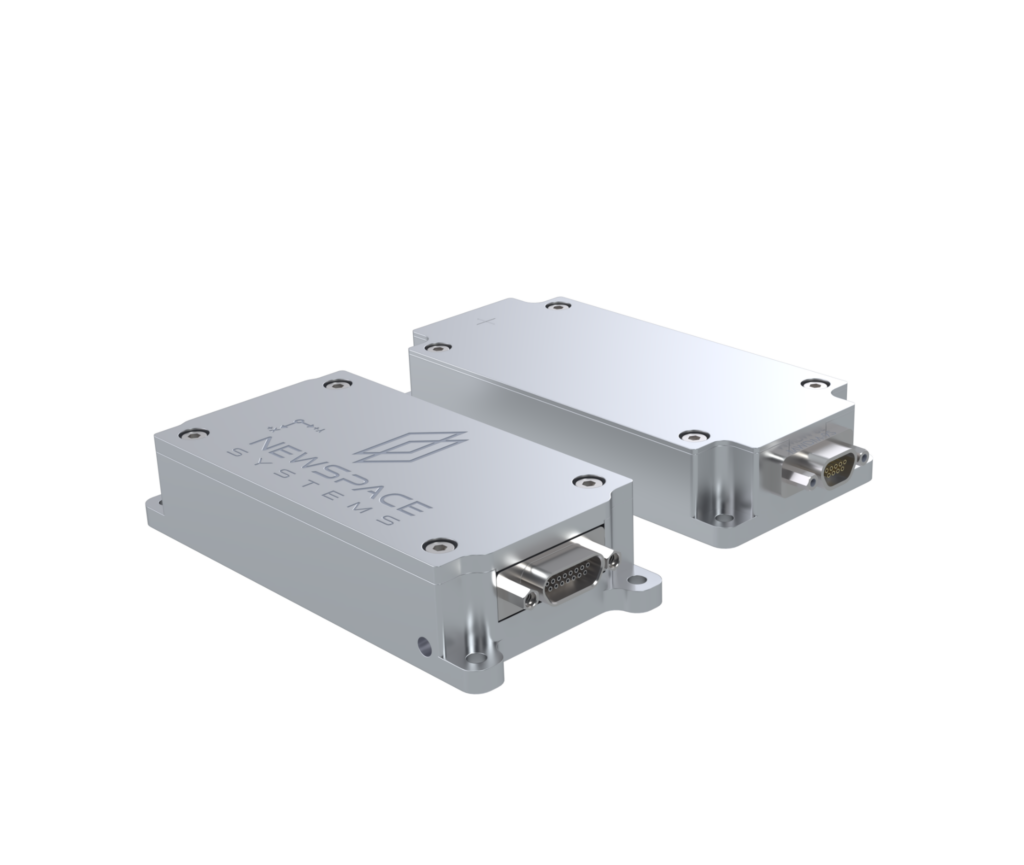
A tri-axial Anisotropic Magneto-Resistive (AMR) magnetometer that measures x-, y- and z-axis magnetic field components plus sensor temperature, for attitude determination and magnetorquer control on satellites.
Typed specifications57 values
Discloses 10 of 11 fields engineers filter by in this category (category median 8).
- Mass
- 82 g PEGASUS-1 · datasheet p.3 107 g PEGASUS-30K
- Measurement range
- 60 µT PEGASUS-1 · datasheet p.3 60 µT PEGASUS-30K | 60 µT PEGASUS-1 | 60 µT PEGASUS-30K | -100–100 µT PEGASUS-30K, +/-100,000 nT option +3
- Envelope (L×W×H)
- 99 mm × 43 mm × 17 mm PEGASUS-1 · datasheet p.3 92 mm × 43 mm × 17.5 mm PEGASUS-30K
- Resolution
- 8 nT max · PEGASUS-1 · datasheet p.3 8 nT max · PEGASUS-30K
- Output data rate
- 25 Hz max · PEGASUS-1 · datasheet p.3 25 Hz max · PEGASUS-1, < 25 Hz | 20 Hz max · PEGASUS-30K | 20 Hz max · PEGASUS-30K, < 20 Hz
- Noise density
- 16 nT max · PEGASUS-1 · datasheet p.3 16 nT max · PEGASUS-30K
- Supply voltage
- 5 V nom. · regulated 5 V supply · datasheet p.2 5 V PEGASUS-1 | 5 V PEGASUS-30K
- Power consumption
- 0.735 W max · PEGASUS-1 · datasheet p.3 0.5 W max · PEGASUS-30K
- Data interface
- RS-485 PEGASUS-1 · datasheet p.3 RS-485 PEGASUS-30K | RS-422 PEGASUS-1 | RS-422 PEGASUS-30K
- Operating temperature
- -30 °C min · PEGASUS-1 · datasheet p.3 -30 °C min · PEGASUS-30K | 75 °C max · PEGASUS-1 | 75 °C max · PEGASUS-30K | -30–75 °C thermal (operational), both models
- Radiation tolerance (TID)
- 10 krad PEGASUS-1 · datasheet p.3 10 krad PEGASUS-1, component level | 30 krad PEGASUS-30K | 30 krad PEGASUS-30K, component level
- TRL
- 9 datasheet p.2
- Sensor type
- AMR Anisotropic Magneto-Resistive sensors · datasheet p.1
- Axes
- 3 tri-axial, x, y, z · datasheet p.1
- Output type
- digital digital serial interface · datasheet p.1
- Noise (RMS amplitude)
- 16 nT max · PEGASUS-1 · datasheet p.3 16 nT max · PEGASUS-30K
- Connector
- 9-pin Female Micro-D PEGASUS-1 · datasheet p.3 15-pin Female Micro-D PEGASUS-30K
- Random vibration
- 10 g RMS acceptance testing, all FM parts · datasheet p.2 21.06 g RMS random, qualification, both models
- Flight heritage
- TRL 9 with significant in-orbit heritage. Developed in collaboration with the Space and Atmospheric Physics Group of Imperial College London, the sensor head first flew on the CINEMA mission and then as an integrated unit in July 2014. Since then, > 400 u datasheet p.2
- Missions flown
- 400 datasheet p.1 200 min · 200+ units in orbit, flown since 2018
- Shock qualification
- 2 000 g qualification, both models · datasheet p.2 2 000 g shock
- Intended use
- spacecraft attitude control attitude determination sensor, magnetorquer rod control torqu… · datasheet p.2
- Configuration
- integrated (sensor + electronics) integrated processing circuitry and sensor head · datasheet p.1
- Axis orthogonality error
- 1 ° max · PEGASUS-1, < 1 deg · datasheet p.2 1 ° max · PEGASUS-30K, < 1 deg
Each value is typed with its unit and measurement condition and cites the datasheet page it was taken from. Nothing is guessed: a field that is absent here has not been published by the manufacturer. machine-extracted ✓ checked by NewSpace Market ✓ manufacturer confirmed by the manufacturer.
As published by the supplier19 lines, in the manufacturer's own wording
- Power requirement
- Regulated 5 V DC supply
- Output interface
- Digital serial interface
- Measurement axes
- X, Y, Z magnetic field components plus sensor temperature
- Sensor technology
- Anisotropic Magneto-Resistive (AMR) with offset compensating circuitry
- TRL
- TRL 9
- Flight heritage
- First flew on CINEMA mission; integrated unit flown since July 2014; >400 units sold to a variety of international missions and constellation programmes; baselined on 5 constellation programmes
- Orthogonality
- < 1°
- Measurement Range
- - 60,000 nT to +60,000 nT
- Resolution
- ≤ 8 nT
- Update Rate
- < 25 Hz
- Noise Density
- < 16 nT RMS/Hz
- Dimensions
- 99 mm × 43 mm × 17 mm
- Mass
- 82 g
- Power
- < 735 mW
- Operating temperature
- -30 °C to +75 °C
- Radiation (TID)
- 10 krad (component level)
- Supply voltage
- 5 V DC
- Interface
- RS-485 / RS-422
- Connector
- 9-pin Female Micro-D
About
The NewSpace Systems (NSS) magnetometer is a tri-axial sensor utilising Anisotropic Magneto-Resistive (AMR) sensors co-located with offset compensating circuitry that nulls the characteristic offset voltage of the AMR sensor, enhancing sensor performance. It provides x-, y- and z-axes magnetic field component measurements, as well as a sensor temperature measurement used for temperature compensation of the magnetic field measurement. The product includes low noise, precision processing and analogue-to-digital conversion circuitry which improves linearity and reduces drift sensitivity of the sensor head. The integrated processing circuitry and sensor head provide an accurate and stable magnetic field measurement at low power consumption. It requires a regulated 5 V DC supply, and the measured x-, y- and z-axes magnetic field components are output via a digital serial interface. Features include small size and low mass, radiation tolerant COTS construction, supply with a calibration matrix, and simple interfacing. It can be used for calculation of magnetorquer rod control torque levels, as an attitude determination sensor when used with an IGRF reference model, and as an angular rate determination sensor by comparing successive measurements. The sensor is TRL 9 with significant in-orbit heritage, developed in collaboration with the Space and Atmospheric Physics Group of Imperial College London. The sensor head first flew on the CINEMA mission, then as an integrated unit in July 2014. Since then, more than 400 units have been sold to a variety of international missions and constellation programmes, and the product is baselined on 5 constellation programmes to date.
Documentation
Need the full ICD, test reports or a specific revision? Ask the supplier directly.