Quad-band Synthetic Aperture Radar (SAR)
 Glavkosmos
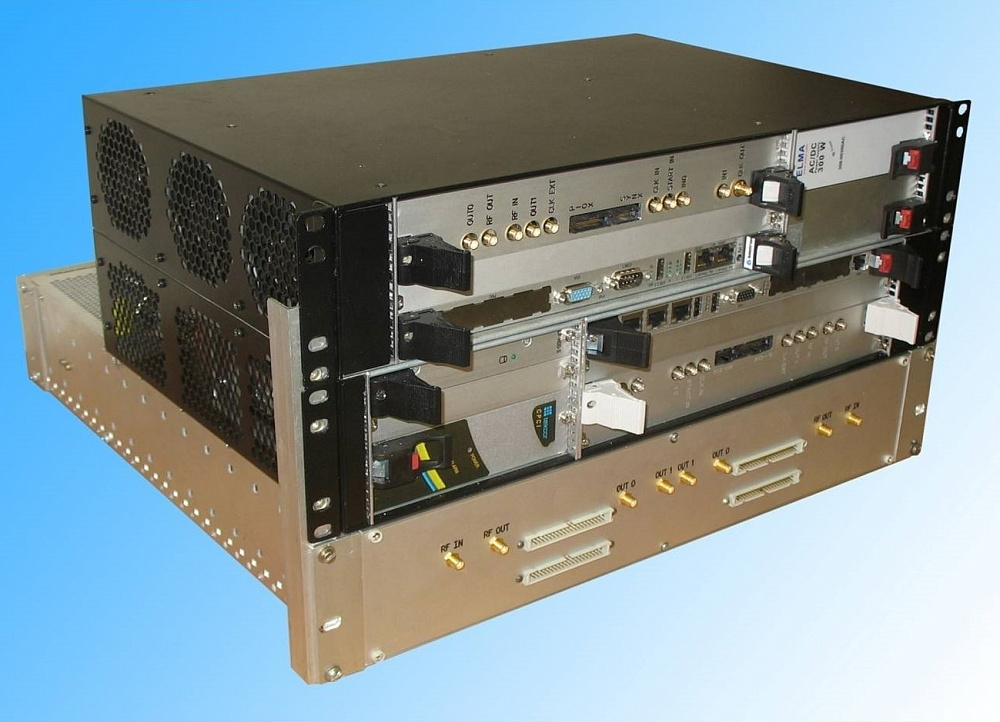
A small-size quad-band (X, L, P, VHF) synthetic aperture radar for Earth remote sensing surveying, designed for operation aboard various types of aircraft.
Key figurescomparable across the catalogue
- Power
- 250 W
- Design life
- 7 years
- Lead time
- 12 months
Normalised to common units so this product can be compared with others in its category. The supplier's own wording is below.
As published by the supplier
- Purpose
- ERS SAR is designed for radar surveying in different bands, in the interests of various customers.
- Year of release
- 1997
- Design life
- 7 years
- Lead time
- 12 months
- Flight qualification of the product
- No
- Possibility to adapt the product to customer requirements
- Yes
- Spatial resolution
- 0.3 m (X-band), 0.5 m (L-band), 2.5 m (P-band), 3.5 m (VHF-band)
- Swath width
- No less than 10 km (X-band), No less than 10 km (L-band), 6 km (P-band), 6 km (VHF-band)
- Operating range
- 15 km (X-band), 15 km (L-band), 8 km (P-band), 8 km (VHF-band)
- Transmitter pulse power
- 250 W (X-band), 250 W (L-band), 200 W (P-band), 150 W (VHF-band)
About
The Quad-band Synthetic Aperture Radar (SAR) is an ERS (Earth Remote Sensing) SAR instrument designed for radar surveying in different frequency bands to serve various customer needs. It is a small-size multiband SAR intended for operation aboard aircraft of different types, and includes mathematical, algorithmic, and software support. The system operates simultaneously across four bands (X, L, P, and VHF), each with its own spatial resolution, swath width, operating range, and transmitter pulse power specifications, allowing flexible surveying performance depending on the band used. The product can be adapted to customer requirements. It has a guaranteed service life of 7 years and an estimated production/delivery time of 12 months. The product was first released in 1997 and has not undergone flight qualification.
Documentation
No public datasheet yet — request the datasheet / ICD from the supplier.