Space Platform 100
 Glavkosmos
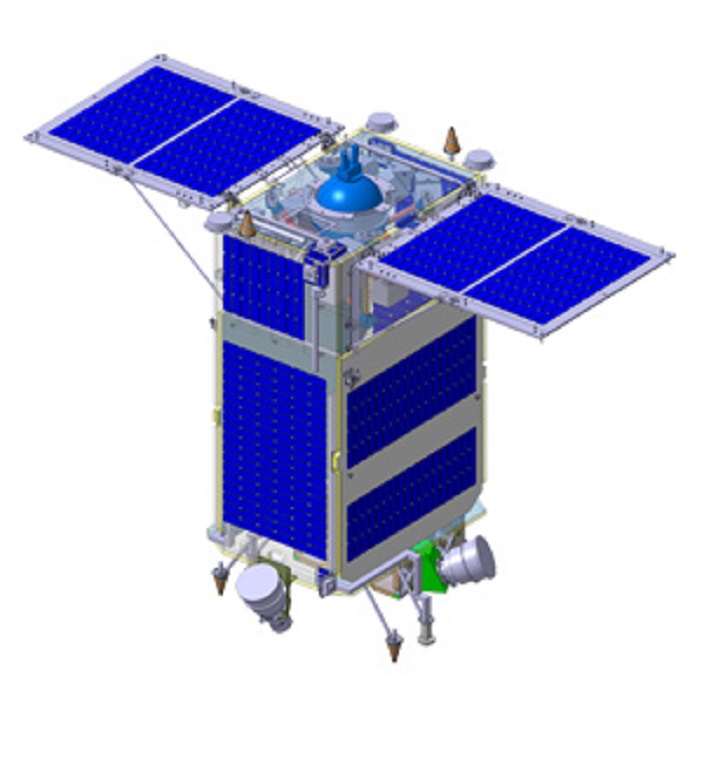
The Space Platform 100 is a small spacecraft platform designed for various orbital missions, supporting payloads up to 100 kg for applications like communications and remote sensing.
Key figurescomparable across the catalogue
- Mass
- 120 kg
- Payload capacity
- 100 kg
- Lead time
- 18 months
Normalised to common units so this product can be compared with others in its category. The supplier's own wording is below.
As published by the supplier
- Purpose
- Design and manufacture of small spacecraft for technological scientific purposes, communications, remote sensing for operation in various types of orbits – from low circular to geostationary.
- Year of release
- 2016
- Design life
- Not specified
- Lead time
- 18 months
- Flight qualification of the product
- No
- Brief history of flight qualification
- Most of the modules of the platform system, including the onboard control system and the orientation and stabilization system, are composed of previously developed and flight-qualified devices and equipment, which makes the platform even cheaper and more attractive by minimizing risks.
- Possibility to adapt the product to customer requirements
- Yes
- Working orbits
- Low circular orbit or the geostationary orbit
- Platform weight
- Up to 120 kg
- Payload weight
- Up to 100 kg
- Payload power supply capacity
- 400 watts for RS and up to 1500 watts for the ICA connection
- Orientation
- Three-axis, active
- Orientation accuracy
- Not more than 0.08 deg. Not more than 0.0004 deg.
- Nominal voltage
- 27±0.5 V
- Stage of development
- The design documentation for the platform and the option of mounting the payload for remote sensing has been Released. All parameters and characteristics of the platform are confirmed.
About
The Space Platform 100 is a small spacecraft platform designed for technological scientific purposes, communications, and remote sensing, capable of operating in various types of orbits, from low circular to geostationary. Released in 2016, it has an estimated production/delivery time of 18 months. While the product itself does not have flight qualification, most of its module system components, including the onboard control system and orientation and stabilization system, are composed of previously developed and flight-qualified devices, which helps minimize risks and reduce costs. The platform is adaptable to customer requirements.
The platform is designed for small spacecraft weighing up to 180 kg. It is divided into several independent modules, each functioning as a subsystem with clearly defined mechanical, electrical, and thermal interfaces. Key features include an untight structure, a battery system (Nickel-hydrogen for remote sensing ICA, Li-ion for communication ICA), and a passive thermal control system utilizing heat pipes and heaters. Its orientation and stabilization system is based on star sensors and control engines-flywheels. Orbit parameter maintenance is achieved through a correction system, which can be a thermocatalytic propulsion system (hydrazine) for remote sensing spacecraft or an electric propulsion system (xenon) for communication spacecraft. The design documentation for the platform and the remote sensing payload mounting option has been released, and all parameters and characteristics are confirmed.
Documentation
No public datasheet yet — request the datasheet / ICD from the supplier.