Two-degree-of-freedom Device for Antenna Pointing. Type 3
 Glavkosmos
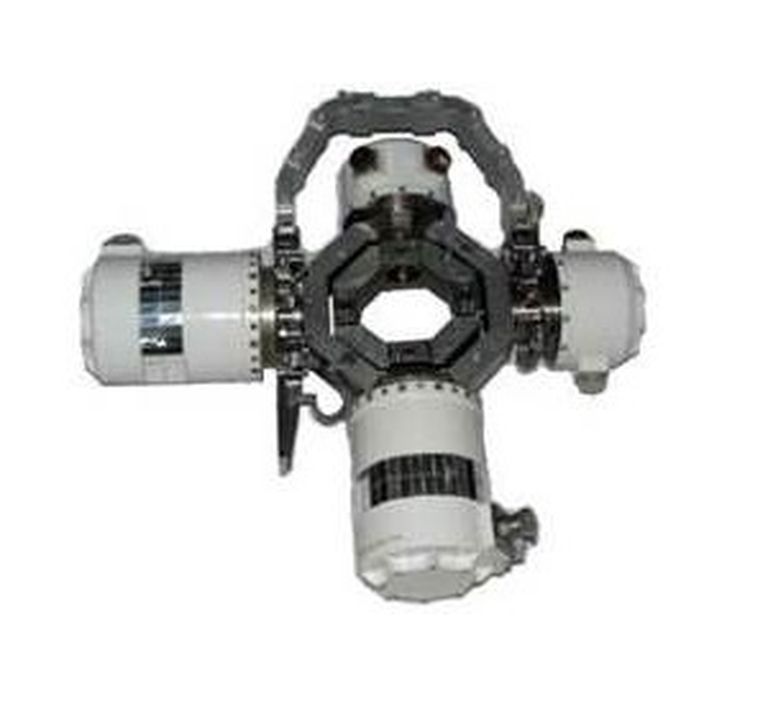
An electromechanical two-degree-of-freedom device designed for precise pointing of spacecraft antennas towards both mobile and immobile users.
Key figurescomparable across the catalogue
- Mass
- 13 kg
- Largest dimension
- 565 mm
- Design life
- 5 years
- Lead time
- 6 months
- TRL
- 9
Normalised to common units so this product can be compared with others in its category. The supplier's own wording is below.
As published by the supplier
- Purpose
- Spacecraft antennas pointing to mobile and immobile users.
- Year of release
- 1988
- Design life
- 5 years
- Lead time
- 6 months
- Flight qualification of the product
- Yes
- Rotation angle for each axis
- ± 11.5 °
- Slew rate
- 0.00016 – 0.083 °/min
- Measurement error of the rotation angle for each axis
- 90 arcsec, not exceeding
- Developed torque for each axis
- 50 N·m, not less than
- Operating temperature range
- ± 50 °C
- Active lifetime
- 5 years
- Overall dimensions
- 565 × 500 × 210 mm, not exceeding
- Mass
- 13 kg
About
The Two-degree-of-freedom Device for Antenna Pointing, Type 3, is an electromechanical system engineered for the precise orientation of antennas on spacecraft. Its primary purpose is to enable spacecraft antennas to accurately track and point towards various targets, including both mobile and immobile users. The device was released in 1988 and boasts a guaranteed service life of 5 years. It is flight qualified, ensuring its reliability and performance in the harsh space environment. Key features include a rotation angle of ±11.5° for each axis, a slew rate ranging from 0.00016 to 0.083 °/min, and a measurement error of the rotation angle not exceeding 90 arcsec. It can develop a torque of at least 50 N·m for each axis and operates within a temperature range of ±50 °С. The active lifetime is specified as 5 years, with overall dimensions not exceeding 565 x 500 x 210 mm and a mass of 13 kg.
Documentation
No public datasheet yet — request the datasheet / ICD from the supplier.