Bipropellant Thruster 17D
 Glavkosmos
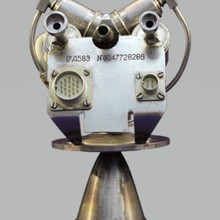
Flight-proven 13.3 N UDMH/NTO thruster (0.55 kg, 450,000 starts, Isp 2688 m/s) flown on MIR, ISS Zarya module, Briz, and Strela.
Key figurescomparable across the catalogue
- Mass
- 0.55 kg
- Thrust
- 13.3 N
- Specific impulse
- 274.1 s
- TRL
- 9
Normalised to common units so this product can be compared with others in its category. The supplier's own wording is below.
As published by the supplier
- Purpose
- Multi-impulse attitude control of spacecraft in response to control system triggering commands
- Year of release
- 1985
- Flight heritage
- ALMAZ orbital station; BRIZ booster units; KVANT-2, KRISTALL, SPEKTR, PRIRODA (MIR station modules); Russia ZARYA module (ISS); STRELA launcher upper stage
- Customization
- Can be adapted to customer requirements
- Propellants
- UDMH / NTO
- Nominal thrust
- 13.3 N
- Nominal specific impulse (steady state)
- 2688 m/s
- Nominal inlet pressure
- 1.47 MPa
- Inlet operating pressure
- 0.78–3.43 MPa
- Total firing time
- Up to 180,000 s
- Cycle life (starts)
- Up to 450,000
- Nozzle expansion ratio
- 137
- Operating voltage
- 27 V
- Mass
- Not over 0.550 kg
- TRL
- 9 (flight-proven)
About
The Bipropellant Thruster 17D is a flight-proven UDMH/NTO thruster producing 13.3 N nominal thrust at a specific impulse of 2688 m/s in steady state, designed for multi-impulse attitude control of spacecraft. It has an extensive flight history including the ALMAZ orbital station, the BRIZ booster units, the KVANT-2, KRISTALL, SPEKTR, and PRIRODA augmentation modules of the MIR orbital station, the Russian ZARYA module of the International Space Station, and the STRELA launcher upper stage. The engine has a cycle life of up to 450,000 starts and cumulative firing time of up to 180,000 s, with a nozzle expansion ratio of 137. Mass is 0.55 kg, operating voltage 27 V.
Documentation
No public datasheet yet — request the datasheet / ICD from the supplier.