Space Sensors
 Collins Aerospace
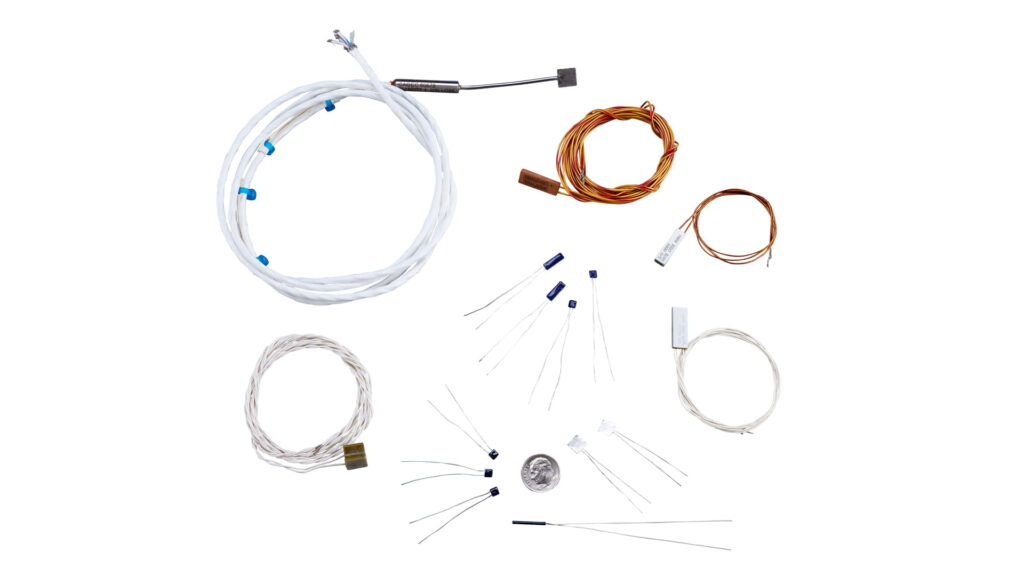
Flight-proven temperature, speed, and pressure sensors for launch vehicles and spacecraft, with heritage across NASA, ESA, and commercial programs since the 1960s.
Technical specifications
- Types
- Temperature (surface & immersion), speed, level, pressure, conductivity sensors
- Applications
- Launch vehicles, propulsion, payload thermal, attitude control
- Heritage programs
- Space Shuttle, JWST, SLS, Orion, Parker Solar Probe, Voyager
- Launch vehicles
- Atlas V, Delta IV, Vulcan, Ariane 5/6, H3, Electron, Terran
- Heritage since
- Early 1960s (Rosemount Engineering origin)
About
Collins Aerospace delivers a comprehensive family of space-grade sensors for launch vehicles, spacecraft, and scientific missions. The product line includes surface and immersion temperature sensors (cryogenic, high-temperature, and room-temperature variants), turbopump speed sensors, propellant level sensors, water conductivity sensors, and pressure sensors engineered for the harshest space environments. Sensors are qualified for applications including solar arrays, thrusters, antennas, cryogenic coolers, propellant systems, electronic bays, exhaust gas measurement, and attitude control systems. Heritage includes NASA’s Space Shuttle (RS-25 engines, all sensors remained within initial calibration through up to 126 engine cycles), James Webb Space Telescope (mirror control and image stability measurements), Space Launch System (SLS core stage engines), Orion Crew Module (environmental and attitude control sensors), and Parker Solar Probe (solar corona measurements). Collins sensors are flown on launch vehicles including Atlas V, Delta IV, Vulcan, Ariane 5/6, H3, Electron, and Terran, and have made measurements on Voyager 1 and 2, Mars rovers, and the Huygens Probe on Titan.
Documentation
No public datasheet yet — request the datasheet / ICD from the supplier.