KSOI-300 Optical Imager (300 mm)
 Kairo Space
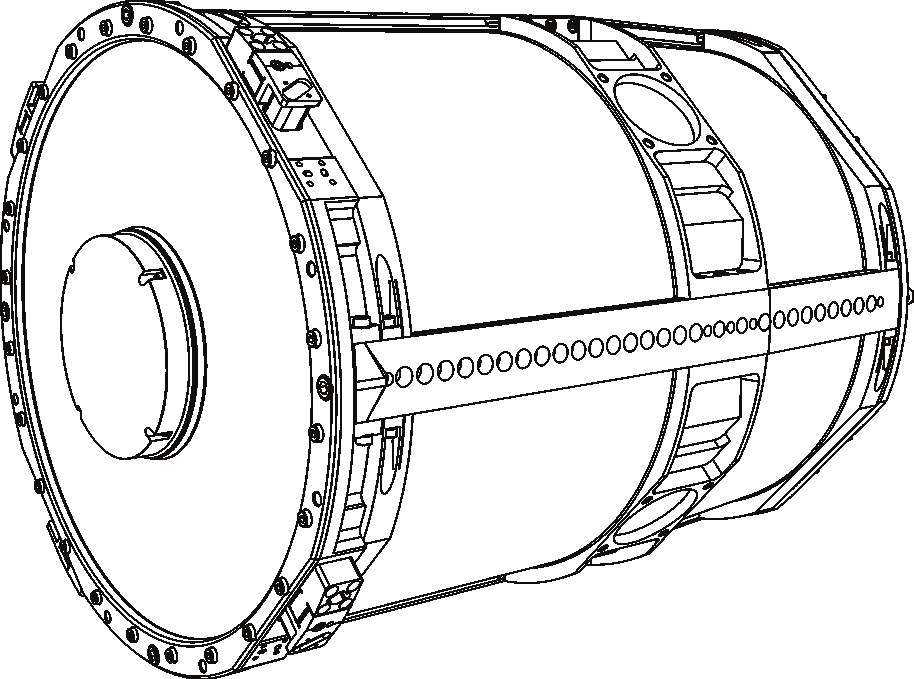
300 mm telescope-class CubeSat optical imager for high-resolution sub-meter earth observation.
Typed specifications59 values
Discloses 12 of 14 fields engineers filter by in this category (category median 4).
- Ground sample distance (GSD)
- 1 m @500km · datasheet p.1 1 m 500 km, in-orbit configurable | 1 m 500km
- Mass
- 16 000 g max · datasheet p.1
- Envelope (L×W×H)
- 500 x 370 x 370 mm³ datasheet p.1
- Swath width
- 12 km @500km · datasheet p.1 12 km 500 km | 12 km 500km
- Sensor resolution
- 12480 x 256 pixels datasheet p.1 3.2 Mpx 12480 × 256 px; as stated: «12480 x 256 pixels»
- Spectral bands
- PAN(R, G, B optional) datasheet p.1 4 max · in-orbit configurable, spectral bands up to 4 bands
- Supply voltage
- 9–12 V power supply option 1 · datasheet p.1 18–36 V power supply option 2 | 18–36 V
- Power consumption
- 12 W max · datasheet p.1
- Data interface
- LVDS datasheet p.1 TTL Control interface | CAN control interface, 2x | LVDS data interface | other TTL control interface +7
- Operating temperature
- -10 °C product page -10–60 °C
- Radiation tolerance (TID)
- 60 krad Electronics · datasheet p.1 150 krad Lens | 60 krad max · electronics, up to | 150 krad max · lens, up to
- Design lifetime
- 3 years datasheet p.1
- TRL
- 5 datasheet p.1
- Export status
- ITAR-free ITAR restriction / Export control: No · datasheet p.1
- Camera type
- panchromatic PAN 450-900 nm · datasheet p.1 RGB R, G, B optional
- Scan mode
- TDI dTDI up to 64 stages per channel · datasheet p.1
- Reference altitude
- 500 km GSD and swath reference altitude · datasheet p.1
- Field of view
- 1.43 ° horizontal x vertical · datasheet p.1
- Aperture
- 300 mm datasheet p.1
- Spectral range
- 450–900 nm PAN · datasheet p.1
- Focal length
- 2 500 mm datasheet p.1
- Survival temperature
- -80–85 °C datasheet p.1
- Optics
- catadioptric datasheet p.1
- Detector
- other type of detector: TDI (CCD/CMOS not stated) · datasheet p.1
- Bit depth
- 12 bit datasheet p.1 8 bit min · data format mono 8/10/12 bit | 12 bit max · maximum pixel depth
- F-number
- 8.3 f / 8.3 · datasheet p.1
- Sensor format (pixels)
- 12480 x 256 datasheet p.1
- On-board storage
- 256 GB datasheet p.1
- Pixel pitch
- 5 µm datasheet p.1
- Exposure time
- 0.01–100 ms per line, printed as 10 us / 100 ms · datasheet p.1
- SNR
- 200 min · >200 · datasheet p.1
- Data interface speed
- 85 Mbps datasheet p.1
- On-board compression
- lossy (JPEG / JPEG 2000) JPEG (optional) · datasheet p.1
Each value is typed with its unit and measurement condition and cites the datasheet page it was taken from. Nothing is guessed: a field that is absent here has not been published by the manufacturer. machine-extracted ✓ checked by NewSpace Market ✓ manufacturer confirmed by the manufacturer.
As published by the supplier18 lines, in the manufacturer's own wording
- Aperture
- 300 mm
- Class
- Telescope-class high-resolution imager
- Band
- Visible
- Application
- High-resolution earth observation, precision monitoring
- Datasheet
- Available
- GSD @500km
- 1 m
- Storage capacity
- 256 Gb
- Mass
- < 16000 g
- Dimensions
- 500 x 370 x 370 mm³
- Power consumption
- < 12 W
- Data interface
- LVDS / ETHERNET
- Control interface
- 2xCAN / 2xRS422 / 2xUART / TTL
- Operating temperature
- -10 °C ~ +60 °C
- Surviving temperature
- -80 °C ~ +85 °C
- Aperture diameter
- 300 mm
- Focal length
- 2500 mm
- f number
- f / 8.3
- Field of View (horizontal x vertical)
- 1.43°
About
The KSOI-300 is Kairo Space’s highest-specification optical imaging payload, featuring a 300 mm aperture telescope-class design for high-resolution earth observation from LEO. It enables CubeSat-based imagery with fine ground sampling distances suitable for precision monitoring applications including infrastructure assessment, boundary mapping, urban planning, and intelligence applications.
A technical datasheet covering optical performance parameters, mechanical interface dimensions, electrical interface requirements, and thermal characteristics is available for qualified customers evaluating the KSOI-300 for integration into their satellite systems. The imager is designed for larger CubeSat and small satellite form factors given its aperture size.
Documentation
Need the full ICD, test reports or a specific revision? Ask the supplier directly.