Cryocoolers
 Northrop Grumman Space Systems
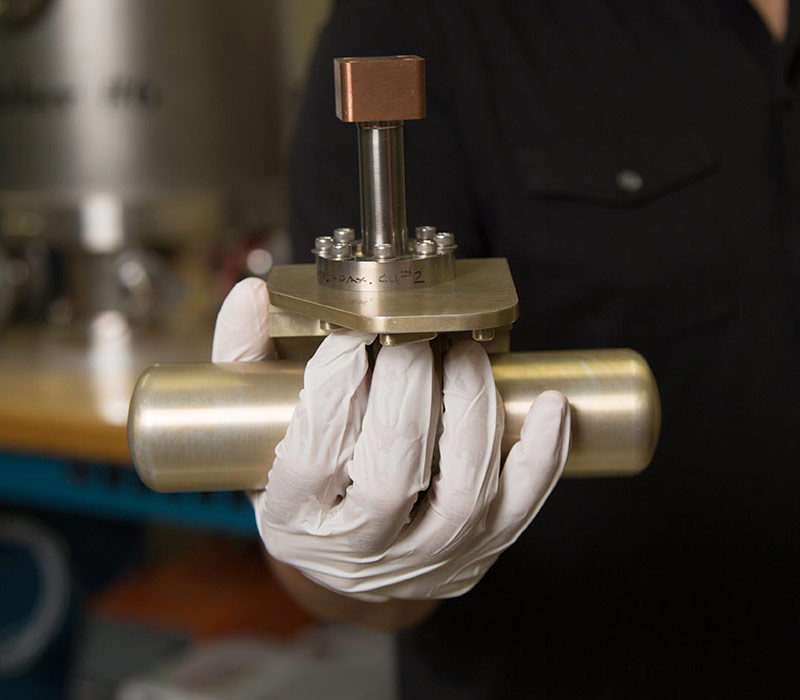
Northrop Grumman's pulse tube cryocoolers provide high reliability for critical space missions, operating without moving parts for extended lifespans.
Typed specifications24 values
Discloses 6 of 7 fields engineers filter by in this category (category median 1).
- Mass
- 3 800 g max · (electronics) · datasheet p.2 3 800 g max · electronics | 4 500 g max · single stage | 4 500 g max · single stage cooler
- Power consumption
- 180 W compressor · datasheet p.2 180 W max | 180 W max · compressor input power
- Data interface
- RS-422 standard digital interfaces (RS422 and 1553) · datasheet p.1 MIL-STD-1553 standard digital interfaces (RS422 and 1553)
- Operating temperature
- -40 °C min · datasheet p.2 70 °C max | -40–70 °C environment
- Design lifetime
- 10 years datasheet p.2 10 years min · more than 10 years of continuous on-orbit operation
- TRL
- 9 TRL 9 High Efficiency Cryocooler, flight electronics and puls… · datasheet p.2
- Product type
- cryocooler datasheet p.1
- Cooling power
- 23 W refrigeration capacity at 150 K · datasheet p.2 2 W refrigeration capacity at 45 K | 8 W refrigeration capacity at 77 K
- Cold tip temperature
- 1.7 K min · designs offer cooling from 1.7 to 200 Kelvin · datasheet p.1
- Random vibration
- 50 g RMS max · product page
- Flight heritage
- Pulse tube cryocoolers with more than 300 combined years of on-orbit operation datasheet p.1
- Missions flown
- 300 datasheet p.1
- Cooler type
- pulse tube datasheet p.1
Each value is typed with its unit and measurement condition and cites the datasheet page it was taken from. Nothing is guessed: a field that is absent here has not been published by the manufacturer. machine-extracted ✓ checked by NewSpace Market ✓ manufacturer confirmed by the manufacturer.
As published by the supplier16 lines, in the manufacturer's own wording
- On-orbit operation
- More than 300 combined years
- Operating mechanism
- Without moving parts
- Applications
- Missile defense, climate science, astronomy, weather tracking and prediction
- Scalability
- Scalable for large-scale and robust spacecraft, and for smaller, more proliferated spacecraft designs
- Flight heritage
- NASA’s James Webb Space Telescope
- Cooling range
- 1.7 to 200 Kelvin
- Interface
- RS422 and 1553
- Refrigeration Capacity
- 2 W at 45 K
- Refrigeration Capacity (2)
- 8 W at 77 K
- Refrigeration Capacity (3)
- 23 W at 150 K
- Compressor input power
- Up to 180 W
- Reliability
- > 90% at 87,600 hours (10 years)
- Exported Vibration
- < 50 mN drive axis
- Exported Vibration (2)
- < 200 mN pulse tube axis
- Mass (single stage)
- < 4.5 kg
- Mass (electronics)
- < 3.8 kg
About
Northrop Grumman’s pulse tube cryocoolers are designed for high reliability in critical space missions, including applications in missile defense, climate science, astronomy, and weather tracking and prediction. These cryocoolers have a significant flight heritage, having operated on-orbit for more than 300 combined years. A key feature of these pulse tube cryocoolers is their operation without moving parts, which contributes to their exceptional longevity, often exceeding their designed lifespan many times over without any degradation in performance. They are capable of supporting demanding and complex space missions, such as NASA’s James Webb Space Telescope. The designs are scalable, making them suitable for both large-scale, robust spacecraft and smaller, more proliferated spacecraft designs.
Documentation
Need the full ICD, test reports or a specific revision? Ask the supplier directly.