Advanced Coarse Sun Sensor (ACSS)
 Solar MEMS Technologies
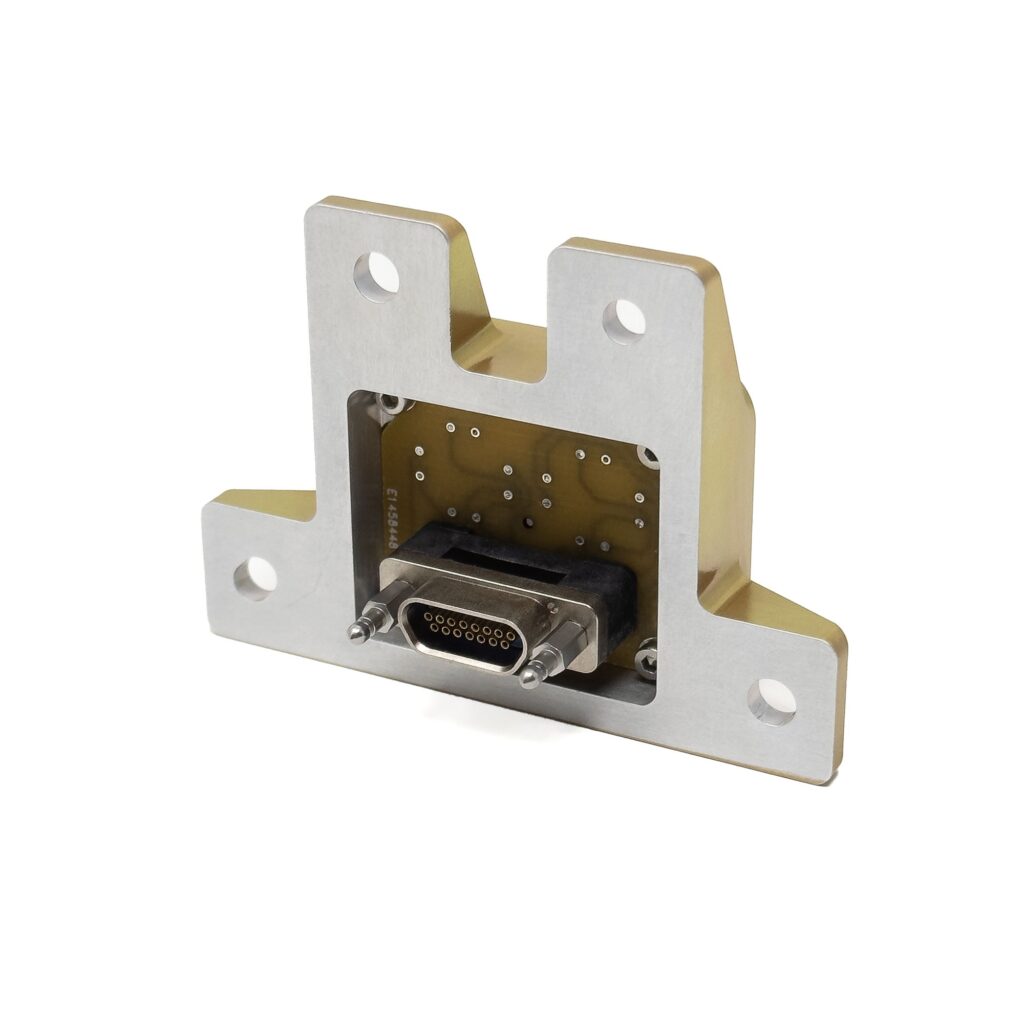
The Advanced Coarse Sun Sensor (ACSS) is a highly reliable and radiation-hardened device for sun-tracking and attitude determination in space missions, measuring sun ray incident angles in two orthogonal axes.
Typed specifications27 values
Discloses 6 of 8 fields engineers filter by in this category (category median 4).
- Accuracy
- 3 ° 3sigma, no calibrated · datasheet p.1 3 ° max
- Mass
- 40 g datasheet p.2
- Envelope (L×W×H)
- 65 x 47 x 13 mm datasheet p.2
- Output type
- analog datasheet p.2
- Field of view
- 60 ° ±60º · datasheet p.1 60 ° half-angle
- Supply voltage
- 15 V min · datasheet p.2 30 V max | 15–30 V
- Operating temperature
- -55–105 °C datasheet p.1 -55–105 °C operating temperature (qualification data) | -45–85 °C operating temperature (technical characteristics) | -45–85 °C
- Radiation tolerance (TID)
- 200 krad (gamma) · datasheet p.1 200 krad radiation test, gamma
- Export status
- ITAR-free ITAR FREE · datasheet p.1
- Sensor class
- coarse datasheet p.1
- Axes
- 2 2 orthogonal axes · datasheet p.1
- Connector
- 15-pin micro connector datasheet p.2
- Random vibration
- 18.3 g RMS mechanical test, 18.3 g @ 20-2000 H · datasheet p.1
- Flight heritage
- since 2019 with hundreds of flight units delivered datasheet p.1 more than 2500 units in orbit since 2019
- Satellite class
- GEO for the most demanding LEO, MEO and GEO missions · datasheet p.1
- Missions flown
- 2 500 datasheet p.0 2 500 min · ACSS internal sensor with more than 2500 units in orbit since…
- Shock qualification
- 2 000 g mechanical test · datasheet p.1
Each value is typed with its unit and measurement condition and cites the datasheet page it was taken from. Nothing is guessed: a field that is absent here has not been published by the manufacturer. machine-extracted ✓ checked by NewSpace Market ✓ manufacturer confirmed by the manufacturer.
As published by the supplier12 lines, in the manufacturer's own wording
- Industry
- Space
- Comm. interface
- Analog
- Flight mode
- Yes
- Engineering mode
- Yes
- Field of view (º)
- ±60, Custom
- Power supply
- 15-13V (3 mA)
- Operating temperature
- -45 to 85 degrees
- Radiation test
- 200 Krad (gamma) 8e11 10 MeV (protons)
- Mechanical test
- Shock 2000 g
- Endurance test
- 600 cycles from -55 to 105º C 2000h at 125º C
- EMC/ESD
- ECSS-E-ST-20-07C MIL-STD-461F
- Flight heritage
- since 2019 with hundreds of flight units delivered
About
The Advanced Coarse Sun Sensor (ACSS) is a specialized device engineered for sun-tracking and attitude determination in various space missions, including LEO, MEO, and GEO. It operates by measuring the incident angle of sun rays across two orthogonal axes, leveraging its geometrical design to provide high sensitivity. The ACSS is designed for exceptional reliability and radiation hardness, making it suitable for the most demanding space environments. It boasts flight heritage since 2019, with hundreds of units delivered, and its manufacturing process has been industrialized for mass production. The sensor includes both flight and engineering modes, offers a Field of View of ±60 degrees (with custom options available), and operates with a power supply of 15-13V (3mA). It is built to withstand extreme conditions, with an operating temperature range of -45 to 85 degrees Celsius, radiation tested to 200 Krad (gamma) and 8e11 10 MeV (protons), and mechanical shock resistance up to 2000g. Endurance tests include 600 cycles from -55 to 105 degrees Celsius and 2000 hours at 125 degrees Celsius. It complies with EMC/ESD standards ECSS-E-ST-20-07C and MIL-STD-461F.
Documentation
Need the full ICD, test reports or a specific revision? Ask the supplier directly.