Modified Thermocatalytic Thrusters
 Glavkosmos
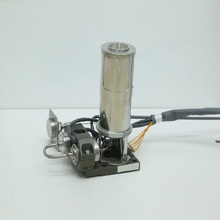
Propellant - hydrazine. The main thruster component parts are: a decomposition chamber with a catalyst element and a nozzle, a propellant injection unit, two small-size solenoid valves that supply propellant to the thruster, and a pressure signaling indicator that monitors the fact that the thruster
Key figurescomparable across the catalogue
- Mass
- 0.44 kg
- Power
- 10 W
- Largest dimension
- 110 mm
- Thrust
- 1 N
- Specific impulse
- 214 s
- Data rate
- 20 Mbps
- Design life
- 20 years
Normalised to common units so this product can be compared with others in its category. The supplier's own wording is below.
As published by the supplier
- Thrust
- (5.6 … 1.0) N
- Propellant inlet pressure
- (883..204) kPa
- Specific impulse in a continuous mode of operation
- (220..214) s
- Life in terms of propellant throughput
- 20 kg
- Life in terms of number of cycles
- 50 cycles
- Power consumption in the preparation mode (for 60 min) and in the instant readiness mode
- (10.0 … 14.0) W
- Overall dimensions
- 110 × 102 × 54 mm
- Mass
- 0.44 kg
About
Propellant – hydrazine. The main thruster component parts are: a decomposition chamber with a catalyst element and a nozzle, a propellant injection unit, two small-size solenoid valves that supply propellant to the thruster, and a pressure signaling indicator that monitors the fact that the thruster has been started up. A resistive heater and MLI installed on the thruster chamber ensure the required thermal mode of the thruster. Thruster temperature is monitored by means of two thermocouples. The thruster also has a mounting plate that joins the thruster elements. Manufacturing lead time is given without taking into account the time needed to procure materials (4 months) and procured parts and components (6 months).
Documentation
No public datasheet yet — request the datasheet / ICD from the supplier.