piCAM/FM (Flight Model)
 SkyFox Labs s.r.o.
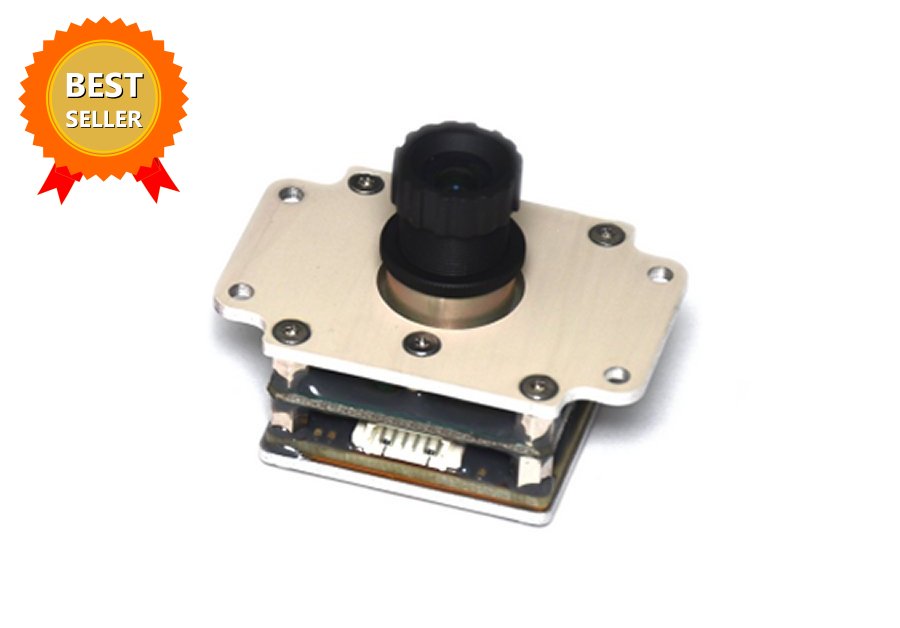
The piCAM/FM is a space-friendly digital CubeSat camera designed to capture images of celestial bodies, docking satellites, or deployable structures, offering easy integration and various optics options.
Typed specifications3 values
Discloses 1 of 14 fields engineers filter by in this category (category median 4).
- Envelope (L×W×H)
- 33x33x19 mm body + optics product page
- TRL
- 9 product page
- Connector
- 6 pin Molex product page
Each value is typed with its unit and measurement condition and cites the datasheet page it was taken from. Nothing is guessed: a field that is absent here has not been published by the manufacturer. machine-extracted ✓ checked by NewSpace Market ✓ manufacturer confirmed by the manufacturer.
As published by the supplier12 lines, in the manufacturer's own wording
- Resolution
- VGA
- Data Output
- JPEG in ASCII HEX format
- Connector
- 6 pin Molex
- Serial Bitrate
- 1k2 to 921k6 selectable (115k2 Default)
- Image Capture Time
- Within 5 seconds
- Dimensions
- 33x33x19 mm body + optics
- Mounting Bracket
- 48x33 mm with 4x M2.5 mounting holes
- Mass
- 40 grams (may vary with different optics selected)
- Standard FoV Optics
- ~60°
- TRL
- 9
- Power
- 3.3 V @ 90 mA
- Country of Origin
- Czech Republic
About
Do you plan to fly a satellite to space? Take the Digital CubeSat Camera with you! To capture images of the Earth, Moon, Mars, Venus …, two docking satellites, orientation towards the local horizon, deployable antennas or a solar sail… or anything else you want to see downloaded on the screen of your Groundstation soon! For the first time in the New Space history you can also use the external LED Flashlight control signal to illuminate the deployment process in dark periods of orbit. Save time with coding, the module utilize UART interface and easy-to-parse JPEG format with ASCII lines terminated with CR+LF. And… you need only 3.3V bus to power it! Pick up lenses fitting the needs of your project from the Narrow Field-of-View down to the wide Fish Eye sight! There are 6 different FoV optics options you can freely choose from. Prove Your Success. | Show Images. “Photographs furnish evidence.” Susan Sontag, On Photography (1977). There is no better way to prove your satellite does the right things in space in front of your investors, professors or your team rather than showing the imagery of deployed solar panels, booms, correct attitude, solar sail deployment or a successful planetary flyby. And. There is also no better way to find out what is imperfect, if it doesn’t. Prove them all right in colour form using piCAM and low downlink throughput demand over a single pass of your groundstation! Image sells.
Documentation
- piCAM_Datasheet_rev_A_2025.pdf www.skyfoxlabs.com ↗
- Declaration_of_Conformity_piCAM.pdf www.skyfoxlabs.com ↗
Need the full ICD, test reports or a specific revision? Ask the supplier directly.