Glonass-M
 ISS Reshetnev
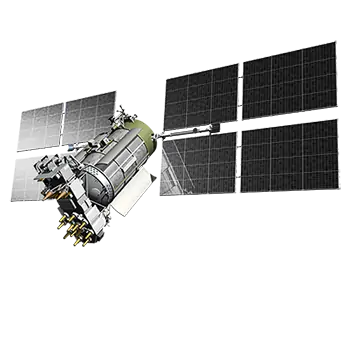
Glonass-M is a navigation satellite designed for the GLONASS global navigation satellite system, operating in a high-mid circular inclined orbit.
Key figurescomparable across the catalogue
- Mass
- 1,415 kg
- Power
- 1,400 W
- Design life
- 7 years
Normalised to common units so this product can be compared with others in its category. The supplier's own wording is below.
As published by the supplier
- ADCS type
- active, 3-axes
- EPS power
- 1400 W
- Mass
- 1415 kg
- Design life
- 7 years
- Orbit
- High-mid, circular, inclined
- Orbit height
- 19100 km
- Launch vehicle
- Proton-M carrier rocket and DM upper stage, Proton-M carrier rocket and Briz-M upper stage (group launch), Soyuz-2 carrier rocket and Fregat upper stage (single launch)
- Cosmodromes
- Baikonur, Plesetsk
- First launch date
- 10 December 2003
About
The Glonass-M is a navigation satellite, part of the GLONASS global navigation satellite system. It features an active, 3-axes Attitude Determination and Control System (ADCS) and has an Electrical Power System (EPS) capable of generating 1400 W. The satellite has a mass of 1415 kg and is designed for a lifetime of 7 years. It operates in a high-mid, circular, inclined orbit at an altitude of 19100 km. Glonass-M satellites can be launched using various configurations: a Proton-M carrier rocket with a DM upper stage, a Proton-M carrier rocket with a Briz-M upper stage for group launches, or a Soyuz-2 carrier rocket with a Fregat upper stage for single launches. Launches are conducted from the Baikonur and Plesetsk cosmodromes. The first Glonass-M satellite was launched on December 10, 2003.
Documentation
No public datasheet yet — request the datasheet / ICD from the supplier.