Glonass
 ISS Reshetnev
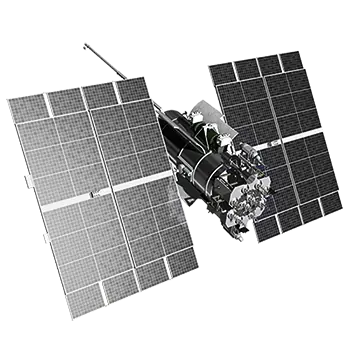
The Glonass satellite is an active, 3-axes navigation satellite with a mass of 1450 kg and a lifetime of 3 years, operating in a high-mid, circular, inclined orbit at 19100 km.
Key figurescomparable across the catalogue
- Mass
- 1,450 kg
- Design life
- 3 years
Normalised to common units so this product can be compared with others in its category. The supplier's own wording is below.
As published by the supplier
- ADCS type
- active, 3-axes
- EPS power
- 1000 W
- Mass
- 1450 kg
- Lifetime
- 3 years
- Orbit
- High-mid, circular, inclined
- Orbit height
- 19100 km
- Launch vehicle
- Proton-К / DM
- Cosmodromes
- Baikonur
- First launch date
- 12 October 1982
About
The Glonass satellite is a navigation spacecraft developed by ISS Reshetnev. It features an active, 3-axes attitude determination and control system (ADCS) and an electrical power system (EPS) providing 1000 W. With a mass of 1450 kg, the satellite is designed for a lifetime of 3 years. It operates in a high-mid, circular, inclined orbit at an altitude of 19100 km. The Glonass satellite was launched using a Proton-K / DM launch vehicle from the Baikonur Cosmodrome, with its first launch date recorded on 12 October 1982. This satellite is part of the broader Glonass navigation system, which includes other spacecraft like Glonass-K and Glonass-M.
Documentation
No public datasheet yet — request the datasheet / ICD from the supplier.