Syrlinks EWC36 L-band transmitter
 Syrlinks
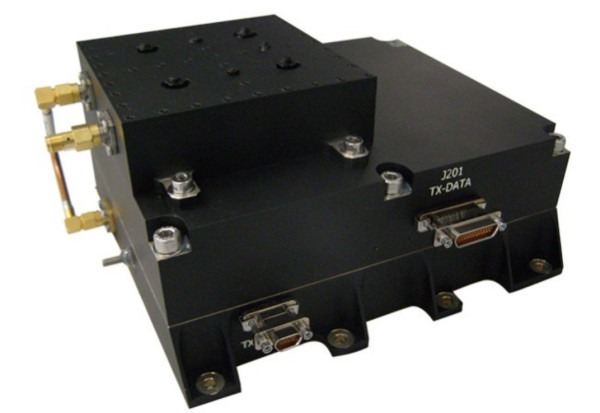
The Syrlinks EWC36 L-band transmitter is a second-generation, high-reliability L-band transmitter designed for space applications, operating between 1698 MHz and 1710 MHz.
Typed specifications4 values
Discloses 2 of 13 fields engineers filter by in this category (category median 3).
- Frequency band
- L TX · description
- Frequency range
- 1 698 MHz min · TX · description 1 710 MHz max · TX
- Design lifetime
- 7.5 years description
Each value is typed with its unit and measurement condition and cites the datasheet page it was taken from. Nothing is guessed: a field that is absent here has not been published by the manufacturer. machine-extracted ✓ checked by NewSpace Market ✓ manufacturer confirmed by the manufacturer.
As published by the supplier7 lines, in the manufacturer's own wording
- Life-time LEO missions
- 7.5 years
- Reliability design
- ESA CLASS 3
- Testing & qualification
- ECSS-Q-ST-60C CLASS 3 / NASA Level II
- Radiation
- tested & hardened
- Protection
- Smart protection against SEE
- Tests
- Functional, Mechanical, Thermal & EMC Tests
- Export control
- ITAR free
About
The Syrlinks EWC36 L-band transmitter is a second-generation L-band transmitter specifically engineered for space applications. It operates within the frequency range of 1698 MHz to 1710 MHz and incorporates a band-pass filter. The transmitter also includes a DC-DC converter with galvanic isolation, enhancing its robustness for space environments. It is primarily suited for observation and scientific low Earth orbit (LEO) missions, offering a 7.5-year lifetime for such missions. Key features include its design for high power transmission, high reliability (meeting ESA CLASS 3 standards), and low power consumption. The product is tested and qualified to ECSS-Q-ST-60C CLASS 3 / NASA Level II, is radiation tested and hardened, and includes smart protection against Single Event Effects (SEE). It has undergone functional, mechanical, thermal, and EMC tests. The product is ITAR free. Applications include telemetry and use with observation and scientific payloads.
Documentation
No public datasheet yet — request the datasheet / ICD from the supplier.