DragonEye
 Dragonfly Aerospace
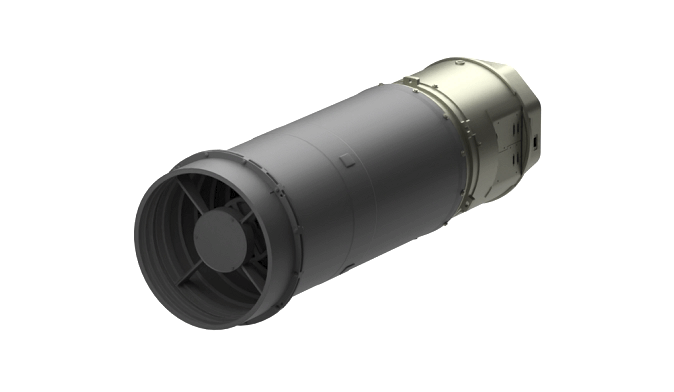
DragonEye is a high-resolution imager for microsatellites, offering detailed Earth imagery in panchromatic mode with radiation-resistant optics and a wide field of view.
Typed specifications35 values
Discloses 5 of 14 fields engineers filter by in this category (category median 4).
- Ground sample distance (GSD)
- 2.8 m MS binned at 500 km · datasheet p.1 2.8 m MS binned, at 500 km | 1.4 m PAN at 500 km | 1.4 m PAN, at 500 km
- Mass
- 18 000 g nom. · datasheet p.1 18 000 g
- Envelope (L×W×H)
- 320 (D) x 930 (L) plus electronics datasheet p.1 320 mm (D) x 930 mm (L) plus electronics
- Swath width
- 22.2 km at 500 km · datasheet p.1
- Spectral bands
- 10 10 x MS plus 1 x PAN · datasheet p.1 11 10x MS plus 1x PAN
- Supply voltage
- 28 V nom. · 28V DC · datasheet p.1 28 V nom. · DC
- Power consumption
- 45 W max · Imaging mode · datasheet p.1 25 W max · Readout mode
- Data interface
- LVDS datasheet p.1 other Multi-gigabit transceiver | RS422 TMTC Interface
- Operating temperature
- 10 °C min · datasheet p.1 30 °C max | 10–30 °C
- Camera type
- panchromatic datasheet p.1 multispectral
- Reference altitude
- 500 km datasheet p.1
- Survival temperature
- -20 °C min · datasheet p.1 55 °C max | -20–55 °C
- Flight heritage
- 2 DragonEye imagers launched in 2023 datasheet p.1
- Satellite class
- microsat 10-100 kg satellite bus size 50-100 kg · datasheet p.1
- Missions flown
- 2 launched in 2023 · datasheet p.0
- Bit depth
- 10 bit 10-bit or 12-bit · datasheet p.1 12 bit 10-bit or 12-bit
- On-board compression
- lossless (CCSDS 122 / JPEG-LS) J2K lossless · datasheet p.1 lossy (JPEG / JPEG 2000) J2K lossy | none (raw) RAW
Each value is typed with its unit and measurement condition and cites the datasheet page it was taken from. Nothing is guessed: a field that is absent here has not been published by the manufacturer. machine-extracted ✓ checked by NewSpace Market ✓ manufacturer confirmed by the manufacturer.
As published by the supplier18 lines, in the manufacturer's own wording
- Spatial resolution (GSD) at 500 km pan
- 1.4 m
- Spatial resolution (GSD) at 500 km ms binned
- 2.8 m
- Swath at 500 km
- 22.2 km
- Mass (Including electronics)
- 18 kg
- Spectral bands
- 10x MS plus 1x PAN
- Satellite bus size
- 50−100 kg
- Physical size
- 320 mm x 930 mm plus electronics
- Data format
- 10-bit or 12-bit
- Integrated mass data storage
- Optional
- Compression
- RAW or J2K lossless or lossy
- Data interface
- Multi gigabit transceiver, LVDS
- Tmtc interface
- RS422
- Power usage imaging mode
- < 45 W
- Power usage readout mode
- < 25 W
- Power supply
- 28 V DC
- Operating temperature
- +10°C to +30°C
- Survival temperature
- -20°C to +55°C
- Flight heritage
- 2 DragonEye imagers launched in 2023
About
DragonEye is a high-resolution imager designed for microsatellites, featuring radiation-resistant optics and low thermal expansion. It is capable of delivering detailed Earth imagery in panchromatic mode. The system nearly doubles the angular field of view compared to conventional systems, while avoiding the complexity and loss of spatial resolution typically associated with large apertures. Its design incorporates a Cassegrain system and a chromatic two-lens corrector, which together provide a wide field of view and reduce sensitivity to de-centring, making it highly suitable for high-performance satellite imaging applications. The imager supports 10x multispectral bands plus 1x panchromatic band, and offers data formats of 10-bit or 12-bit. Integrated mass data storage is available as an optional feature. Data compression options include RAW, J2K lossless, or J2K lossy. It features a multi-gigabit transceiver and LVDS for data interface, and RS422 for TMTC interface. The imager operates on a 28 V DC power supply and has an operating temperature range of +10°C to +30°C, with a survival temperature range of -20°C to +55°C. Two DragonEye imagers were launched in 2023, demonstrating flight heritage.
Documentation
Need the full ICD, test reports or a specific revision? Ask the supplier directly.