Sun Sensor (10 g, 28 × 23 × 11 mm)
 SPUTNIX
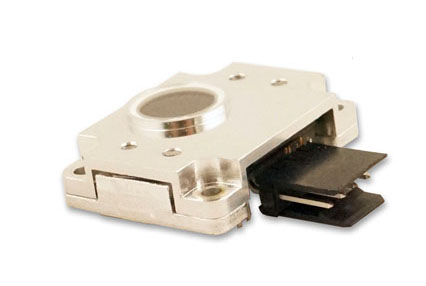
The Sun Sensor is a two orthogonal axes digital sun sensor designed for nano-satellites, providing directional cosines of the sun's direction without requiring calibration.
Typed specifications5 values
Discloses 2 of 8 fields engineers filter by in this category (category median 4).
- Mass
- 10 g product page
- Envelope (L×W×H)
- 28 × 23 × 11 mm product page
- Power consumption
- 0.02 W product page
- Design lifetime
- 1 years product page
- Lead time
- 3 months product page
Each value is typed with its unit and measurement condition and cites the datasheet page it was taken from. Nothing is guessed: a field that is absent here has not been published by the manufacturer. machine-extracted ✓ checked by NewSpace Market ✓ manufacturer confirmed by the manufacturer.
As published by the supplier15 lines, in the manufacturer's own wording
- Purpose
- Designed for use in nano-satellites missions. CAN interface provides single cable connection and chains of sensors.
- Year of release
- 2017
- Design life
- 1 years
- Lead time
- 3 months
- Flight qualification of the product
- Yes
- Brief history of flight qualification
- In the composition of the satellites SiriusSat-1.2 (launched on 15.08.18.).
- Possibility to adapt the product to customer requirements
- No
- Dimensions
- 28 × 23 × 11 mm
- Mass (w/cover)
- 10 g
- Supply voltage
- 4..14 V
- Power consumption, max (im active mode)
- 20 mW
- Data interface
- CAN 2.0B
- Angle of view (FOV cone)
- ± 60°
- Accuracy (3 sigma)
- < ± 0.5°
- Error (3 sigma)
- ± 0.1°
About
The Sun Sensor is a two orthogonal axes digital sun sensor specifically designed for use in nano-satellite missions. It generates the directional cosines of the angles of the direction to the sun, eliminating the need for calibration. The sensor is characterized by its very small size and weight, as well as ultra-low power consumption. It features a CAN interface for single cable connection and supports chains of sensors. Key features include its suitability for mid-size satellite designs in a light and small package, ultra-low power CAN device operation, and a built-in DC converter for constant consumption. The product was released in 2017 and has a guaranteed service life of 1 year. It has flight heritage, having been qualified in the composition of the SiriusSat-1.2 satellites, launched on August 15, 2018. The product cannot be adapted to customer requirements.
Documentation
No public datasheet yet — request the datasheet / ICD from the supplier.